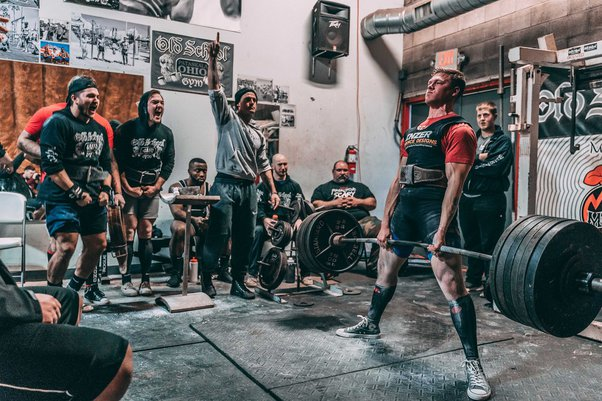
In this video I cover my 3 favorite intensity techniques to help you build bigger muscles. Most people think in order to grow your muscles you must constantly be increasing the weight you use during training. Yes that is definitely important to progress and should be a focus when building muscle but it is not possible to maintain constant strength gain. These tips will help you increase the load you put on the muscles to make them grow without having to increase the weight you use
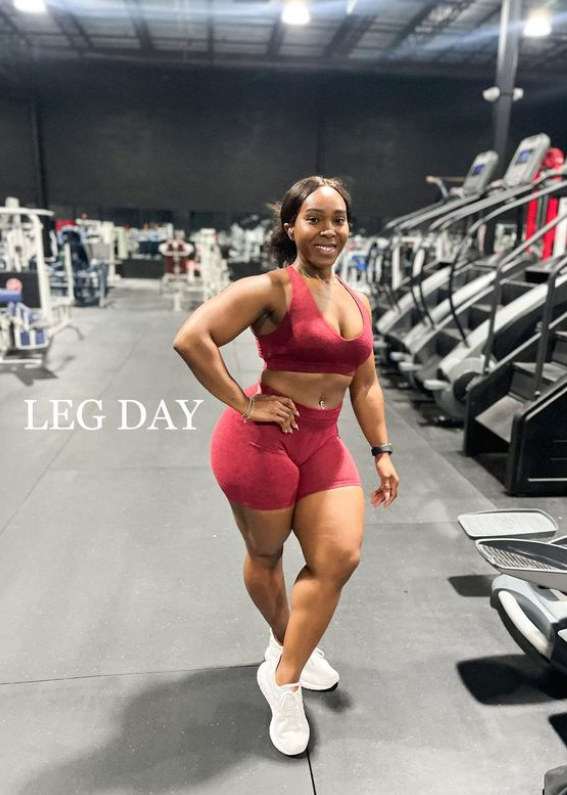
Today I am sharing a typical lower body routine that has helped me develop my legs and glutes tremendously. Check it out, save it and try it.. Let me know what you think!
One question I get asked A LOT!!!! … is about my strength in the gym.
Not trying to brag, but I can move some respectable numbers in all 4 of the major lifts. Yes I said 4!
Bench, Deadlift, Bench, and Military Press
I always answer with the same response. Programming, Consistency, and Recovery.
They usually follow -up with the question “what type of program are you on powerlifting… you dont look like a powerlifter?”
My response, “Powerbuilding”
Them – “Powerbuilding.. .what is that”
Powerbuilding put simply is a workout program that is an amalgamation of two training styles; powerlifting and bodybuilding. This hybrid training method might not be a completely new concept but it has been gaining steam over the past decade. Powerbuilding workout routines should lead to an increase in muscle size and overall strength.
In this post I will try to touch on all aspects of powerbuilding including:
What is powerbuilding?
Who is powerbuilding for?
12 week sample powerbuilding program
Benefits of powerbuilding
Powerbuilding Tips
Powerbuilding FAQs
Let’s dig into it….
WHAT IS POWERBUILDING?
The best of both worlds, powerbuilding combines the concepts of powerlifting and bodybuilding. If done properly, powerbuilding programs will pack on muscle mass and strength. Powerlifting and bodybuilding have different training protocols, diets and end targets. Historically, powerlifters train for maximizing strength or power in specific lifts while bodybuilders train to maximize hypertrophy (increase muscle size). Therefore, powerbuilders can be thought of as bodybuilders who want gain the power to match their muscles or powerlifters looking to improve their overall musculature aesthetics to match their strength.
WHAT IS POWERLIFTING?
Powerlifting is exactly what is sounds like, lifting weights to become more powerful. Powerlifting is a sport where athletes compete for their one rep max (1RM) in three main lifts.
Squat
Deadlift
Bench press
Most competitions allow competitors three attempts to hit their maximum lifted weight. The competitions have age and weight classes and the winner of each class is the one who has the highest powerlifting total.
Powerlifting training generally entails focusing on the big lifts working with weights ranging from 80-95% of their 1RM in a rep range of 1-5 and a set range from 3-6. The techniques powerlifters use center around recruiting as much musculature as possible so that the coordination between muscles produce more combined strength. They also try to reduce the range of motion that the barbell has to travel, such as an arched back when doing bench presses. Lastly, powerlifters focus on form and technique to avoid injuries while lifting such heavy weights.
WHAT IS BODYBUILDING?
Bodybuilding is also a sport or style of training where people look to “build” or add muscle to their body. Bodybuilding is the focus on the aesthetics of the body with less regard for actual strength or power that those muscles produce. The quintessential term in bodybuilding might very well be “muscle hypertrophy” or the enlargement of muscles. To increase muscle size the training must include:
Mechanical Tension
Metabolic Stress
More Volume
Mechanical tension refers to lifting a relatively heavy weight through a full range of motion for a certain amount of time. The time under tension (TUT) on muscles results in more mechanical tension which should help muscle grow.
Metabolic stress can be thought of as the process of the constant pumping of blood into active muscles. This “pump or burn” is produced by blood filling your muscles which results in micro tears of the muscle fibers and the accrual of metabolites which are believed to stimulate anabolic signaling aiding in muscle growth.
More volume is perhaps the most important factor in promoting hypertrophy. This is why you’ll find bodybuilders generally using weights of 75-80% of 1RM with a rep range of 8-12 and sets of 3-4, although this can vary.
Another major difference is that bodybuilders perform a wide variety of exercises unlike powerlifters who only stick to a handful. To sculpt their muscles properly bodybuilders will perform many isolation and single joint exercises at a variety of angles. Bodybuilders also employ training methods such as drop sets, compound sets, forced reps and training to failure.
12 WEEK PEAK POWERBUILDING WORKOUT PROGRAM
We created a sample powerbuilding program that is spread over 5 workouts throughout the week. You should have two days off per week to allow your body ample time to recover fromm the stress put on your body. As you will see the major lifts on the power days have the rep and sets as:
Weeks 1-4: 5 sets x 5 reps
Weeks 5-8: 6 sets x 4 reps
Weeks 9-12: 7 sets x 3 reps
Note: Feel free to switch up the accessory lifts if you don’t have access to certain equipment or if you want to target certain muscles more or less than we have. Just make sure to keep the major lifts in your powerbuilding program. As always, get a 5-10 minute dynamic warm up in before you begin your workout followed by a 5-10 minute cool down.
WEEKS 1 to 4: Monday = Upper Power Day
Exercise
Set
Rep
Rest
Flat Bench Press
5
5
Up to 2.5 mins
Bent-Over Row
5
5
Up to 2 min
Decline DB Bench Press
3
6-8
Up to 1.5 mins
Lat Pull Down
3
6-8
Up to 1.5 mins
Standing Military Press
5
5
Up to 2 mins
Skullcrushers
3
8-12
Up to 1 min
Alt. Hammer Curls
3
8-12
Up to 1 min
Pallof Press
3
8-12
Up to 1 min
WEEKS 1 to 4: Tuesdays = Lower Power Day
Exercise
Set
Rep
Rest
Squat
5
5
Up to 3 mins
Deadlift
5
5
Up to 3 mins
Front Squat
3
6
Up to 2.5 mins
Leg Press
3
8-12
Up to 1.5 mins
Split Squats
3
8-12
Up to 1.5 mins
Standing Calf Raise
3
8-12
Up to 1 min
Cable Crunches
3
8-12
Up to 1 min
WEDNESDAY- OFF
WEEKS 1 to 4: Thursdays = Shoulders, Chest, Triceps Hypertrophy
Exercise
Set
Rep
Rest
Incline DB Press
3
8-12
Up to 1.5 mins
Decline DB Press
5
8-10
Up to 1.5 mins
Pec Deck
3
8-12
Up to 1.5 mins
Seated Arnold Press
3
8-10
Up to 1.5 mins
DB Lateral Raise & Rear Delt Lateral Raise (Superset)
DB Lateral Raise & Rear Delt Lateral Raise (Superset)
2
8
Up to 2 min
Triceps Pressdown
3
10-15
Up to 1 min
Overhead Triceps Extensions
2
AMRAP
Up to 1 min
Hanging Leg Raises
3
15-20
Up to 1 min
WEEKS 9-12: Fridays = Lower Body Hypertrophy
Exercise
Set
Rep
Rest
Hack Squats
3
8-12
Up to 1.5 mins
Single Leg DB Stiff Legged Deadlift
3
10-12
Up to 1.5 mins
Leg Curl & Leg Extension (Superset)
3
12-15
Up to 2.5 mins
Barbell Good Morning (weighted)
2
10
Up to 1 min
Leg Press Calf Raises(Toes forward, Inward outward)
3
30 total
Up to 1 min
Cable Woodchoppers
4
12-15
Up to 1 min
WEEKS 9-12: Saturday = Back, Biceps Hypertrophy
Exercise
Set
Rep
Rest
T Bar Row
3
8-12
Up to 1.5 mins
Seated Cable Row
3
8-10
Up to 1.5 mins
Close-Grip Lat Pulldown
4
8-12
Up to 1.5 mins
DB Trap Raises & Cable Face Pulls (Superset)
3
8-10
Up to 2 mins
Preacher Curls & Incline DB Curls (Superset)
2
8
Up to 1 min
Weighted Plank
3
1.5 minutes
Up to 1 min
SUNDAY – OFF
BENEFITS OF POWERBUILDING
Powerbuilding programs offer numerous benefits thus their popularity continues to grow. These days you might see powerbuilding being talked about on Reddit forums or other social media platforms with before and after transformations. The core benefits of powerbuilding is to improve strength and body composition. Let’s take a look at some other benefits powerbuilding has to offer.
Strength Matching Muscles: As touched on before powerbuilding is a well-rounded training protocol because it should lead to both muscle size gains as well as strength gains. All too often the jacked people you see walking around have the muscles but the strength doesn’t match the size.
Variety: Powerbuilding workouts aren’t boring routines because you have days focusing on different lifts, both compound and isolation movements with varying set and rep ranges.
Efficiency: One of the major selling points of Powerbuilding is that you’re combining two workout modalities into one program. Instead of doing a bulking program for a few months then moving to a cutting program, Powerbuilding can allow you to put on size and strength without the extra fat (*if following a good nutrition plan).
Split Training: Many powerbuilding programs are built around splits where you will be training upper and lower body muscles twice a week. With split training you can reach a good volume for all major muscles without over-training.
Personal Preferences: By getting a taste of both the powerlifting style of training and the bodybuilding style many people report that they are able to identify more with one of these methods. This comes down to personal preference of course but powerbuilding gives you a chance to dip your toes into both worlds at the same time.
Freedom to Choose: The low reps and sets for most compound movements in powerbuilding routines are due to the load and the intensity. This gives you the chance to add more volume for isolation or accessory movements as you see fit. There is a feeling of more freedom because of this whereas other workout programs you have to stay within defined parameters of exercises, sets and reps.
TIPS FOR POWERBUILDING TO MAXIMIZE STRENGTH AND MUSCLE GAINS
In order to get the most of any powerbuilding program you should follow some rough guidelines to make sure all your time and effort isn’t being wasted
Make sure you know the fundamentals of the big compound lifts so you can perform them with proper form and technique. On your power days you should be pushing yourself to the absolute limit.
You can get creative with your exercises by switching up the variations time to time. However, the power days must be comprised of some variation of bench press, squat or deadlifts.
Eating enough clean calories is essential to gain as much strength and muscle mass as possible during your powerbuilding program. You must get at least 1 gram of protein per pound of bodyweight. You might also want to consider carb loading on your power days to help fuel your more taxing workouts.
Track your progression. You should be adding weight to your lifts on power days as the weeks go on. Shoot for an added five pounds on upper body lifts per week and 10 pounds on lower body lifts. If you can’t add weight to your lifts then try to increase total training volume or time under tension.
Consider mixing in special sets on hypertrophy days including supersets, drop sets, forced reps, partial reps or reps to failure.
If possible, try to train with a partner for your first powerbuilding program so you can push each other to the max in a safe way. This also helps to track progress, hold each other accountable and promote healthy competition.
REPS AND SETS FOR POWERBUILDING
Briefly touched on above, let’s have a look at the end goal then work backwards.
Reps and Sets for Muscle Gain: Usually in the range of 8-12 rep range with 14-20 sets per week per major muscle group. In this area we are generally speaking about accessory lifts so you can mix things up a bit to cater to your personal needs or to address imbalances/weak areas.
Reps and Sets for Endurance: Rep and set ranges for muscle endurance can have a large range anywhere for 10-20 reps or even to failure (AMRAP). In powerbuidling routines, muscle endurance exercises will be limited to accessory lifts. Usually sets can range from 1-4.
Reps and Set or Strength Gain: Weights between 80-95% of your 1RM for 1-5 reps with sets ranging from 3-8.
Warmup for Powerbuilding Workout
Preceding all workouts, warmups are a must. It’s an integral part of a workout session to get the blood flowing and the joints loosened up. This holds particularly true for powerbuilding programs where you will be lifting some heavy weights.
It is always recommended to do a dynamic warmup consisting of full body dynamic stretching exercises while specifically targeting the muscles you will be working the hardest. You should also do some light reps of the targeted exercise, slowly progressing up in weight.
Got Salt?
Sodium helps give your body a performance edge for any and all workout sessions, helping you get stronger for next time.
I can get into specifics in another post but trust me… Add salt to your pre-workout meal and/or drink. You will NOT be sorry!
POWERBUILDING FAQS
How to create a powerbuilding program?
In order to create a powerbuilding program you should first understand that you must include the big lifts in your program including:
Squats
Deadlifts
Bench Press
Overhead Press*
You should also include a variety of accessory lifts throughout the training program. There isn’t a set format to create a powerbuilding program apart from the need for the big compound lifts at low rep range and accessory or other compound lifts at mid rep range.
You can split up the program based on upper/lower body or push/pull/legs or even by the main lifts i.e. deadlift, squat, bench press, overhead press day etc. We lean towards powerbuilding programs that hit all the major muscle groups twice weekly.
Who is Powerbuilding Good for?
Powerbuilding can be good for just about everyone who wants to gain strength and muscle. The following groups of people could benefit from a powerbuilding training program.
Powerlifters and Bodybuilders: Powerlifters can use powerbuilding after their competitions in the offseason to retain strength while also improving body composition. Bodybuilders can use powerbuilding workouts a few months before their bodybuilding competition then transition into more of a cutting sculpting routine to get ready for their show.
Athletes: Powerbuilding programs can be great for athletes of all sports during the offseason to gain lean mass and strength. Then when the season is approaching, they can transition to more sport specific training methods.
Everyone else: Powerbuilding provides a well-balanced training regimen for people who want to gain muscle and strength while improving their overall fitness foundation. Powerbuilding programs are the perfect choice for those who often get bored or lose motivation because they’re always performing workouts based on 3 sets of 10 reps for every exercise.
Note: A word of caution to beginners, is that in order to complete a powerbuilding routine properly you must have good form and technique of the bigger compound lifts including squats, deadlifts, bench press and overhead press.
So there it is… powerbuilding will make you as strong as you look. A real life G.I Joe action figure. Give the sample program a try for a couple of weeks to see if you can handle that type of training.
Word to the wise… Go just as hard at maintaining your nutrition as you do this training, it will pay in dividends!
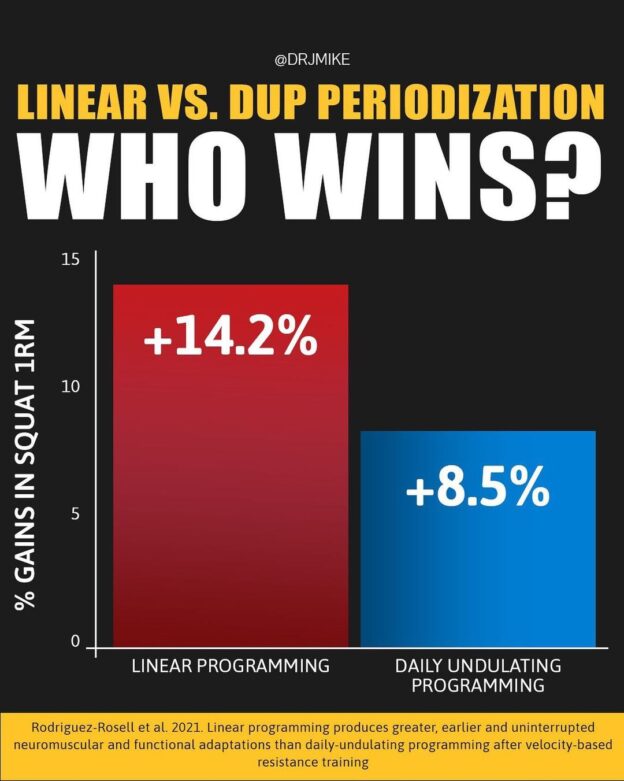
A lot of people out there love Periodization! Of course linear and DUP (daily undulating) have been around for decades and in the early 2000s DUP/non-linear was thought to be more superior because you could change set, and reps schemes & incorporate within week variations & and add within week recovery. Undulating periodization (also referred to as Non-Linear Periodization) involves varying the stimulus on a daily (DUP) or weekly (WUP) basis. . STUDY SHOWS: This newer study compared two different 8 week Periodization program strategies with trained males examining changes in 1RM squat, velocity/load profiles and muscular endurance. Both groups assigned loads via velocity base training at 50 to 80% of 1RM throughout the study and stopped each set at 15% velocity loss and were both matched both average in peak intensity. . The results showed significant differences in favor of the LINEAR programming group with 1RM squat. velocity at given loads and sub-max muscular endurance but no significant difference in countermovement jump between groups. . HERE’s THE REALITY: It’s pretty difficult to detect massive differences between these two groups when doing similar training programs. In Other words it’s a limited amount of time. Second, most people fail to realize is that ALL types of Periodization work. They are ALL linear over time and should be. Unfortunately the vast majority of research is comparing linear, DUP/nonlinear. There’s little Scientific research (peer-review scientific journals) on the other different and OTHER types (comparatively) such as CONJUGATE or Block style (aside from anecdotal, traditional textbook and lay articles) and that have been modified for certain sports. I am personally more of a Conjugate style fan because you can maximize & utilize a combination of all other Periodization methods. . Take-home message: The truth is that not a single type is the best and they all work for different types of people and have benefits. . .
This is an old seminar held by Stan Efferding on a nutrition plan called the Vertical Diet. I say old but the health/nutrition information he shares is very much relevant to your present health and wellness, as well as the future of your health and wellness. He covers everything from sleep habits and water intake to nutrition requirements and deficiencies you may not realize you have. I have personally followed this approach to nutrition and it has helped me progress in my strength training tenfold. Even if you do not decide to try the diet out, take as many nuggets of information as you can and implement them into your daily regimen! Take the time to watch this… you will NOT be sorry!!!!
If you wish to get a more detailed explanation of the information shared in this video, as well as meal prep plans and cookbooks, check out Stan Efferding’s Website.
Sleep is a fascinating and complex topic that has so much individual variability yet has tremendous impact on life, stress, and physiological and psychological outcomes. For most of us, we approach and discuss sleep as if it’s only a single layer of something.
So, what is sleep really? Let’s discuss and dive deeper into sleep, science, and swoleness.
A few fun facts about sleep:
Nathaniel Kleitman (born in 1895 in Bessarabia—now Moldova) is known as the “father of modern sleep” and earned a doctorate from the University of Chicago.
Kleitman’s daughter (Ester) and Aserinsky in 1953 introduced the world to “rapid eye movement,” or REM sleep, making sleep a truly scientific field.
Prior to the invention of the incandescent light bulb, we reportedly got about twelve hours of nightly sleep on average.
Before alarm clocks were invented, there were “knocker-ups” who went tapping on client’s windows with long sticks until they were awake.
Dogs and cats sleep over 70 percent of their lives.
Human beings are the only mammals that willingly delay sleep.
SLEEP 101
Sleep can be defined as a reversible behavioral state in which an individual is perceptually disengaged from and unresponsive to the environment (11). It is within the Suprachiasmatic Nucleus (SCN) of the hypothalamus (the brain site of our circadian clock) that the circadian rhythm, including the sleep-wakefulness cycle, is regulated.
Sleep has two primary and complex physiological and behavioral states. We know these as rapid eye movement (REM) and non-rapid eye movement (NREM) sleep. NREM sleep is divided into four stages (five if you count REM) that are linked with a progressive increase in the depth of sleep (11).
Here’s another fact—the release of certain neurotransmitters (norepinephrine, serotonin, and histamine) is completely shut down during REM, which produces muscle atonia: a paralysis type of sensation during sleep), bursts of REM, and dreaming. Therefore, REM sleep is considered to be a condition with an activated brain in a paralyzed body. Very cool, isn’t it?
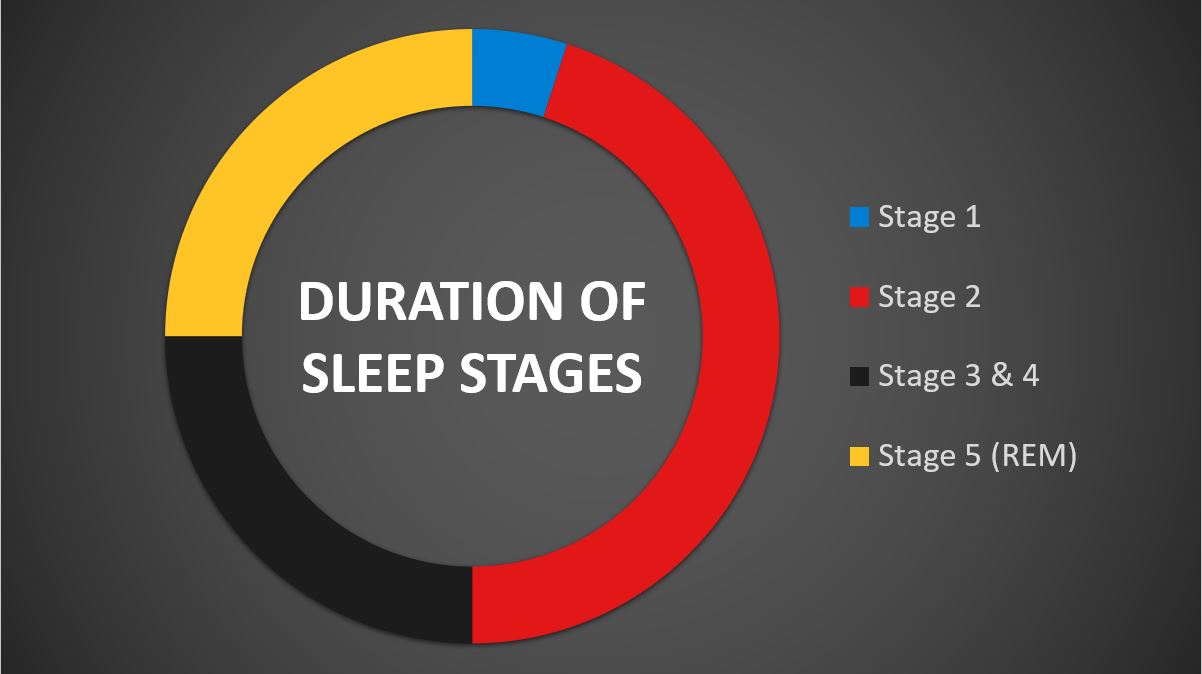
During the night, sleep patterns repeat intermittently, moving sequentially through four stages of non-REM sleep into REM sleep, which constitutes about 25 percent of total sleep and initially lasts approximately ten minutes and extends with each repeating cycle, lasting up to an hour in the last phase. During REM sleep, the eyes move back and forth rapidly and the body’s muscular contraction activity is minimal.
There are several stages of sleep, which has led to a whole taxonomy of sleep. It’s important to mention that beta waves are the earliest stages of sleep because you’re still awake and alert while you lay in bed watching episodes of Breaking Bad.
STAGE 1
In Stage 1,as we prepare to drift off, the brain emits alpha and theta waves. This is actually where “daydreaming” comes in, except we fall asleep. These alpha and theta waves are slower and more regular compared to the waves emitted by the part of our brain that’s awake. Individuals who practice meditation typically “hang out” in stage 1. In this stage, it’s very common to experience strange and extremely vivid sensations. One of the best examples is the feeling of falling or somebody calling your name followed by sudden muscle contractions. These are known as hypnagogic hallucinations, a collective term for sights, sounds, and other sensations experienced during the transition between wakefulness and sleep (31). Briefly following, we enter theta, which is still a relatively light period between being awake and asleep and lasts a very short period of five to ten minutes.
STAGE 2
Stage 2 lasts approximately twenty minutes, as our brain begins to generate very short periods of rapid, rhythmic brain wave activity known as sleep spindles (3). Sleep spindles are a hallmark of non-rapid eye movement (NREM). At this point, body temperature and heart rate are reduced.
STAGE 3
Stage 3 is where things start to pick up as delta waves start to emerge, which are very slow and have much larger amplitudes. Stage 3 is often referred to as delta sleep or “slow wave sleep.” Stage 3 and 4 are typically combined stages. In stage 3, it is often difficult to awaken a person, and if awakened, the person will feel disoriented for several minutes. Blood flow is directed away from the brain to other parts of the body for restorative purposes. A person can be woken up in stage 1 by a slight noise (yes, the “light sleepers”). By stage 3, he/she might sleep through a very loud bang (perhaps somebody eagerly trying to steal your protein powder). In any case, it isn’t good. Considering that sleep is vital to recovery, it is within this specific sleep stage (slow wave sleep) that growth hormone is released within humans. This has been well documented (18, 27, 33, 41, 43, 46) and suggests that optimum conditions for anabolism (aka swoleness) prevail during sleep and that the duration of slow wave sleep are proportional to preceding wakefulness (39). In addition, if/when sleep deprivation is apparent, slow wave sleep is decreased, facilitating an increase in daytime sleepiness and a reduction in performance (14).
STAGE 4
Delta sleep lasts about 25 to 30 minutes. Sleepwalking and/or bed wetting occur in this stage of sleep.
STAGE 5
The final stage of sleep is where we dream. It is actual REM sleep, lasting about 90 to 120 minutes of a night’s sleep, and is accompanied by increased respiration rate and brain activity. Herein lies a huge problem for so many individuals. If you repeatedly wake up before you get into REM sleep, you’ll begin to suffer detrimental effects to memory, motor skills, and general performance.
Dreaming occurs because of increased brain activity, but voluntary muscles become paralyzed. Although they can vary substantially, the length of a dream may last for a few seconds or as long as twenty to thirty minutes (19). Interestingly, the average person has three to five dreams per night, but some may have up to seven dreams in one night (19). These dreams can be combinations of emotion, visuals, sexual themes, black and white versus color (38), nightmares, déjà vu, or any other phenomenona. The paralyzing effect during dreams is actually a built-in protective mechanism to keep you from hurting yourself. Have you ever felt like you can’t escape during a dream? Well, it turns out you can’t. You can breathe and your basic physiology is functioning, but you really can’t move.
SLEEP, RECOVERY, AND TRAINING
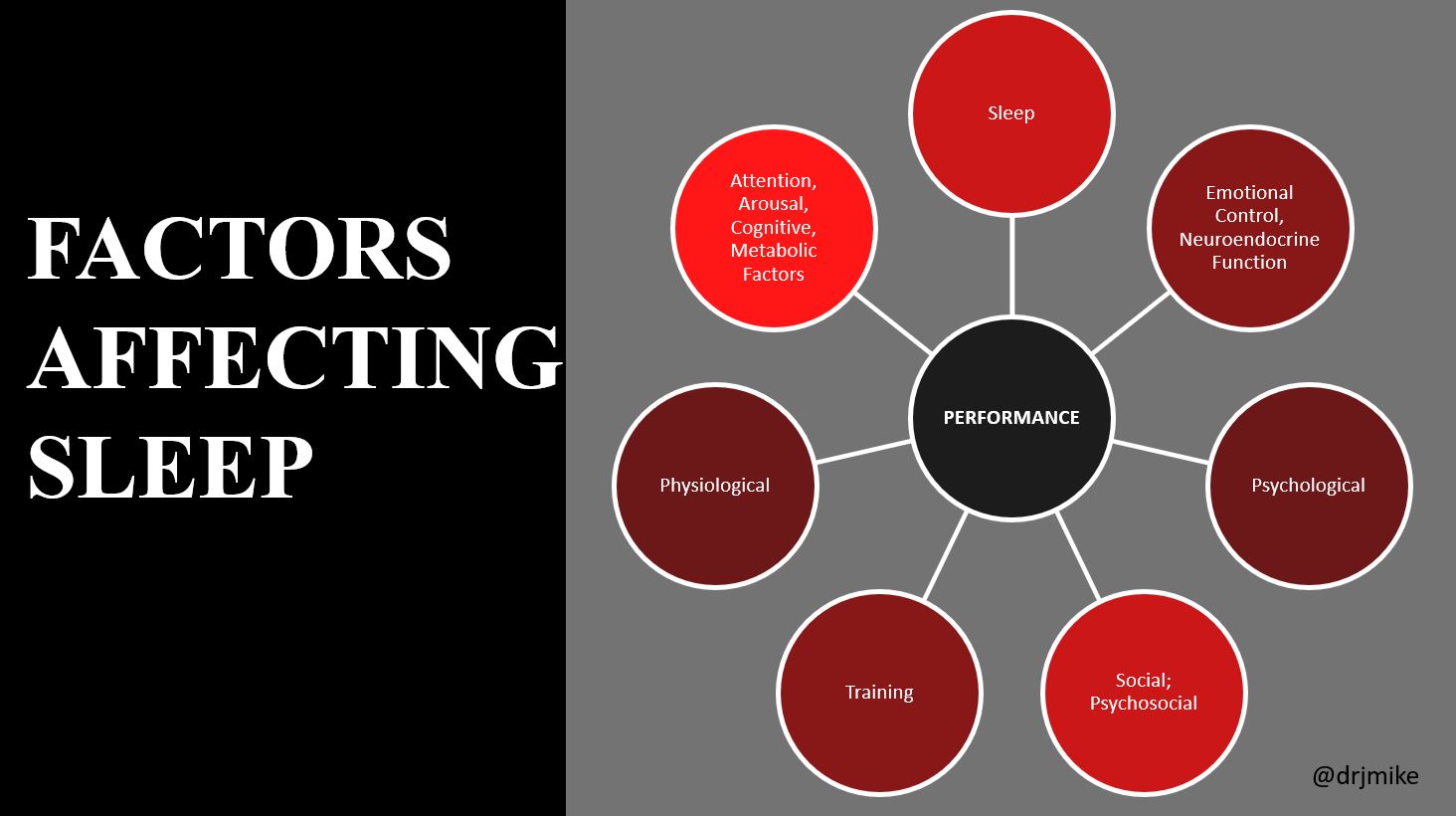
Most of hard training athletes need about seven to eight and a half hours of sleep each day (2), of which 80–90 percent should be during the night. Sleep also serves as a restorative process for energy resources, tissue recovery, thermoregulation, and cognitive function (1), and deep sleep is vital for maximizing physiological growth and repair (20). Sleep is recognized as an essential component of recovery from performance training and anecdotally reported to be the single most efficacious recovery strategy. Adequate sleep is also vital for athletes who are injured, traveling, in heavy periods of training or competition phases (36, 37). Poor sleep quality, predominantly during high training loads and competition periods, has been identified as a marker of under-recovery and a contributing factor of overreaching and overtraining (13).
We all have experienced sleep disturbances the night prior to a competition, which is all too common for hard training athletes. Recent research investigated the precompetitive sleep behavior of 103 athletes and how it relates to precompetitive mood and subsequent performance (25). Results revealed that on the night before competition, athletes slept well under the recommended target of eight hours of sleep for healthy adults, with almost 70 percent of athletes experiencing poorer sleep than usual. It was found that anxiety, noise, the need to use the bathroom, and early event times were among the most commonly reported causes of disrupted sleep in athletes on the night prior to competition. Of course, disrupted sleep on the night prior to competition can negatively relate to an athlete’s precompetitive mood states. Although not conveyed in the literature, anecdotal evidence also suggests that athletes who compete at night also have complications falling asleep post-competition.
It’s been shown that hard training athletes have sleep disturbances in part related to higher nighttime epinephrine (adrenaline) and norepinephrine concentrations (30). Similarly, a doubling of training load has been reported to provoke insomnia and depression as part of the overtraining syndrome (45).
SLEEP DEPRIVATION
Sleep deprivation, sleep loss—it’s all the same. When we don’t sleep, the circadian rhythm gets off-track, hormones get crazy, and we can’t recover as effectively. Loss of sleep certainly impacts a wide variety of physiological outcomes such as altered glucose control, abnormal cortisol, and of course, overall hormonal imbalances such as lower testosterone in men (no swoleness), which impedes training recovery due to decreased protein synthesis.
There are a whole host of consequences of sleep deprivation beyond just reductions in exercise performance, both in the general populations and in athletes.
Let’s examine a variety of consequences of sleep deprivation. This, of course, isn’t an exhaustive list but highlights major components involved in sleep loss.
STRENGTH AND POWER
Blumert and colleagues (4) examined the effects of 24 hours of sleep deprivation in nine US college-level weightlifters in a randomized counterbalanced design. There weren’t any differences in any of the performance tasks (snatch, clean and jerk, front squat, and total volume load and training intensity) following 24 hours of sleep deprivation when compared with no sleep deprivation (4). However, mood state, as assessed by the profile of mood states (a questionnaire used for overtraining), was significantly altered with confusion, vigor, fatigue, and total mood disturbance all negatively impacted by sleep deprivation. There have also been performance declines in isokinetic knee extension and flexion torque after thirty hours of sleep deprivation in trained men (9). An early study also found a significant effect of sleep loss on maximal bench press, leg press, and deadlifts but not maximal bicep curls. Submaximal performance was significantly negatively affected on all four tasks and to a greater extent compared to the maximal efforts (34).
Bottom line on strength and power: In all likelihood, sleep loss will affect your gains, but individual variability does exist as well as differences in training responses and programs.
HORMONES
Testosterone is also affected by your total amount of sleep. This makes sense, as our bodies make much more testosterone when we’re asleep than when we’re awake. A lack of sleep can most certainly create a decrease in testosterone. A recent investigation found that men who slept less than five hours a night for one week in a laboratory had significantly lower levels of testosterone (by over 10 percent) than when they had a full night’s sleep (26) whereas an early report showed a 30.4 percent decrease (12). Interestingly, these reductions all happened within 24 hours of sleep deprivation (13, 17).
In a study by Leproult and colleagues (26), the participants spent three nights in the laboratory sleeping for up to ten hours and then eight consecutive nights sleeping less than five hours. Their blood was sampled every 15 to thirty minutes for 24 hours during the last day of the ten-hour sleep phase and the last day of the five-hour sleep phase. The results showed that sleep loss on testosterone levels were apparent after just one week of decreased sleep, and five hours of sleep decreased their testosterone levels by ten to fifteen percent. It was also found the men had the lowest testosterone levels in the afternoons on their sleep restricted days, between 2:00 p.m. and 10:00 p.m., and also self-reported their mood and vigor levels throughout the study. In addition, the young men reported a decline in their sense of wellbeing as their blood testosterone levels reduced. Their mood and vigor actually decreased more per day as the sleep restriction part of the study continued.
Growth hormones are secreted in a pulsatile fashion from the anterior pituitary shortly after sleep. As previously mentioned, growth hormone is well documented for promoting anabolic effects during sleep. However, considerable sleep deprivation for multiple nights can undoubtedly crush growth hormone. But some evidence indicates that neither an irregular sleep cycle [i.e. night shift workers (7)] nor only sleeping for four hours a night (41) will adversely affect whole-day exposure to growth hormone. Although sleep loss can disturb changes in the growth hormone cycle, overall exposure is still present, as the body appears to compensate during normal waking hours.
Cortisol is a steroid hormone that is produced in the adrenal cortex located on top of each kidney. Cortisol is released in a highly irregular manner with peak secretion in the early morning, which then tapers out in the late afternoon and evening. Fasting, food intake, exercising, awakening, and psychosocial stressors cause the body to release cortisol, but it has a slightly different response when sleep loss is apparent. The majority of the recent science on cortisol and sleep deprivation shows either no change or slight increases. Some studies even normalize this difference and increase overall exposure to cortisol over a full day.
Similar to cortisol, insulin doesn’t appear to be highly disastrous to sleep loss (unless you eat a large meat-lovers pizza with everything drizzled in olive oil right before your four hours of sleep). However, some evidence does show a decrease in insulin sensitivity in the fat cells and liver (8, 15). Some evidence reports that this decrease in insulin sensitivity can be attributed to getting half your normal amount of sleep for less than a week (10, 35).
Bottom line with sleep and hormones: Try not to screw them up! For those of you who are ramping up training efforts for competition, you may want to get more total hours on the pillow.
METABOLISM
Studies support the notion that chronic partial sleep loss can increase the risk of obesity and diabetes (24). This includes changes in glucose regulation via insulin resistance, deregulation of neuroendocrine control of appetite, and/or increased energy intake (1, 40). Sleep deprivation has also been shown to have decreases in leptin and increases in ghrelin [appetite regulating hormones (47)]. Sleep loss has also been shown to increase hunger and appetite, particularly in relation to carbohydrate-rich foods (42). Metabolic rate itself is a bit mixed. One study found that getting three fewer hours of sleep per day for two weeks resulted in a 7.6 percent reduction in metabolic rate (29) whereas other reports showed no decrease (6, 32). To add to the mix, a recent study in adolescent boys reported that less sleep actually resulted in additional calories expended (23), meaning the subjects expended more (being awake longer) and consumed less (decreased appetite).
Bottom line with metabolism: Altered glucose metabolism and neuroendocrine function can create concern regarding carbohydrate metabolism, appetite, food intake, and protein synthesis.
COGNITION
There isn’t any doubt that one of the most studied areas of the science of sleep deprivation is the effects on alertness and performance (44). It is estimated that the consequences cost billions of dollars worldwide per year due to accidents, direct healthcare costs, and reduced efficiency and productivity (44). Sleep loss surely decreases the effects of learning and memory and is critical for learning and preparing the brain for next-day memory development (48). Interestingly, a recent study found that 24 hours of sleep deprivation significantly heightened the levels of stress hormones and lowered attention and working memory. This means that the acute loss in sleep rendered the subjects more susceptible to making errors despite the fact that they were all good sleepers, had no history of medical or neuropsychiatric diseases, weren’t taking any kind of medication, and were in their early to mid 20s (22). Although a lack of overall evidence exists on the effects of sleep deprivation risk of acute injury (i.e. decreased focus, poor execution, or lowered reaction times), it’s likely that sleep deprivation may increase susceptibility to injury.
Bottom line on cognition: Sleep loss can negatively impact learning, memory and likely increase the risk of injury and work related errors.
IMMUNE RESPONSE AND INFLAMMATION
Ever have the feeling of sickness and headaches due to loss of sleep? Say I! Well, a recent review examined the link between sleep and immune response and concluded that sleep improves immune responses and that most immune cells have their peak pro-inflammatory activity at night (5). This means that sleep loss will certainly impair immune responses, increasing risk of illness. A recent study examined immune function response in subjects who naturally slept for less than seven hours, seven to nine hours, or longer than nine hours (16). Short sleep duration was associated with 49 percent higher T-cell function in response to an antigen and 30 percent lower natural killer cell activity when compared with normal sleep. Simply put, sleep loss lowers immune function.
Inflammatory markers are also present with sleep deprivation. Interleukins (naturally occurring proteins produced by the body that have infection-fighting immune responses), tumor necrosis factor-α (important mediator of the body’s response to infection), and C-reactive protein (a substance produced by the liver that increases in the presence of inflammation in the body) are all influenced by a lack of sleep (28) as well as gender differences (21). Those people with insomnia and sleep apnea have elevated inflammatory markers (28), which absolutely affect insulin sensitivity, metabolism, blood pressure, and sleep.
Bottom line on immune response and inflammation: Loss of sleep does decrease immune function and can adversely affect performance whereas additional and consistent sleep surely helps reverse the process.
A true king of Calisthenics, Broly Gainz sets the workout challenge to a full body exercise of Animal Pushups. 100 reps in under 5 minutes. Can you do it?!?
Try it out and Post your pictures and video clips in the community feed! Train Hard!!!
In the American culture, 1 out of 3 is either obese, diabetic, or has some form of dietary problem.
The Asian culture rarely has issue with obesity, diabetes, or metabolic dysfunction… ever wonder why?!
While i can not say definitively why that is… an educated guess would say that it has a lot to do with their eating habits/practices. Kaiseki – a style of traditional Japanese cuisine in which a series of very small, intricate dishes are prepared.
Think Japanese hibachi restaurant.
Unfortunately we have Americanized the experience, but you get the point!
In Kaiseki, the main goal is to eat until satisfied; not until full. This helps to minimize overeating and taking in excess calories, which aids in weight management and even fat loss. The sequence is as follows
Soup or broth
vegetables and protein
starchy carbs
Also, these small intricate dishes are consumed in a sequence that helps improve digestion, as well as helps to maintain a lower blood-glucose level after the meal is over. Both of these are two very important keys to fat loss.
While the typical meal today is not served with this approach in mind there is one key take away that can be used in practice to aid with keeping the pounds off and keeping the waistline small.
In every meal……. SEQUENCE YOUR MACROS and EAT CARBS LAST
Meal Sequencing
Meal sequencing refers to the order in which the macronutrients in a meal are eaten. Macronutrients are protein, fats and carbohydrates, as opposed to micro-nutrients which are vitamins and mineral.
It is suggested that it may be beneficial to eat protein and/or fat before eating carbohydrates. This promotes the secretion of glucagon-like peptide-1 (GLP-1) from the gut as well as improving secretions of insulin and glucagon and delaying gastric emptying. GLP-1 suppresses the appetite by acting on the hypothalamus via the vagus nerve (1). The delayed gastric emptying means you feel full for longer
That said, eating foods rich in saturated fat from animal products, before carbohydrate increases secretions of GLP-1 as well as another chemical that promotes energy storage in fat tissue and may lead to weight gain in the long term.
This is where “eating clean” comes into play. If you are able to, choose leaner cuts of meat (>93%). If not, trim the fat whenever possible.
DON’T FORGET THE FIBER
Guys! Vegetables are high in fiber. Yes, vegetables do contains some trace amount so of carbohydrates, but their primary purpose in a meal is fiber. Stick to the green leafy veggies as much as possible. Also, its not a bad idea to add a little color to the plate by adding in peppers and onions.
A useful scientific fact to know is that dietary fiber intake before carbohydrate intake significantly reduces postprandial glucose levels and may help with weight loss even though it doesn’t raise GLP-1.
FIBER, PROTEIN AND FAT TOGETHER
To maximize the benefits to blood sugar and to avoid weight gain try eating a combination of fiber with protein and/or fat before eating carbohydrates (1). This is a useful and practical strategy for anyone with blood sugar problems, type 2 diabetes or a tendency to gain weight.
FINALLY THE CARBS
I will make this simple. Stick to starchy carbs such as rice (brown or white) and potatoes (red, white or sweet). Eat enough to meet your satisfaction but there is no reason to “clean the plate” so to speak. The only time i would recommend cleaning the plate is right after a good workout session! As long as you are within your caloric intake for the meal/day of course.
THE TAKEAWAY…
In today’s society where burgers and fries are the popular meal type, it is more difficult to maintain this type of practice when eating. I said difficult NOT impossible. While perfection is not necessary, consistency is. Meal prep as much as possible and stick to eating those carb sources last in those meals. This simple trick will make a huge difference. When it comes to eating out socially, those meals will be more rewarding. Let us know if this helps you! Eat Smart! Train Hard!
REFERENCES
1. Nutrients. 2020 Aug 19;12(9):E2502. A Review of Recent Findings on Meal Sequence: An Attractive Dietary Approach to Prevention and Management of Type 2 Diabetes. Kubota S et al.
IFBB Pro,Damien Patrick shares hi workout for developing some dense muscle in the traps and back. Save this for your next back workout and give it a try!
SEATED CABLE ROW 3X12,12,10 1 DROP SET: 10 / FAILURE
If you want to get more programs like this that have been designed by Damien, head to www.damienpatrick.com . You can also download his app for all of the program info and content!
1 set of 100 reps on the Leg Press Daily to start your workout, or as a finisher on leg days
In order to grow your legs, you have to travel to some of the darkest corners of your psyche. The typical go to for quad growth is heavy intense sessions that scorch every slow twitch and fast twitch fiber in your lower body.
Those sessions are almost always guaranteed to garner some serious growth, but extremely hard to maintain long term. This is where the phrase “work smarter; not harder” comes in.
TRY THIS
Mike Stein; Stein fitness
The 100 rep Leg Press
Start every workout with 100 reps on the leg press. That’s every workout, not just leg day!
Use a very light weight. Try to do all 100 reps unbroken, meaning without having to rack the sled and rest. You can however pause briefly at the top with locked legs for a few breaths, but don’t rack the sled.
Do fairly slow, rhythmic reps. Don’t go slow on purpose, but don’t go super fast either.
If you are unable to complete straight reps
Use the same light weight.
Complete 20 reps; rest 10 seconds; complete another 20 reps. Repeat until you complete 100 total reps.
After 1 week, decrease the rest time to 5 seconds.
To make it interesting
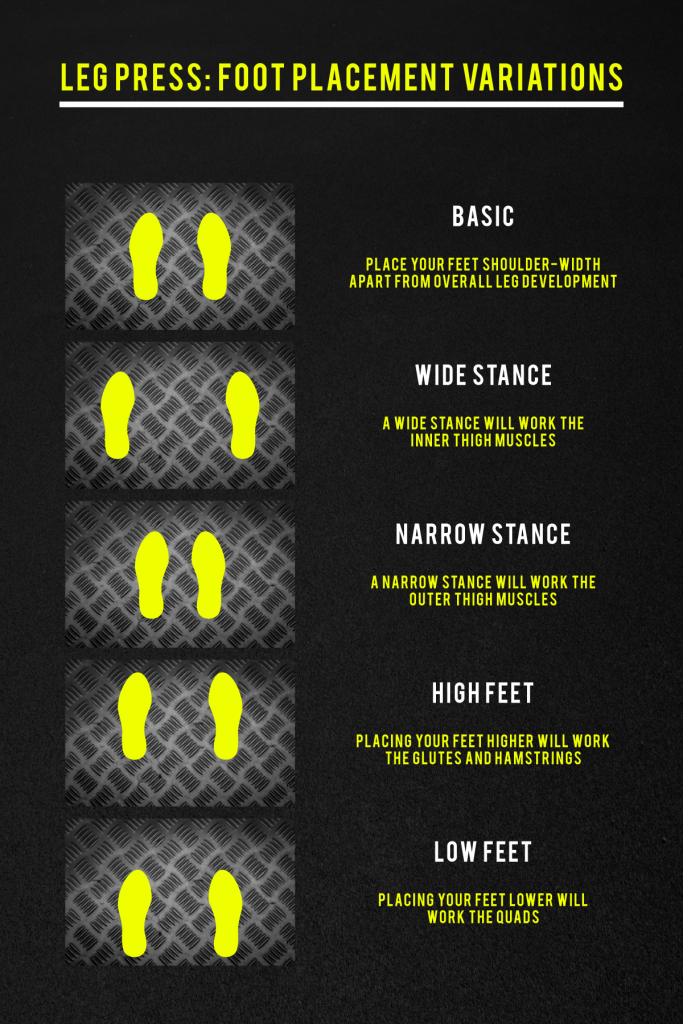
Complete a set of 20 reps at each foot placement on the chart below
I guarantee the burn/pump you get will be like no other!!
“The super-high rep approach for the lower body can work and improve muscle growth. It shines the most when used in conjunction with heavier work. In that case, it will augment the growth response. I don’t see it as a stand-alone method, however.
For performance improvement, it can be useful for athletes involved in sports where you need strength-endurance in the legs, including CrossFit. Once again, mostly as an auxiliary method.
It can also develop the tendons which can increase your future strength gains and protect you against injuries.
It’s not a fun method. A lot of people will look for reasons not to do it. They’ll argue that it’s a stupid method so they’ll feel less bad about not giving it a go. But if used right, it could be the add-on that you’ve been looking for to give your training and gains a spark.” (Thibaudeau, 2020)
Girls and Guys….. Give this a try and let us know what you think!
Train Hard!
References
Thibaudeau, C. 100 Rep Leg Press. T-Nation Feb. 20
This unique variation of the Concentration Curl perfects form by eliminating the ability to cheat the reps
This curl variation comes straight from IFBB Pro. Branden Ray. He is notorious for finding different variations or angles to target muscle groups. Anything he has to share is solid gold!
We’ve all seen classic footage of Arnold performing his bent over concentration curls peaking the biceps. I like it however there’s no stability and the arm swings easily.
Then there’s the concentration curl performed while sitting on a bench with the elbow pressed into the bone working side leg. You have the stability from the leg, but you often see the curl get cheated when the elbows and hand don’t stay in line with each other.
Branden Ray explains how how you can combine the best part of both versions of concentration curls to perform the exercise more strictly.
Give this exercise a try in your next arm session! Post a clip in the Community Activity Feed and share your thoughts! Train Hard!!!
Nutrition Tactics for Ectomorphs wanting to add quality size!
Last week, A young guy in the gym stopped me to ask about gaining weight… (i hate when people interrupt my workout!) The conversation (starting with my response) went something like this…
On Tuesday, the guy came back to me the list he kept in his phone. After one glance, I told him that I knew the answer to my question before he even went through this process.
Bottom line, he is not eating enough!
But to add insult to injury, he was eating a lot of garbage calories.
I told him (purposely without getting into specifics) he needs to decide if he wants to gain weight or add muscle.
He immediately yelled out “Muscle!”
I then told him he will need to figure out what his maintenance level of calories and eat that for a little while. That would start his journey to gaining the weight he wants. Then determine when its good to increase that to keep the gainz going!
Of course he proceeded to asking follow up questions but I told him, i had to train and i didn’t have the time to have that conversation.
(Shameless plug) I told him that I would answer his question in my blog, gymjunkiez.com, this week and I thanked him for the topic idea.
So this is for you my guy, and all of the men and women that have the same question!
Slim build, tall, narrow shoulders, eat all day but doesn’t gain weight (muscle mass), loses weight easily (muscle mass and/or bodyfat)…
This describes an ectomorph body type.
An ectomorph, often referred to as a “hard gainer”, usually has a fast metabolism and needs more calories to maintain a given weight. This elevated metabolism/increased need for calories could be due to a number of factors
high resting metabolic rate (burning more calories at rest)
elevated hormone levels (very active thyroid)
high insulin sensitivity ( body uses carbs efficiently)
increased fat oxidation capacity (easier time burning fat)
Because ectomorphs tend to burn through carbohydrates very quickly, they will need to follow a high carbohydrate diet when trying to gain muscle.
There it is, Problem Solved right!? No.
The number one reason causing “hard gainers” not to gain weight is under eating. In most cases increasing your caloric intake will lead to weight gain.
Problem solved again right!? No.
All weight is not good weight. For ectomorphs that want to gain quality size (muscle), increasing calories can still be classified as undereating.
The problem is what most define as “eating a lot of calories” doesn’t mean they are eating a lot of in terms of total calories. It means they eat a lot of food in one meal; possibly two. Then they are in a fasted state for the remainder of the day. This results in an increased caloric intake with a lot of garbage calories.
Hard gainers and garbage calories tend to be their own worst enemy. Because of their ability to metabolize calories efficiently along with eating a lot of junk calories, they do not gain the weight they are looking for. In many cases they stay the same weight, but begin to look worse; physique wise; over time. This is because at the current calorie surplus, their bodies tend to maintain or lose muscle size and hold the rest of their weight in bodyfat.
Think skinny fat!
Hard-gainers that want to put on “weight” and be in good shape should define weight gain as increasing muscle mass.
In order to increase muscle mass, there are a few ideologies that will have to be adopted. We will get into those strategies for you ectomorphs to gain weigh, but just know this. You are going to have to eat a lot to grow muscle! And that definition of eating a lot is about to change!
There is no way around that either! As previously mentioned, the primary factor that determines whether you gain or lose weight is your caloric intake (how many calories you eat).
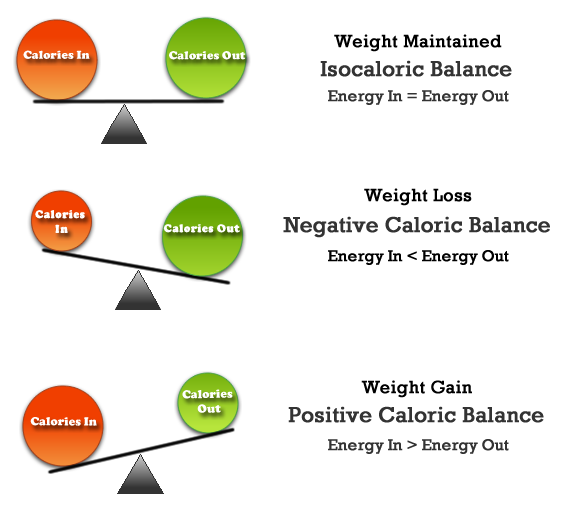
If you eat more calories than you burn (hypercaloric diet) you will gain weight and if you burn more calories than you eat (hypocaloric diet) you will lose weight.
When you eat exactly the same amount of calories as you burn it is called a maintenance caloric diet. Ectomorphs trying to gain muscle need to eat a hypercaloric diet like anyone else who wants to gain weight.
The key is developing a plan of action and sticking to it……. CONSISTENTLY!
Using the tips i am listing below; develop a plan that you can stick to.
Tactics for Daily Meal Planning
1. Eat lean protein with every meal: Good proteins include chicken, lean beef and turkey, tuna and other fish, whole eggs (also has fat)/ egg whites, and protein supplements (find quality sourced protein supplements) .
2. Limit processed carbs: The bulk of your carb consumption should be in the form of quality, unprocessed, low glycemic carbs such as oatmeal, sweet potatoes, rice, whole-grain pastas, breads, and cereals.
3. Eat fruits and vegetables everyday: Fruits and vegetables contain vitamins, minerals, and many nutrients vital for good overall health, wellness, and growth.
4. Add some healthy fats with every meal (except post-workout): Dietary fat is very important for proper body functioning and hormone production. Most people have an unbalanced view of dietary fat and therefore limit it. Good sources of fat include almonds and almond butter, peanuts and peanut butter, avocado, flax seed and olive oil, and eggs.
5. You do NOT have to stuff yourself: When trying to gain weight, some hard gainers eat to the point of vomiting. This is not healthy or necessary. Instead of eating huge meals, I recommend eating 6-7 decently-sized meals that make you feel full but not stuffed and bloated.
6. Cook meals in advance: Have food already cooked and ready to go when it is time to eat makes getting enough calories much easier and less of a burden.
7. A macronutrient ratio for bulking is 50:30:20/carbs:protein:fats: One should always get 1-1.5 grams of protein per pound of bodyweight, this is your primary objective. Above that, carbs and good fats will make up the bulk of your calories.
A simple calculation to determine your maintenance caloric intake is to take your body weight and multiply it by 15; this gives you your total calories to be consumed each day. For example, a 200 pound person would consume 3,000 calories a day.
If you are consuming 3,000 calories, using the macro ratio 50/30/20, this would roughly equate to:
Carbs = 375 grams
Protein = 225 grams
Fat = 65 grams
A good starting point for ectomorphs is to get use to eating at maintenance level using this macro ratio for a few weeks. You will be surprised to know that most gain a few pounds just from making the first change.
8. Eat the bulk of your carbs around your workout: Weight lifting increases the body’s need for glucose, therefore it makes sense to eat carbs around your workout.
For ectomorphs who struggle to gain weight we recommend consuming a fast digesting shake post workout consisting of essential amino acids/whey protein and a high glycemic carbohydrate. Fruit is the easiest and fastest to get a hold of after leaving the gym. A carb based drink is also good. This same shake can also be taken pre-workout.
After this post-workout shake resume your normal protein+carbs+fat meals.
9. If you aren’t gaining weight you need to increase your calories: While some people might be able to gain muscle on eating 250-500 calories above maintenance levels (thats 3500 calories for the example listed above), ectomorphs may need to increase calories to 4,000 or even 5,000 calories a day in order to grow. It is important to monitor your weight and body fat% so you can tell whether or not you need to increase your caloric intake.
10. A cheat meal here and there can be beneficial to ectomorphs: Eating 6 meals a day for 7 days = eating 42 meals a week. Having one or two “off” meals tend to hurt most people trying to lose weight. For ectomorphs, it will keep calories high and can be psychologically motivating. If you want to enjoy a meal out with your friends and family that is highly encouraged!
For hard-gainers, nutrition is far more important to your weight gain goal, than lifting weights.
You can lift hard and heavy and not see any movement on the scale without an effective nutrition plan!
Combine these tactics in the kitchen with a sound hypertrophy based workout plan (another blog post at another time – but in the mean time check out my GVT training post) and you will definitely start to see the scale move. Just be patient and stick to the plan!
IFBB Pro, Damien Patrick shares a shoulder workout full of dropsets and supersets. I tried this today and I guarantee it will give you a “STUUUPID Pump”! Give it a try…..
If you want to get more programs like this that have been designed by Damien, head to www.damienpatrick.com . You can also download his app for all of the program info and content!
3x WBFF Bikini World Champion and Pro trainer, Rachel Dillon shares shares a quad focused session for the ladies. This should be a quick 30 minute session using a superset and a giant set to scorch the quads! A short focused intense session. Good luck!!
Part 1 – Superset – Barbell Sissy Squats, Incline Dumbbell Squats – 60-90 seconds reset after each round
Barbell Sissy squats 4×15
1) Place your heels should on a slightly raised surface, like a weight plate.
2) Keep your feet shoulder-width apart, toes pointing forwards, shoulders back and down, and pull the bar down to lock in your upper body .
3) Bend at the knees and lean the body backwards, so that the tension comes into the front of your thighs.
4) Lower back as far as you can, keeping a neutral spine throughout. You should form a straight line from your knees to your head.
5) Pause at the bottom before slowly pushing back up to the starting position.
Dumbbell Incline Squats 4×20
1) Place your heels should on a slightly raised surface, or a slant board .
2 Lift the dumbbells up to rest on your shoulders to keep your upper body tight and in upright position. Brace your core .
3) Bend at the knees and lean the body backwards, so that the tension comes into the front of your thighs.
4) Lower back as far as you can, keeping a neutral spine throughout. You should form a straight line from your knees to your head.
5) Pause at the bottom before slowly pushing back up to the starting position.
Part 2 – Giant set – Barbell Walking Lunges, Step-ups, Bulgarian Hops – 60-90 seconds reset after each round
Barbell Walking Lunges 3×20
Begin standing with your feet shoulder width apart and a barbell across your upper back.
Step forward with one leg, flexing the knees to drop your hips. Descend until your rear knee nearly touches the ground. Your posture should remain upright, and your front knee should stay above the front foot.
Drive through the heel of your lead foot and extend both knees to raise yourself back up.
Step forward with your rear foot, repeating the lunge on the opposite leg.
Plate Step-ups 3×15
Hold a plate in front of you at shoulder level and place one foot on a bench or box, your knee bent to 90°. Keeping the other leg straight and firmly planted on the ground, push your shoulders back and chest out.
Push through your top foot to raise your body over the platform, your back leg suspended in the air.
Bulgarian Hops 3×20
Standing in front of a bench (or chair, etc.), facing the opposite direction, place your rear foot on top of the bench – shoe laces down.
Make sure you place your front foot far enough forward so you are in a full lunge position, not too close to the bench (see illustration), and be sure your weight is your front heel.
Maintaining your balance, slowly lower your body down until your back knee almost touches the ground (the depth will depend on your mobility and stability and the height of the bench). Be sure to keep your upper body straight and upright and don’t let your knee come past your toe or shift inward or outward.
Stand back up in a controlled manner until you’re in the upright position again (without locking the knee). Maintain proper alignment. Hands can be at your side, out in front of you or above your head. They can also be out to the side if you find it easier to balance this way.
Save this post and give this session a try. Let us know what you think. Train Hard Ladies!!
If you would like to try more of this style of workout. Rachel’s Busy Girl programs can be found at www. movewithus.com
Recently, I have been having a lot of conversations about nutrition and losing weight (fat loss). I have come to realize that there are not many people that take the time to understand the nutrition side of health and fitness.
(I have also realized most people do not know the difference between weight loss and fat loss. They use the terms interchangeably. Just because you lose some weight on the scale, does not mean it was a positive change…. food for thought)
For sake of time, let’s make one thing clear! You by no means have to eat like a physique competitor to lose weight, lose bodyfat, improve your body composition, or however you describe your physical goals. But the ultimate goal should be the same as a physique competitor (although less extreme)… to become lighter, leaner, and in better physical condition.
Yes, restricting yourself to a specific group of foods that you weigh and monitor calorie intake on a daily basis is going to get you there. But, that is just not a realistic approach for the majority of today’s society.
Now on the other side of that coin, you cannot continue to go down the path that you are currently on as you are just not seeing the results you hoped for. Which I am sure is pretty demotivating.
So with that being said, if you are looking for some simple ways to streamline your existing nutritional approach for hitting that target weight (fat) loss goal, try to incorporate these few strategies below!
Think Slow And Sustainable
For all of the trainers/coaches out there I have to say this.
Losing “10 lbs in a week” or “30 lbs by my birthday (5 weeks away) are just not realistic goals!!!
Very few individuals achieve those types of results….. very few!
In order to make those type of changes you have to be 100% on top of everything you eat, the cardio you do, the workouts, and there are no breaks!! No going out with friends. No grabbing a meal because you have been good all week. No drinking. None of that!!
And even with that level of discipline, there is no guarantee you will meet your goal in the allotted amount of time. The other side of that is even if you do meet the goal, you are almost guaranteed to go right back to where you started…. Or worse!
Set realistic goals for yourself. Create habits that can be sustained for long periods of time. Slow and steady always wins the race with this fitness lifestyle.
You do not need to commit to a super-restrictive 90-day or 12-week challenge in order to lose weight. In fact, for many people, thinking in shorter time frames, such as 4-6 weeks will actually work better.
Any experienced nutrition coach or certified nutritionist would recommend that you lose weight at a pace no faster than .5-1 percent of your body weight per week (1-2 lbs of body per week). Over six weeks for a 150-pound person, that’s 7-8 pounds.
That may not sound like a lot, but it’s enough of a sample size to assess the your eating habits to determine which changes you made worked and which didn’t work. With this information, you’re better equipped to weed out those changes that are not sustainable for you, and to focus on those that are. Then, you can implement those positive changes in your plan of action over the next 4-6 weeks.
Ultimately, this will help shape a foundation of sustainable, healthy eating habits that will serve you for a lifetime rather than feeling the need to commit to 90 days of misery only to revert back to your previous ways (and weight!) when a “challenge” is done.
Figure Out A Meal Frequency That Works For You And Stick To It
I get this question a lot!! How many meals per day do I need to eat? Through my own trial and error and experience, i have learned the answer is simple: Whatever aligns best with your lifestyle!
Seriously! When the calories and the protein intake are about the same, there’s no added weight-loss benefit if you choose to a warriors diet of once a day or if you choose to eat three to six times per day. Choose a frequency that fits into your lifestyle and is sustainable in the long run. That’s what matters most.
I think its worth stating that many active people find it best to eat every 3-4 hours because this helps to maintain steady energy levels throughout the day while also keeping hunger and cravings in check. This usually shapes up to three main meals and 1-2 snacks per day.
The same goes for meal timing. If you want to consume the majority of your daily intake at breakfast, or the majority in the evenings, go for it. What matters most is that your total daily intake remains more or less consistent day after day. However, as you grow on your journey and seek further progress, having some structure of meal timing may benefit you because it will allow you to optimize performance when working out, as well as recovery. You also have better control of your appetite and cravings throughout the day.
Take Aim At Your “Problem Meal”
Full-on meal prep isn’t an option for many people.
And that’s OK!
But it’s also true that many of us have a single “problem meal” during the day where we buy something rather than make it.
For example, maybe lunch is your weakness, and you find yourself at the food truck several times a week. Maybe breakfast is a sugar-bomb and has been since you were a kid. Or maybe your meals are OK, but your snacks are a complete disaster!
No matter the case, taking the initiative to prepare your most problematic meal or snack—and just that meal or snack—can have a profound difference. And “fixing” just the most problematic meal is far easier than trying to prep all your meals, all the time—although that is definitely an option as well (and highly recommended), if you’re up for it.
Look For Easy Low-Calorie Substitutions
When you begin seeking weight loss, there’s one key relationship that you need to be aware AT ALL TIMES the relationship between the number of calories you eat per day and the number of calories you burn per day. If you eat fewer calories than you burn, over time you’ll lose weight. Conversely, if you eat more calories than you burn, over time you’ll probably gain weight.
A lot of people will take that starting point and tell you that you need to count calories. It’s not true! Instead, you can look for ways to make a single change or two to your day to begin taking in fewer calories.
This could mean:
Swapping soda for diet soda or soda water (or WATER!!)
Swapping juice or a sports drink for a low- or no-calorie alternative
Swapping a bag of chips for a piece of fruit or cheese
Swapping a candy bar for a handful of nuts and seeds
Along with a consistent workout schedule, consuming just a couple hundred fewer calories per day, when done consistently, can jump-start weight loss.
That said… you can’t have a diet soda once per week, drink regular soda for the rest of the week, and expect to make groundbreaking weight-loss progress. You need to implement your chosen strategies consistently so that your body has adequate time to react to the impact of you eating fewer calories per day.
Keep A Craving-Fighting Strategy Or Two In Your Back Pocket
The easiest hunger-fighting strategy you can implement right now is to drink more (calorie-free) fluid.
When you drink fluid, it rapidly fills your stomach. When you drink a significant quantity at once, such as 8-12 ounces, it fills your tiny stomach almost completely. When this happens, the fluid forces your stomach wall to expand, which triggers a signal to be sent to the brain basically saying there’s no more room left in the stomach.
The next-level strategies? Start prepping at least some of your meals (more on that soon), or at minimum, your snacks. Dial in your snack game, looking for simple meals and recipes that combine protein and nutrient-dense foods like nuts and vegetables. If you are unable to keep meals with you, below are some quick options you can pick up when you are out and about.
Have these ready so you don’t find yourself ravenous when passing the drive-thru window!
If losing weight (bodyfat) is your goal; try these simple strategies out. The honest truth is, subtle changes in your eating habits will yield big results when you start the process…
BUT
Do not forget to always monitor your calorie intake vs your caloric output! And keep making small changes so that you are able to maintain those habits as a life long practice!
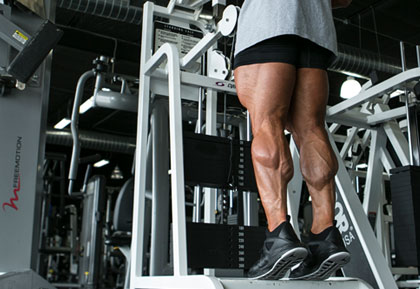
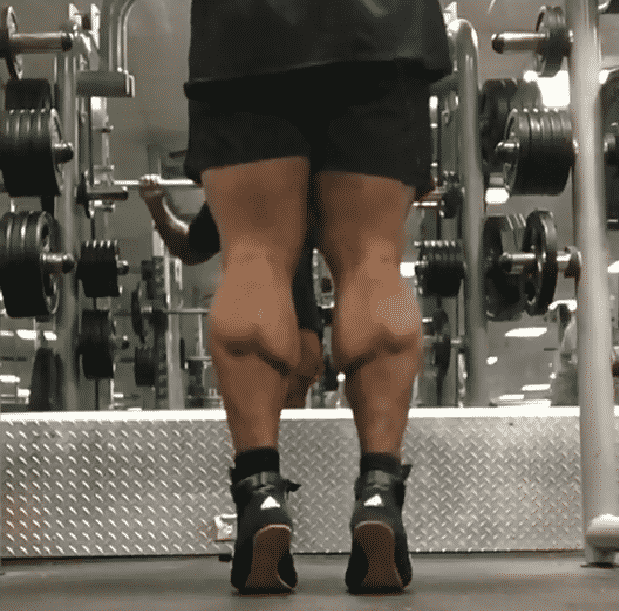
An awesome set of thick, diamond-shaped calves is one of those “little” things that really sets a great physique apart from a mediocre one.
Small, under-developed calves, on the other hand, become a glaring weak point as your upper body develops and greatly diminishes the look of your overall physique. You could be squatting 500 pounds but if your calves aren’t up to snuff, it’ll look like you’ve got chicken legs. (And trust me, I know–I neglected my calves for years; and it took me years to catch up). So basically what I am trying to say is..
NEVER NEGLECT YOUR DAMN CALVES!!!!!!!!
The calf routine that i am sharing was published in Iron Man Magazine in 1971 by Jim Mclellan. Now Mclellan was a known golf instructor, but back in the day was an Old School bodybuilder that was also known for specifically for the calf training routine he developed.
Legend has it he added 1.5 inches to his calves in just 8 weeks.
Legend or not, if there is the possibility of that type of growth; I don’t know about you, but I am going to try it!!!
His program is designed to grow stubborn calves, as well as punk those individuals who have great calves and neglect to work them. I must warn you!! It doesn’t matter if you are a beginner or a veteran gym junkie; you WILL feel the effects of this routine immediately. So please take the proper precautions to survive the gauntlet. Hydrate, stretch, massage your calves, and pray that you can stand up the next morning.
The Jim Mclellan Crippling Calf Program
Find a place where you can do standing calf raises with additional resistance. If you’ve got a standing calf machine at the gym, perfect. No calf machines in sight? Two options: Get inside the smith machine , put the bar on your back and stand on a 4-inch block. Or, you get a hip belt, chain up some plates or a dumbbell and stand on a step.
Start with 15 full ROM reps. Full ROM means at the bottom of each rep, dip your heels as low as you can so that your calves really get a great stretch. And at the top of each rep, raise your heels as high as you can so your calves are forced to contract fully.
Keep these reps slow and smooth.
After the 1st set of 15 – Rest 10 seconds
Now, do 10 more calf raises. Again, slow and smooth. Then, rest 10 seconds. Then, 10 more calf raises. Repeat this two more times for a combined total of 55 reps. By this point, your calves will be on fire… but the fun is just beginning.
After the final rep, you’re going to stay on the block and immediately start doing “burns.” These are short, fast, bouncy calf raises. Don’t worry about dropping your heel as low as you can or rising up as high as you can on your toes. Just focus on speed – knocking out as many mid-range calf raises as you can. You should be trying to actually explode off the block — in reality your toes won’t leave the block but you should be trying to do these fast enough so that it feels like you’re about to lift off the block. Then you come crashing down and your calves are forced to stop the momentum.
This will LOOK like you’re cheating — but what you’re really trying to do is torture the calves and do the burns for as long as you can. Don’t bother trying to count reps — you will be moving too fast for that. Just fight through the pain for as long as possible.
When you can’t take another second, now it’s time for negatives.
Stay on the block, and do a full calf raise with both feet, but then remove one foot from the block and lower yourself slowly using only leg. Lower yourself all the way to the bottom, then lift yourself up again with both calves. And at the top, remove the opposite leg and again lower the weight slowly using only one leg.
Do 10-12 negatives for each leg. When you’re finished with these, take a 3-5 minute rest. Massage your calves, walk around a bit and give each calf a good stretch. It will be painful, but do it anyway. After the 3-5 minute rest period is over, do the entire routine again.
Complete this same routine 3 times throughout the week.
After two weeks on the above routine, you’ll make the following change: After the negatives, add another round of “burns” and then another round of negatives. Making this change will help increase time under tension and keep the progress going.
Ok, so that’s the basic routine. Here are a few additional notes to focus your calf training…
Train calves 2-3 times per week. The calves are brutally tough and they need to be punished over and over, many times in the same week to make them grow.
Train calves first in your workout.
Use the same amount of weight for the entire calf training session.
You don’t need to use heavy weights for this routine to work.
The key is to punish your calves. It’s all about how long you can deal with the pain. Do NOT be nice to your calves.
Don’t stop when you can’t get a full rep. That’s not failure. Keep going until you can’t raise up your heel even a single inch. When your calves are so fried that you can’t make your heel raise up even a single inch, that’s failure.
Most people with great calves go them from their parents – not from hard work.
If you were born with terrible calves, you’ll probably never have great calves. But you can improve on what you’ve got by working hard to train them.
Again, this is NOT for the faint of heart. You may not enjoy the pain and soreness, but you’ll love the results. The saying goes:
If you want something you have never had… you have to be willing to do something you have never done!
Let me know how this routine works out for you… leave me a comment. Train hard!!!!!!!
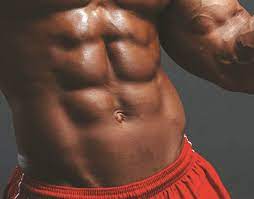
A set of washboard abs is one of the most visible benchmarks for male physiques – a true sign of dedication and one that you see plastered on billboards and fashion posters across the globe. For women, a toned stomach with visible abs is a great indicator of your fitness and strength.
However, for most people, getting your abs to show can be a tricky challenge. There are a number of factors involved in training your stomach. If you want a rock-hard set of abs that can be spotted on the beach, you’ll need to be aware of the 10 reasons you can’t see your abs.
1. You Have Too Much Body Fat.
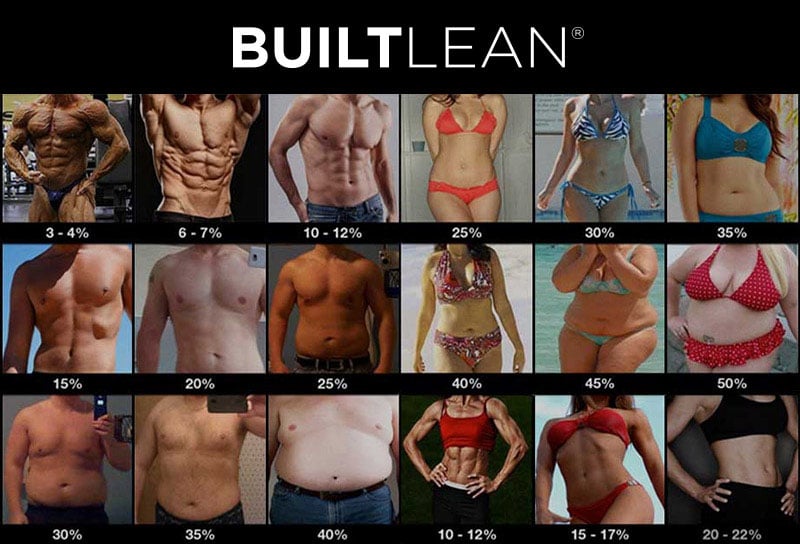
The single most important aspect when it comes to getting your abs to show is having a low body fat percentage. All humans have abdominal muscles that can be made more visible with training – but ultimately to see your abs you need to be at 10% body fat or less (18% or less for women.)
Ditch the fad diets and stop performing endless crunches. If you’ve got too much body fat you’re not getting anywhere.
2. You Focus On Sit-Ups And Crunches.
Performing endless amounts of bodyweight crunches and sit ups will not build up much in the way of ab muscle and certainly won’t help drastically reduce body fat. While bodyweight exercises will help boost your metabolism and burn calories – there are many more effective exercises you can do instead. But in the end you only have two choices. Lose body fat through diet.. or through diet and cardio.. one takes longer than the other, but those are two options!
3. You’re Forgetting How To Actually Build Muscle.
One of the best ways to build muscle is to perform heavier sets with fewer reps. This means adding resistance to any ab exercises you’re doing. Experiment with cable crunches and doing sit-ups whilst holding a weight plate. Performing lower reps such as 10-12 for 3 sets with a weight can yield better muscular growth than doing 100 unweighted crunches at a time.
4. You’re Overtraining The Ab Area.
Excluding fitness professionals whose bodies are used to their constant daily routine of training their abs at the end of sessions, the average gym goer should understand that rest is just as important as training. Like your arms or legs, your abs need time to recover and grow.
5. Your Nutrition Plan Is Not Effective.
If any of the 10 reasons you can’t see your abs was to be key – this might be it. The importance of losing body fat has already been presented – but to actually lose the weight you’ll need to be eating in a caloric deficit.
Fad diet tactics to rapidly reduce weight such as liquid diets might get you a visible set of abs for a single day, but then you’ll pile weight back on.
Instead, your nutrition should be tailored around a reduction of calories whilst continuing to eat healthy food. Cut down on refined carbohydrates and sugary treats. One of the truest fitness anecdotes you’ll ever hear is that ‘Abs are made in the kitchen.’
6. You May Have Non-Ideal Genetics.
Sometimes it’s not about how to get your abs to grow. Sometimes, It’s a case of having poor ab genetics. Some people are more genetically inclined to lose weight quickly in the stomach area and have more pronounced, well-built abs at greater levels of body fat. There are people who can still have visible abs at 15% body fat, where others may need to hit a little as 6%.
Do the best you can to reduce your body fat and don’t compare yourself to others – they may have an unfair advantage. Your hard work will pay off.
7. You May Be Too Stressed Or Too Tired.
When stressed, your body releases cortisol. An excess amount hinders fat loss. Cortisol is catabolic, which means it can break down tissue. If you’re trying to get abs, you’ll want to put your body in an anabolic state – so avoiding stress is vital.
Sleep puts cortisol levels at their lowest during your slow wave sleep stage. Prioritizing a good night’s rest will help put your body in the best state it can be to lose weight and build muscle.
8. You Might Be Drinking Too Much Alcohol.
Are you often heading out with the intention of having a few beers on the weekend but often ending up with a full weekend of excess drinking? Your body will not be grateful. Just as you need to lose body fat, you also need to cut down on alcohol.
Whether you’re downing pints or sticking to slimline drinks, alcohol is still a catastrophic hindrance in getting your abs to show. The excess calories aside, alcohol reduces testosterone, messes up your sleep pattern, shuts down fat burning and strains the liver. If you want to look ‘cut’, you’ll need to cut the alcohol.
9. You Have Unrealistic Time Expectations.
Getting ripped isn’t the quick process you might think it is. Losing body fat is a hard thing that requires time and dedication. Your body does not want to make a quick change – and due to the low amount of bodyfat you need to have visible abs, you might feel like they’re never going to show and give up.
As long as you eat at a caloric deficit, put healthy foods in your body and perform the right kinds of exercise, you’ll see results. Just don’t expect to see them instantly.
10. You’re Not Sticking To A Routine.
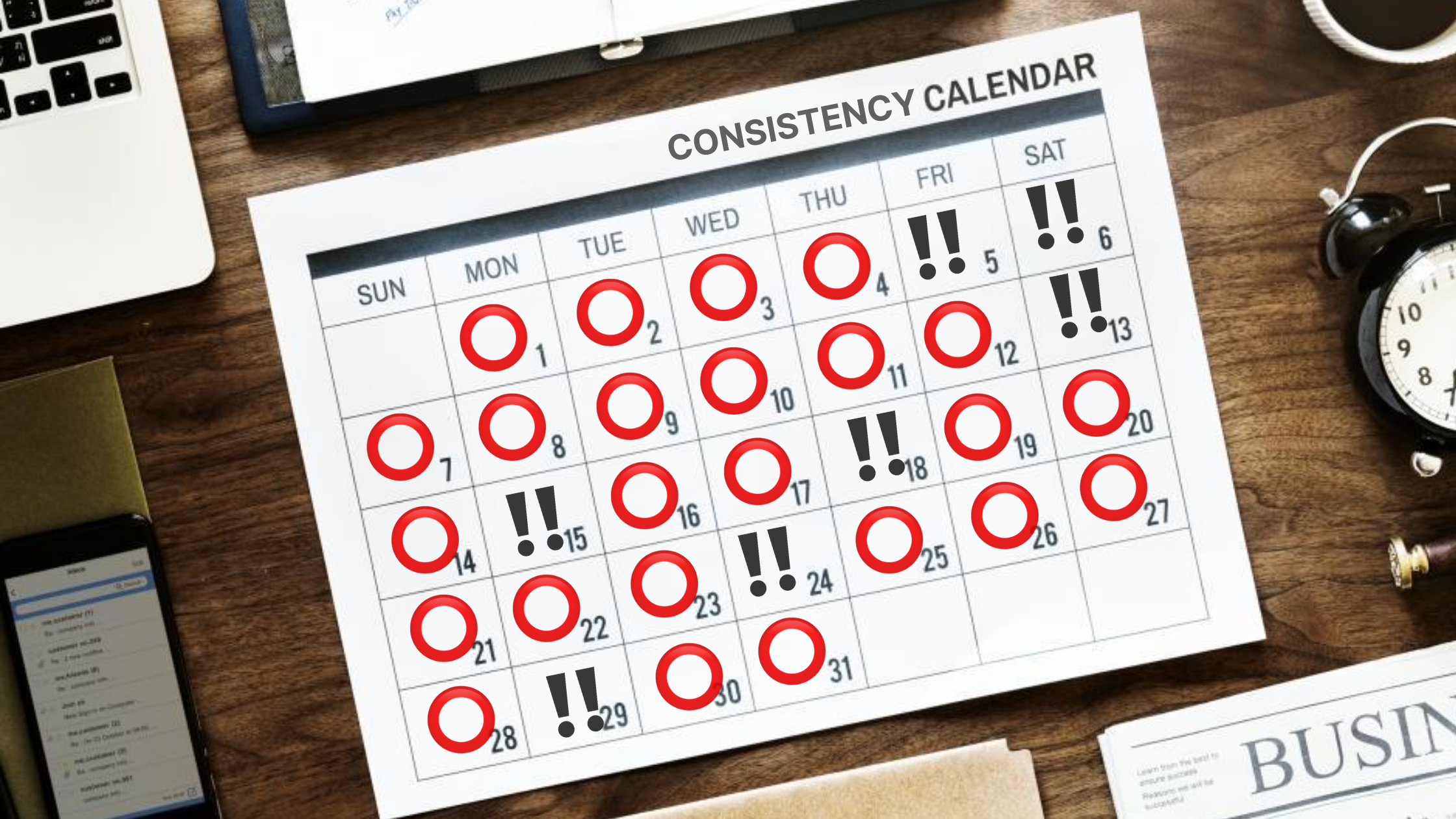
With every single fitness goal – whether it’s to build lots of mass, gain strength, slim down, compete in an event, or getting your abs to show, dedication is the single most important thing. You need to give a routine time to work. Don’t just switch from one gimmick to the next and expect to see a six pack.
Hard work, effort and a well-structured routine will get your abs to show. You’ll need a strict caloric deficit combined with cardio exercise to help lose fat and some mass-building stomach exercises to really get your abs to ‘pop.’ Stick to the routine, give it time and you’ll see the results of your hard work.
These are just a few reasons why your abs are visible as you want them to be… . Do you have others? Please share them in the comments and let’s discuss.
This is the perfect subject for this ending. Eat Smart! Train Hard!
In my experience, these are 3 common struggles that people experience at the start of their fitness journeys and this is MY advice.
1) “I don’t have the time.” ✅Most of us believe we don’t have time. But if we are real with ourselves, we ALL make time for what we want. Carve out 45mins to an hour of workout time and plan it into your daily routine. Rather than spending 3 hours binging a show, re-invest that time into yourself and your goals. Your body will thank you.
2) “I struggle with staying consistent.” ✅Consistency is the result of our habits. Set clear and attainable goals and expectations of yourself for each day/week. If you set aside a few hours to map out what your days and weeks will look like, you will be surprised how simple it is to stay consistent.
3) “I struggle with sticking to a diet.” ✅I like to think of healthy eating or a “diet” as a lifestyle. Determine what your goals are for yourself and what it will take to get there. Are you someone that will benefit from a structured meal plan? Do you prefer eating later in the day vs. mornings? Whatever it is, you need something that you’re able to stick with. If it feels like a “diet,” you’ll want to quit.
AND PLEASEEEE for the love of God, don’t be that person that eliminates food groups out of your diet. I promise you will be doing more harm than good. Just make sure most of your meals are balanced with complex carbs, protein, healthy fats and micronutrients (veggies/fruits).
What advice would you give someone struggling with their goals?