Category: Blog

  • German Volume Training: How to pack on Muscle Fast!!!!!

    German Volume Training: How to pack on Muscle Fast!!!!!

    I get asked two questions a lot by guys without fail. “Do you take steroids/growth hormones/testosterone replacement/etc” and “How did you get the mass you have”

    Now I will admit that i have some size on me. 5’11 265 lbs. I have between a 33-34 inch waist most of the year, and when i am dieting, its smaller! Now please know i am not saying this to brag, its just so you can get an idea of why i am asked these questions all the time.

    Well I am finally going to give an answer to those questions: NO I have never taken any form of drugs, I work my ass off every training session. And I will to share one of my training secrets with you…

    Guys if you want to achieve some serious muscle gains (or women if that’s your goal), then try German Volume Training!

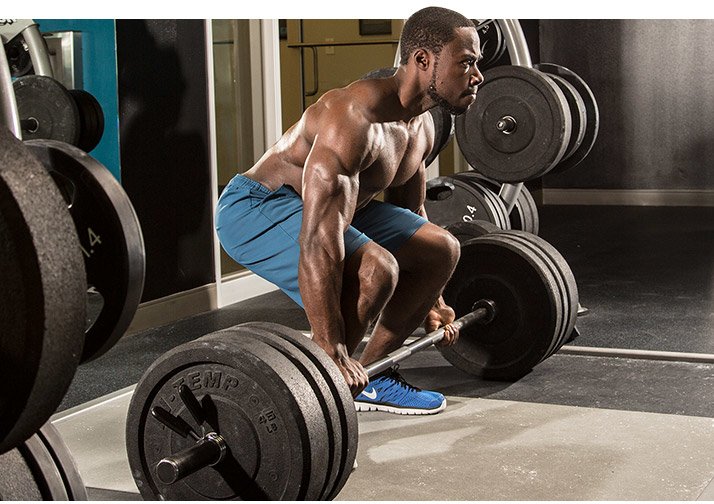
    GVT is an old school style of working out specifically for packing on a lot of muscle mass quickly. Gains of five pounds of solid muscle are often seen in as little as three weeks. Many articles have been written about this workout, but a lot gets lost in translation when it comes to explaining why this particular program works so well.

     GVT works by targeting a group of motor units (nerves that cause a specific group of muscle fibers to contract) and subjecting them to an extensive volume of repeated efforts. Specifically, 10 sets of 10 reps of a single exercise. The body adapts to this extraordinary stress by hypertrophying the targeted fibers.

    German Volume Training goes beyond being a challenging workout physically; mentally, the sheer volume of the work can eventually make you dread going to the gym. After a GVT training cycle you’ll need a break—a long break. A good training plan would be to perform GVT for just one month, once a year or, at the most, twice a year.

    With that background, let me explain some of the mistaken ideas associated with GVT, along with a few tips on how to get the most from this workout.

    First, some bodybuilders believe that GVT is simply a slight variation of Vince Gironda’s 8×8 workout. It’s not. One of the major differences is that there’s more rest time between sets in GVT, making it possible to use more weight for each exercise and thus build more muscle mass.

    Although GVT doesn’t produce a high level of growth hormone release, it’s not as effective in the short term for reducing body fat as other programs, such as the German Body Comp program. However because GVT is a superior method of increasing muscle mass, it will more effectively raise your metabolism (i.e., the rate at which you burn calories). It has been found that for every pound of lean tissue gained on GVT, there is often a loss of an equal amount of fat weight—this is especially true with women.

    There’s also the mistaken belief that  Olympic lifts and their assistance exercises, such as power cleans or snatch pulls, could be used within the GVT program. No, they can’t. First, it would be difficult to maintain proper form in those complex exercises using such high reps—even in pulls. More importantly, those exercises are dynamic with no eccentric overload, and as such the time under tension for those types of assistance exercises is too short to create maximal gains in hypertrophy.

    With a few exceptions, such as leg curls, it would also be a mistake to use machines for GVT. Machines don’t provide the same stress from a total-body training stimulus due to their increased stability. Performing 10×10 of leg presses is certainly difficult, but nowhere near as difficult as squats. Select exercises that recruit a lot of muscle mass. Triceps kickbacks and side leg raises are definitely out—squats and bench presses are definitely in.

    You’ll increase the weight only after you complete all 10 sets with the predetermined starting weight. The load you use will be submaximal— you don’t try to reach failure on all sets; only the last three sets should be hard. Basically you get the training effect from the law of repeated efforts. Once you’re able to complete 10 sets of 10 reps, you’ll increase the weight by 2ó–5%. Also, you’ll perform the reps without any outside assistance.

    Due to the physical and mental challenges of the GVT, I’d recommend at least a year of conventional training before trying it. If you’ve tried GVT before, review the previous three paragraphs! The German Volume Training program is one of the most difficult workout programs you’ll ever perform, but the results are worth it. For a more detailed explanation, check out  www.poliquingroup.com

    The following includes a sample GVT workout within a month-long program that involves performing each training session a total of six times. Although supplementary work can be performed for the same muscle group, only two exercises in each workout are performed for 10 sets of 10 reps. Any additional work could easily push you into overtraining.

    ARMS    
    Exercise Sets/Reps Rest (sec)
    A1. Ez-bar Reverse Curl 10*10 75
    A2. Dip 10*10 75
    B1. Incline Dumbbell Curl 3*12-15 60
    B2. Ez-bar Lying Tricep Ext 3*12-15 60
         
    Chest and Back    
    Exercise Sets/Reps Rest (sec)
    A1. Incline Dumbbell Press 10*10 75
    A2. Chinup 10*10 75
    B1. Flat Dumbell Press 3*12-15 60
    B2. Single Arm Dumbbell Row 3*12-15 60
         
    Legs    
    Exercise Sets/Reps Rest (sec)
    A1. Back Squat 10*10 75
    A2. Lying Leg Curl 10*10 75
    B1. Stiff Legged Deadlift 3*10-12 60
    B2. Standing Calf Raise 3*10-12 60

    Let me know if you like this style of training. Leave me a comment or email me. Train Hard!!!!!!!

  • Gym Junkiez Recipes –           “Oh My” Sauce

    Gym Junkiez Recipes – “Oh My” Sauce

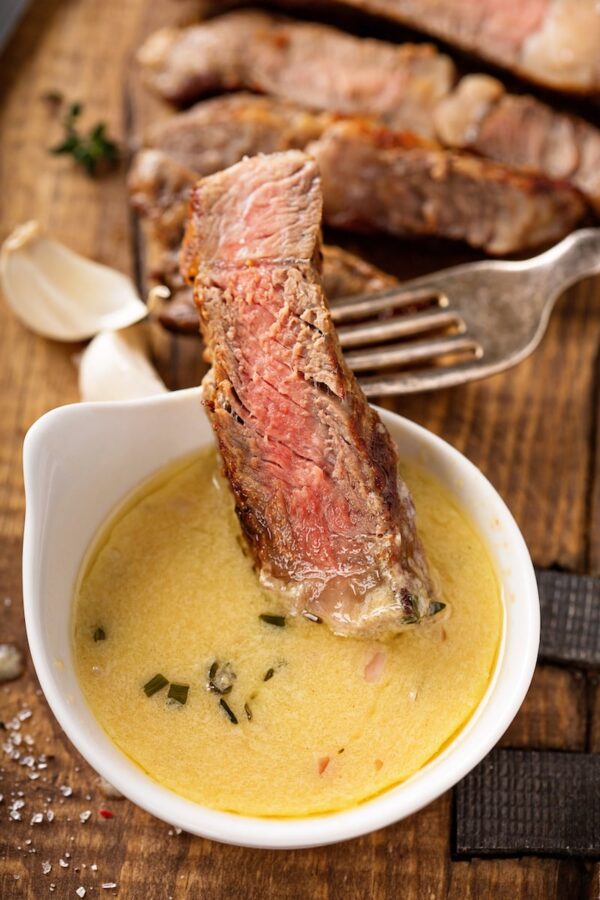
    I Love Steak! Like I literally eat steak everyday! Mainly because this sauce is insanely good! Its called the “Oh My” Sauce. Yes the name is corny but the taste makes up for the name!

    I got this recipe from a site called the novice chef about a year ago and have used it ever since. I actually started putting it on chicken and salmon too! A few slight changes to the recipe and its perfect for the gym junkiez lifestyle!! This sauce is a great source for healthy fats, has virtually no carbs in it (for all of the Carb Nazis out there), and it is addictive!

    If you struggle with sticking to a healthy nutrition plan because the foods lack the flavor you were used to, then i encourage you to try this sauce with your protein source.

    "Oh My!" Steak Sauce: my favorite secret family recipe for the best flavored buttery steak sauce! This steak sauce is gluten free, low carb and keto approved! #Keto #LowCarb

    INGREDIENTS

    • 8 tablespoons Grass-fed butter, melted
    • 1 small shallot, finely minced
    • 5 chives, finely minced
    • 3 garlic cloves, minced
    • 2-3 tablespoons prepared horseradish (the fresh kind in refrigerated section)
    • 2 tablespoons Dijon mustard
    • 3 teaspoons minced fresh thyme
    • pinch of cayenne pepper, to taste
    • Himalayan salt and pepper, to taste

    INSTRUCTIONS

    1. Whisk all ingredients till well combined.
    2. Let the sauce sit for 10 minutes and whisk again. This will allow the butter to cool and thicken just a little.
    3. Serve with your favorite steak!
    4. Store leftovers in the fridge and reheat in 15 second intervals, stirring often, until just melted when ready to reuse!

    Try it out and let me know what you think!!! Eat smart!!!!

  • 4 Bad Habits to Break in the Gym!!

    4 Bad Habits to Break in the Gym!!

    4 Bad Habits to Break in the Gym!!

    Sooooo many people post on social media or brag to their friends about all the hours and energy they are putting into your workouts. Many of these same people have not gained a pound of muscle or lost an inch from their waist since they started working out.

    It’s time for some introspection: You could be wasting precious time at the gym with some nasty habits that are hard to break. It’s important to remember that if bad workout habits are only holding you back, you have to change them in order to get the most out of each second of your workout That’s how you achieve the results you want.

    So get off your cell phones, take off the gloves, and try an exercise or routine you have been scared to try and start making some quality progress in the gym!

    1. Wearing Gloves

    I see a lot of newbies to the Gym Junkiez lifestyle wearing gloves while weight training. While gloves do help ease the stress on the forearms and make it easier to grip the weights, they will ultimately lead to weak grip strength and potential wrist pain and/or injury.

    Wearing gloves does NOT prevent calluses. The only reason you have not developed calluses is because you have not picked up weight heavy enough to cause friction between your hands and the bar. If you argue this point, that just means you aren’t training hard enough to understand this statement. Do yourself a favor and rid yourself of this gym habit. If you can’t lift your normal training weight without gloves, get going on building your grip strength.

    2. Stretching before you begin weight training

    Let me clarify. STATIC stretching before weight training is bad. Static stretching elongates the muscle and places in a weakened state. To properly warm up the body for weight training or any workout, start with 5-10 minutes of light cardiovascular work (bike, treadmill, elliptical) and then complete a series of dynamic stretches. I have found that this list of dynamic stretches before any workout will help you perform optimally

    Upper Body – 2 rounds; 30 seconds a piece

    Lower Body – 2 rounds; 30 seconds a piece

    • Butt kicks
    • High Knees
    • Leg Kicks
    • Jump Squats

    3. Cell Phone Usage

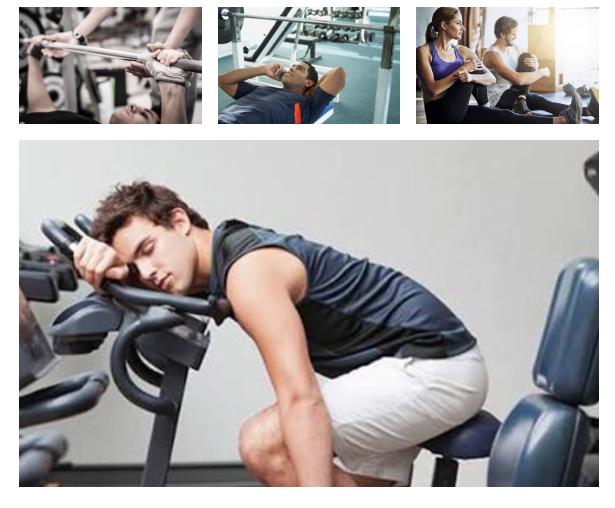
    How many times have you seen this?

    This is one of my biggest pet peeves in the gym. If you are in the gym to lift. LIFT!!! Don’t sit on a bench or machine and surf the web, social media, or just chill while face timing a friend. If you are using your phone to pick a play list, then thats cool!

    Gains come from focus and intensity. Sitting around on your phone will cause you to take more than recommended time between sets which lowers your heart rate as well as any chances of burning that tire of fat around your waist.

    I wonder how many people would still go to the gym if they banned cell phone usage on the floor?!?

    4. Following the Same Routine

    Its easy to go to the gym and follow the same routine every session. But you will only stall your progress to being in better condition or achieving a learner physique. Your body is smarter than you are (let that sink in). Constantly sticking to the same routine will get boring, stagnate your results, cause you to lose motivation, put you at risk for an overuse injury .

    In order to grow and improve there has to be some type of stress to adapt to. Varying your workouts is the only way to achieve that stress. Subtle changes in weight, number of reps, tempo of reps, or time between sets can be all that is needed to push your body to the next level. The best advice for everyone is to follow a routine for 2-3 weeks. If you are able to get through the workout in less time or feeling less fatigued by the end of it. Change it up! If you are unable to determine when its time to change your routine, hire a personal trainer. They will be able to direct you ,and if they are good, teach you how to properly accomplish this.

    Break these habits FAST. The faster you do… the faster you become stronger and in better shape. Thank me later!!!!

    Train Smart! Train Hard!

  • Weight Loss vs Fat Loss

    Weight Loss vs Fat Loss

    I am going to go on a short rant. This post is dedicated to the ladies. Guys can benefit from it, but MOST of the time, men already understand what is being explained here.

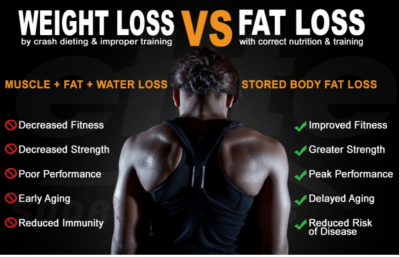
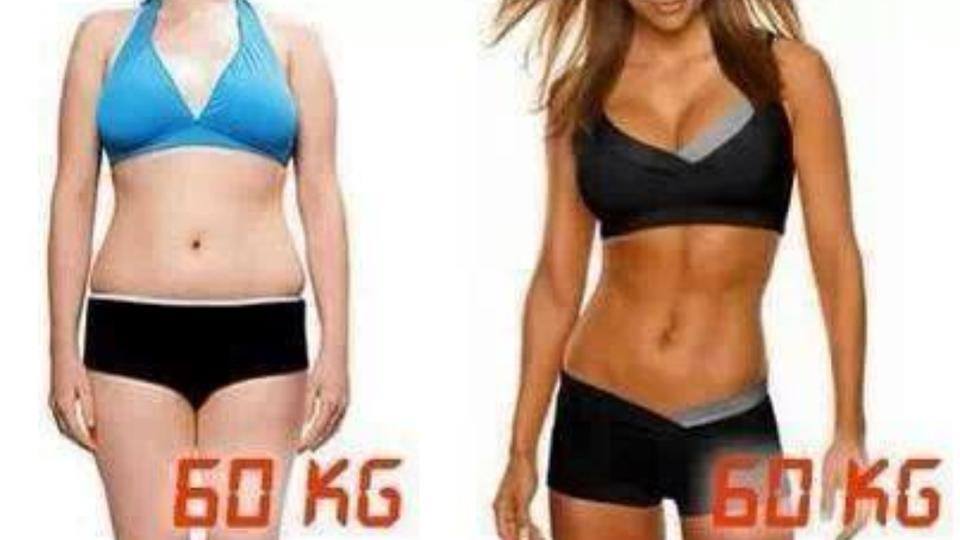
    Ladies! At some point during your lifetime, I’m sure you have made the statement “ I want to lose some weight!”. One question. What did you picture when you said you wanted to lose weight.. your body looking like this


    Related image

       If the first picture is what you are aiming for then I offer a simple solution. Stop eating. You will lose weight! But in doing so you will be losing muscle mass, bone density, and water. Many of the times there is very little fat loss, If any! But if that’s the goal, I wish you the best in your endeavors.

    If you chose the second picture, then the following message is for you!

    When you say they want to lose weight.. what you really mean is you want to lose fat. If you are currently following a program or process that is not resulting in fat being lost then stop immediately and regroup!!!!!

    The goal to successful weight loss is to preserve as much muscle as possible, or possibly even gain some, while at the same time lose as much body fat as possible. Your body fat % is a key indicator of your success, NOT the scale. In fact, stay off the scale.

    I know Telling people to ignore the scale and their weight is not getting us any cool points but it’s the best advice you will ever receive, and for good reason. Too many times successful dieting is sabotaged because of a meaningless number on a scale. A scale does nothing other than measure the force of gravity on your body. Why should this matter at all? It can’t tell you if your clothes fit better, it can’t tell you if your body fat percentage has changed, and it definitely won’t tell you that you’re looking any better.

    When you start dieting, it is imperative that you track your progress using methods other than the scale. You need progress measuring tools that are going to track fat loss – not weight loss. Body fat callipers, tape measures, pictures, clothes sizes, and people’s comments are all going to be more useful for you. Don’t worry about your weight – even if it goes up. If you’re looking better, you’re weight doesn’t matter. The only time it matters is when you tell your weight to someone who doesn’t understand the difference between weight loss and fat loss.

    DO NOT… I REPEAT… DO NOT let someone else’s ignorance about “weight loss” discourage you from continuing to progress towards your goal


    Preserve Muscle While Losing Fat


    Alright then, if your goal is fat loss, you are going to need to focus on preserving muscle while losing fat. Notice I did not say gaining muscle, I said preserving muscle.

    To prevent muscle loss, make sure you are following these basic guidelines:


    • Get in enough calories for your body size and activity level. People tend to sabotage their fat loss progress by eating too little food and too few nutrients resulting in muscle loss. Once you start losing muscle, you are fighting an uphill battle to lose fat. This is one of the main reasons why diets fail. If you do not eat enough calories to maintain your muscle, you will begin to crave certain types of foods because your body signals the need for one of two things, sodium or sugar. Eventually you start having cravings for chips or cake, juice, etc. You eventually binge out because you can’t maintain that low calorie intake and in some cases develop a food addiction.

    • Make sure those calories are nutrient dense by having them come from fruits, vegetables, meats, legumes, dairy, and whole grains.


    • Aim for calories in the 10-12 times your body weight range. This is a basic rule of thumb… a starting point. You will eventually have to adjust your calories to keep progressing. If you want to know how to properly determine your caloric intake for weight loss, read The Post about Counting Macros

    *******DO NOT DEPRIVE YOURSELF OF ANY ONE MACRO. All of these fad diets going around are BS. They work until you add the missing macro source back in and then you will be back to the drawing board. Losing Fat on a balanced diet will help you to maintain the process longer and more likely to keep the weight (fat) off*******


    • Try to get in 1 gram of protein per pound of lean body weight, and divide that evenly among 5 meals.


    • Eat enough carbohydrates to support your activity level. You can start at 150 grams and adjust from there.


    • Fill the rest of your calories with fat – healthy fats and EFAs (essential fatty acids).

    Image result for women lifting weights


    • Make sure you exercise and give your muscles a reason to maintain themselves. I highly recommend lifting weights. Yes ladies, lift weights! It is virtually impossible to look like a man from lifting weights. So please let it go.. that is the BIGGEST misconception about the gym. Lifting weights will help you maintain muscle mass and increase your metabolism. If you don’t , your body is going to shed that unneeded muscle and eventually you will hit a plateau. Force your body to preserve it and even grow it by giving it consistent stimulation.


    Follow these basic principles and you will reach your true goal of not just losing weight, but losing that unwanted fat, and keeping your beautiful curvy muscular body! Rant over. Eat Smart, Train Hard!!!!!

  • Guns Loaded!!

    Guns Loaded!!

    Arm Training – ” I COMMAND YOU MF’ers TO GROW!!!!

    Guys always wanna have big arms but rarely wanna do the work it takes to grow them. Ladies want “toned” arms but dont want to believe that they can achieve this by lifting heavier weights. Well ladies and gentlemen, I am challenging you all to finish this Arm Workout.  Don’t Punk out!!!

    Grab the heaviest pair of dumbbells that you can do 8 reps WITH STRICT FORM and do the following in quick succession, without resting:

    8 reps of dumbbell curls

    8 reps of hammer curls

    8 reps of cross-body curls

    After the last cross-body curl is done, do a drop set by grabbing the next lightest pair of dumbbells (5-15 pounds lighter) and go through the same progression – 8 curls, 8 hammer curls, 8 cross body curls.

    Then move on to triceps (NO REST):

    8 Tate Press – lie on a bench with a pair of dumbbells and extend your arms towards the ceiling as if you were doing presses. Your palms should be facing your feet. Without moving your upper arms and bending only at the elbow, lower the dumbbells so they barely touch your chest. At this point, your elbows will be pointing straight out to the sides. Raise the dumbbells back to the starting position by extending the upper arms.  (Should look like the video below)

    8 reps of overhead dumbbell extensions

    8 reps of dumbbell kickbacks

    After the last kickback is done, grab the next lightest pair of dumbbells for each exercise (it’s unlikely you’ll be able to use the same weights for each exercise!) and do another drop set by going through the same progression – 8 Tate presses, 8 overhead DB extensions, and 8 kickbacks.

    After finishing with the first round of triceps, go back to biceps and do a second round and then do the second round of triceps exercises. DO THIS UNTIL YOU COMPLETE 5 ROUNDS

    What makes this work out a beast is that there’s no rest between sets.  You go non-stop… and the Pump is INSANE!!! Do you have the balls to finish it!! Let me know if you survived in the comments. Train Hard!!!

  • 30 Day Morning Workout Challenge!!!

    30 Day Morning Workout Challenge!!!

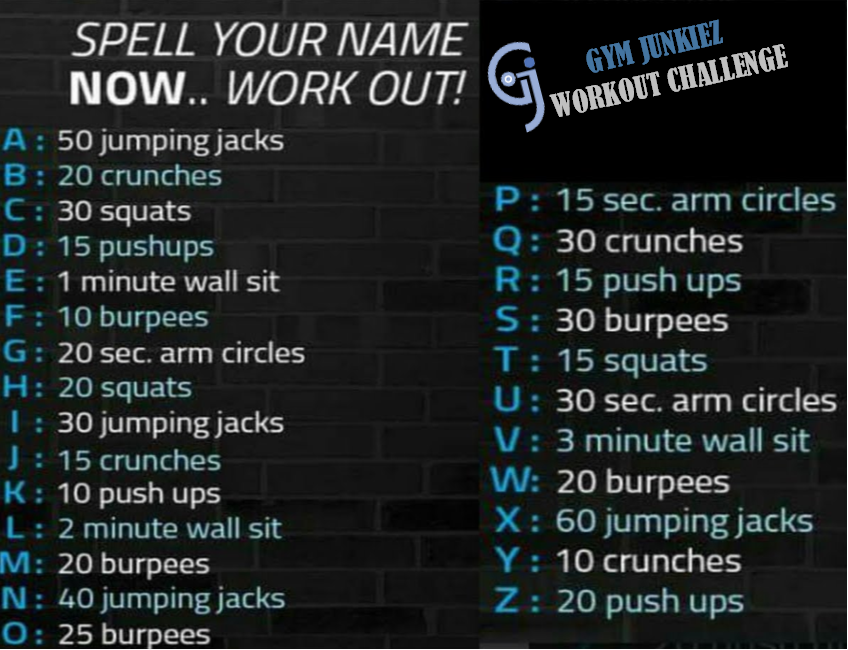
    The Challenge – Every Morning for 30 days! Before you begin getting ready for your day; Complete the Spell You Name Workout! If your name is less than 4 letters or less; go through the workout twice!

    This will take no more than 10 minutes to complete and its a good way to get your blood flowing and metabolism firing.

    I challenge the true Gym Junkiez to spell your First and Last Name!

    Tag us in your workout posts @gymjunkiez17 !! Train Hard!!!!

  • Workout Challenge – Leg Day Blast

    Workout Challenge – Leg Day Blast

    Workout Challenge – Leg Day Blast

    Leg Day Carlton
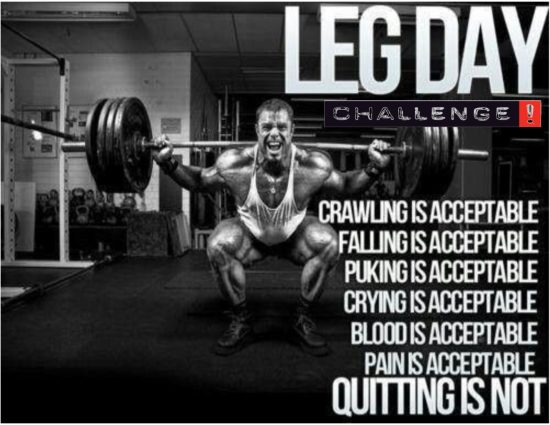
    LMAO…. THIS WILL BE YOU!!!!!

    For the Gym Junkiez that love to train legs, or train legs with the purpose of growing an impressive set of wheels…. .this challenge is for you!!!

    Warning – Do not attempt this workout with food or liquid still sitting in your stomach. Allow all food to digest and liquid to pass or it will come up before this session is over!

    Today’s Leg Workout consists of 1 Giant Set of Heavy Weight being moved. 3 rounds! 10 Exercises; 12 reps each (except for leg extensions – 25 reps)! MAX Effort!!

    Here we go!!!

    LEG DAY

    Warm up – 1 set of leg extensions – 75 reps (20,18,15,12,10 – rest 10 seconds between each set of reps) So it should be 20 rest 10 secs. 18 rest 10 secs. 15 rest 10 secs…. and so on until you finish the set of 10

    Now that your knee’s and quads are nice and warm let the fun begin!

    Giant Set List of Exercises

    • Leg Extensions – 25 reps
    • Lying Hamstring Curls – 12 reps
    • Walking Barbell/Dumbbell Lunges – 12 reps each leg
    • Seated Hamstring Curl – 12 reps
    • Glute/Ham Raises on Lat Pull Down Machine** – 12 reps
    • Hack Squats – 12 reps
    • Leg Press – 12 reps
    • Back Squat (or Safety Bar if your gym has it) – 12 reps
    • Dumbbell Romanian Deadlift – 12 reps
    • Dumbbell Goblet Squat – 12 reps

    After each round take 2 – 2:30 Full Minutes of Rest. You will absolutely need every second of it.

    **Glute Ham Raises on Lat Pulldown Machine

    Related image

    Once you finish the 3 rounds go ahead and find a nice corner in the gym to lay down in. And just to be on the safe side…. take a trash can with you!

    I apologize for you having to walk like this but I promise the results will be well worth the pain you feel!

    MIB Men In Black GIF - MIB MenInBlack Roach GIFs

    Let us know how you make out with this challenge. Tag us if you post the workout on social media. Train Hard!!!!

  • Workout Challenge – Shoulders: Try this Workout and Finisher for Massive Shoulder Gainz

    Workout Challenge – Shoulders: Try this Workout and Finisher for Massive Shoulder Gainz

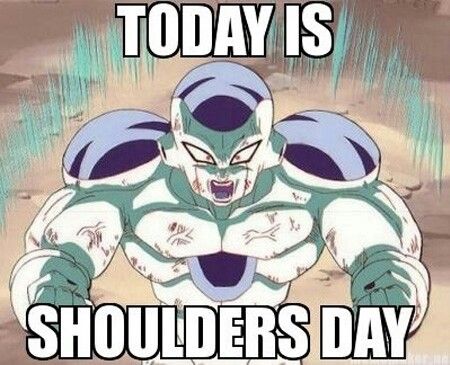
    WORKOUT CHALLENGE – SHOULDERS

    Everyone wants a nice set of shoulders. Men want big- capped-3d looking shoulders. Women want round-sexy shoulders. In either case they help to accentuate the look of a v-taper and a small waist! Regardless of the look you are going for you have to train the muscle. In order to develop those deltoids, you have to push as much blood as you can into all 3 heads of the muscle – the anterior (front delt), medial (side delt) and posterior (rear delt).

    Related image

    For an insane pump and crazy shoulder growth; try this shoulder routine. You will definitely know the meaning of mind – muscle connection after you finish … IF you finish!!! Try it and let me know how you like it!!!

    Shoulder Routine

    Warm-up – 4 x 12 Shoulder Dislocates (warms up the entire shoulder girdle)

    Image result for shoulder dislocates with a band

    Exercise 1 – Compound Movement – Dumbbell Military Press 4 x 12 60 seconds rest. Pyramid up in weight till you can no longer do 12 reps.

    Exercise 2 – Side Laterals w Cables 4 x 12* 30-45 secs rest. Slow controlled reps. Hold each rep for a 2 count.

    Exercise 3 – Reverse Pec Deck 4 x 15 30-45 secs rest. Squeeze each rep for a 2 count

    Exercise 4 – Front Raise with Plate 4 x 12 30-45 secs rest. Hold each rep for a 1 count.

    Exercise 5 – Dumbbell Shoulder Shrugs 3 x 15 30 seconds rest. Squeeze each rep for a 2 count

    FINISHER – If you are one of the true Gym Junkiez and want to set yourself apart from everyone else in the gym… Try this exercise to finish your workout. Your shoulders will feel like they are going to explode. After a few sessions of this, you will definitely see some noticeable changes

    The Victory Raise

    3 x 20 with no more than 30 seconds rest between each set

    1. Place a small resistance band around your wrists.
    2. Lift the dumbbells from the low position to overhead, forming a “V” at the top.
    3. Initiate the movement as a front raise with a neutral grip. As the movement progresses, spread your arms wider to end up with both arms forming a 45 degree angle with the body at the top of the movement.
    4. Come back down the same way, controlling the weight for a good 3-4 second count. Do not release the tension completely at the bottom! Keep some tension in the bands to keep the muscles firing for max results.

    Do the victory raise early in your shoulder or pressing workout. It will turn everything on and will make for safer, more effective pressing. Sets of 8-10 reps with a fairly slow eccentrics are best.

    How It Works

    This move basically combines all the benefits of a lateral raise, front raise, and band pull-apart. It hits all three heads of the deltoids as well as the rhomboids and lower traps. The band keeps the scapula properly aligned and you can’t compensate with the upper traps, making it a lot more effective at recruiting the delts.

    Try this routine out. Post a clip from your training session and tag us @gymjunkiez17 on IG or use the hashtag #gymjunkiez

  • Fasted Cardio – Science and Common Sense

    Fasted Cardio – Science and Common Sense

    Today I am going to tackle fasted cardio. Before I begin let me make two  statements:

    1. Science always wins!!!!

    2. No  matter what approach you take to meeting your fitness goals, two things must remain constant. Hard work and discipline. Which ever methods you choose to follow, as long as you remain true to the cause you will accomplish your goal.

    This morning on Instagram, I commented on a friend’s picture in regards to her remarks on fasted cardio.  I then received a DM from one of her followers (Im guessing) explaining to me that doing cardio in a fasted state is terrible for muscle retention, fat loss is simply burning more calories than you take in and being fasted doesn’t matter, and that i need to look into changing my philosophy. While he made some valid points during the discussion, I was quickly able to tell that he did not have all of the facts. So to the guy who will remain nameless, here is the information I promised you! Never argue without having all of the facts; or doing your homework on who you are arguing with (FLEX)! LOL… joking

    Anyway….. Due to that conversation, I thought it  was a perfect time to weigh in on the matter because while I do have a good scientific understanding of the matter, I also have practical experience and know what it takes to get to 5 to 6% body fat without drugs and without burning up all your muscle. Fasted cardio has been always been a staple in my overall fat loss routine.

    So, in this post I am going to cover the basic science of fasted cardio and why i believe its better for fat loss…..

    What is Fasted Cardio?

    Image result for fasted cardio meme

    Hands down the BEST form of fasted cardio there is!!! LOL

    Fasted cardio has been around for quite some time and is re-gaining popularity as an effective way to accelerate fat loss. People think fasted cardio is simply training on an “empty stomach,” which they usually think is simply a stomach that “feels empty.”

    Well, let me tell you what it really means….

    You are partially correct in saying fasted cardio is cardio done while in a “fasted” state, or in laymen terms your stomach is empty. But it’s actually a bit more than that. It has a lot more to do with how your body processes and absorbs the food you eat.

    When you eat food, it gets broken down into various molecules that your cells can use, and these molecules are released into your blood. Insulin is released and its job is to shuttle these molecules into cells. Depending on how much food you eat in a meal, your insulin levels can remain elevated for several hours (anywhere from 3 – 6+).

    When your body is digesting and absorbing what you’ve eaten, your body is in a “fed”  state. Once it has finished processing and absorbing the nutrients, insulin levels drop to a “baseline”  (low) level, and your body enters a “fasted”  state. Every day your body moves between “fed” and “fasted” state. Learning how to manage your diet and training between these two states  will help you maximize your bodies fat burning potential.

    Long Story Short:

    • Exercise done during periods where insulin levels are elevated and food is still being processed and absorbed is “fed” training.
    • Exercise done during periods where insulin is at a low, baseline level and food is no longer being processed and absorbed is “fasted” training.

    Alright, now you know what fasted cardio is. Let’s now talk about one factor that can hinder your body’s ability to burn fat!

    Insulin – The Fat Loss Killer

    Related image

    Insulin is defined as a hormone made by the pancreas that helps the cells in the body take up glucose from the blood.  Insulin does more than just shuttle nutrients into cells–it also inhibits the breakdown of fatty acids. That is, the higher your insulin levels are, the less your body is going to use fat for energy (both body fat and dietary fat).

    This makes sense physiologically. Why burn fat when there’s a surplus of energy (glucose) readily available via the food we just ate? Thus, when you eat food, your body basically shuts down its fat-burning mechanisms and lives off the energy provided by the meal, and it also stores a portion of the excess energy as body fat for later use.

    As your body processes and absorbs the food, insulin levels decline, which tells the body to start going to fat for energy as the “fuel” from the meal is running out. When the absorption is finally complete, your body is fully running off its own fat stores for energy. While this last part sounds great, do not get too happy. The amount of fat you burn between meals when your insulin levels are low is nothing to be excited about.


    As you can see, your insulin levels spike every time you eat a meal. It takes a while for your insulin levels to drop low enough for your body to tap into fat stores for energy, but by that time your body is telling you that you are hungry again, because of the low insulin levels. So in a nutshell, think of this repetitive cycle as “A Nightmare on Fat-Loss Street” and insulin as Freddy Kruger…

    Freddy is keeping you from losing fat! No matter how hard you use “healthy foods” to battle him, you cannot lose body fat! Dont fear any longer. There are two sure fire ways to end this nightmare. Weight training (which I won’t get into in this post) and fasted cardio!

    Fasted Cardio and Weight Loss


    Fasted cardio is often recommended as a way to speed up fat loss by many experienced gym junkiez and fitness professionals. However without an explanation of how this actually works, you will more than likely lose weight but will not make a dent in your fat loss goals.

    The first thing you should know about fasted cardio is it won’t help you lose fat optimally if you don’t maintain a proper diet. 

    Fasted cardio does not let you somehow cheat the laws of energy balance. At the end of the day, fat loss requires an energy (calorie) deficit, and that means you have to burn more calories than you take in (eat)!

    And with that said, fasted cardio does offer some unique fat loss benefits when done properly. Let me first explain how insulin ties into this.

    As you would expect, if your insulin levels are elevated before exercise due to a pre-workout meal, lipolysis will be hindered (your body will break down less fat cells during that workout). There is tons of research that has proven this true in  both trained and untrained individuals.

    With that said, Lipolysis is only one part of fat loss. The other part is Fat Oxidation, which is the actual burning off of the fatty acids by cells. Your body could break down every fat cell it has into usable fatty acids, but most would go unused (your body only burns so much energy) and winds up reconverted back into body fat.

    This is where many believe fasted cardio is worthless. They say that while it’s true that exercising in a fed state means less lipolysis during the workout, fat oxidation rates aren’t affected so all that happens is your body mobilizes many more fat cells than it can actually oxidize (burn).

    The National Center of Biotechnology Information gives several reasons for this belief to be wrong!

    1. Research has shown that the total amount of fatty acids available regulates fat oxidation rates.

    While your body may not be able to burn all of the fatty acids mobilized during fasted cardio, the more it has available, the more it burns.

    2. Thus, it’s not surprising that research has also shown that ingestion of carbohydrate reduces fat oxidation while at rest and when ingested before exercise.

    Now, ingested before exercise is a key phrase here because the study most commonly cited as “proof” that fasted cardio is a waste of time showed that when carbohydrates are ingested after exercise has begun (30 minutes after, in this case), then fat oxidation rates aren’t changed until after 80 to 90 minutes of exercise.

    That’s cool andall, but who starts their workouts fasted and then eats carbs 30 minutes into them?  Almost, Nobody. Many of us  eat our carbs anywhere from 30 to 60 minutes before we exercise, and as you now know, this reduces both lipolysis and fat oxidations rates and thus reduces the total amount of fat we lose in the workouts.

    So, the bottom line is when we consider all the available research, it’s clear that fasted cardio results in  more fat loss than “fed” cardio, and thus is worthwhile.

    Total fat loss isn’t the only reason I like fasted cardio, though. It also helps eliminate stubborn fat from my lower abs, and lower back!

    How Fasted Cardio Helps Get Rid of “Stubborn” Fat

    Image result for ebony abs

    If you’re a woman, your hips, thighs, and butt are probably the last to really tighten up when you’re losing weight. If you’re a guy, it’s almost certainly your lower abs, obliques, and lower back.

    This isn’t a genetic curse–it’s simply a physiological mechanism.

    You see, your body uses chemicals known as “catecholamines” to break fat cells down into usable energy. Catecholamines travel through your blood and “attach” to receptors on fat cells, which then trigger the release of the energy stored within the cells so it can be burned off. Fat cells have two types of receptors for catecholamines, alpha- and beta-receptors.

    And to make a long story short,  beta-receptors speed up fat mobilization, alpha receptors hinder it.

    So if you have been following along you have probably guessed pretty quickly that the areas that get lean quickly have a lot of fat cells with more beta-receptors than alpha, and those stubborn areas mentioned earlier have a large amount of fat cells with more alpha-receptors than beta.

    (If not leave me a comment or send me a message and i will try to clear up anything you have questions on!!)

    A major issue with these “stubborn fat” areas relates to blood flow.

    You may have noticed that fat in areas like the lower back and thighs are slightly colder to the touch than fat in other areas of your body like the arms or chest. This is simply because there’s less blood flowing through the areas.

    Less blood flow = fewer catecholamines reach the stubborn fat cells = even slower fat loss.

    So you are basically screwed twice here: large amounts of fat cells that don’t respond well to catecholamines and reduced blood flow to keep the catecholamines away.

    Fasted Cardio to the Rescue

    Blood flow in the abdominal region (upper lower abs, obliques, lower back, butt, hips, upper thighs) is increased when you’re in a fasted state, which means the catecholamines can reach this stubborn fat easier, resulting in more fat loss.

    This is where I’ve personally really noticed a difference in cutting with and without fasted cardio. When I include fasted training (both cardio and weightlifting), the journey from about 9% to 6%, where the majority of the fat you’re losing is the “stubborn” stuff, is noticeably faster than when I don’t.

    So i bet your next question is “which type of cardio is best to do in a fasted state”. Thats another answer for another post. If you want me to post the answer to this question, leave me a comment. If you have questions you would like answered. Feel free to ask in the comments section as well. Till the next time, Train Hard!!

  • iTrainers – Cell Phone Apps That Can Replace Personal Trainers

    iTrainers – Cell Phone Apps That Can Replace Personal Trainers


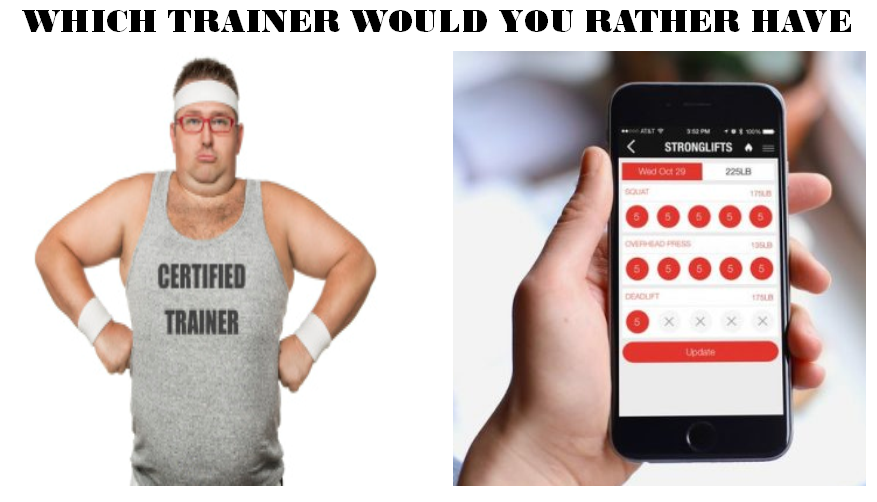
    Everyday there are newbies to the Gym Junkiez mentality. They go to their local gym and try their best to learn what exercises are best for specific body parts they desire to improve, or try different methods of working out to get in shape.  With technology constantly changing and improving, it is becoming easier to find the information to achieve the desired fitness results. Below are some of the best apps out that provide excellent workout routines, as well as allows you to track you progress towards your physique goals. These apps can easily take the place of a physical personal trainer.  If you want to get in shape but do not want to pay the insane fees some personal trainers charge, download one of these apps and give it a run!


    #1 JEFIT
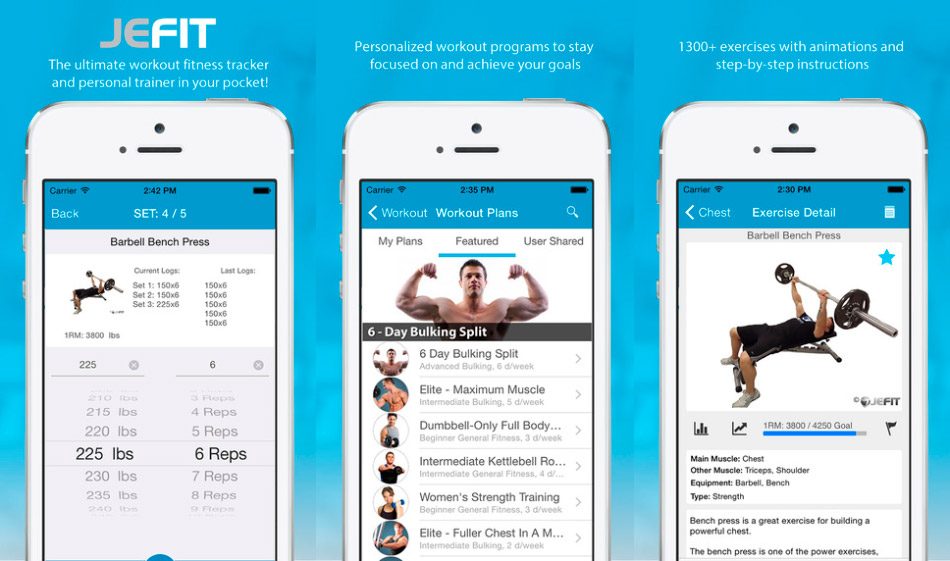
    This all-in-one app contains powerful fitness routine planning and tracking tools that help you target your workouts and keep easy track of your progress. Plan a routine—you can build whole workouts around individual body parts, if you like—before you hit the gym. Once you’re inside, JEFIT takes over, telling you what’s next (including animations) and even timing rest periods between exercise. It stores your info for later reference, plus packs more than 1,300 instructions and animations to help you find new exercises to achieve your goals.
    Rating: 4.59 stars on 22,994 ratings
    Available On: iPhone, iPod touch, iPad and Android
    jefit.com

    Related image

    #2 StrongLifts 5×5
    Based on the popular StrongLifts 5×5 workout—5 sets of 5 reps of free weight compound lifts—this app is out to make you really strong, really fast on only three workouts a week. Like your own personal Bob Harper, StrongLifts tells you what exercises to do, how much weight you should lift (making on-the-fly adjustments when you plateau or fail) and congratulates you when you put in a solid effort or achieve an important goal.
    Rating: 4.50 stars on 252 ratings
    Available On: iPhone, iPod touch and iPad
    stronglifts.com

    Image result for stronglifts app

    #3 Fitness Builder
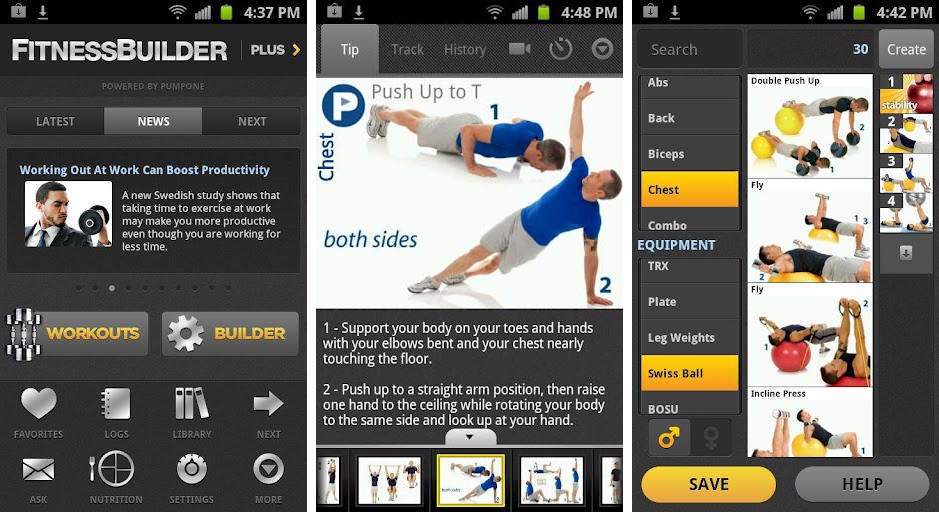
    This app has all the tools you need to get fit—a massive library of instructional training videos, live streaming personal trainers, progress reports, drag-and-drop workout builders and fitness plans. Bummer: You lose a lot of the FREE features after a trial month, but still get 300-plus exercise photos and videos and a handful of PumpOne workouts. It’s $6.99/month to continue at the Plus level.
    Rating: 3.53 stars on 2,198 ratings
    Available On: iPhone, iPad touch, iPad and Android
    fitnessbuilder.com

    Image result for fitnessbuilder app

  • Quick Tip – Use Salt!!!!

    Quick Tip – Use Salt!!!!


    Sodium tends to get a bad rap when it comes to health and fitness. But it shouldn’t. Here’s the deal…. Sodium helps to regulate a number of key functions in the body, including muscle contraction, nerve function, blood volume, and acid-base balance. When you decrease your sodium intake, your body will compensate by excreting potassium, which will cause a decrease in the fluid volume of your muscle cells. This hurts their ability to grow. Increasing sodium intake, therefore, can increase muscle size by adding more fluid volume. A higher volume of intracellular fluid also increases protein turnover, further spurring growth. Another mechanism through which sodium can increase strength is by increasing extra-cellular fluid levels (fluid outside the cell membrane), which in turn improves the leverage in your joints, allowing you to move more weight on lifts. These increases in fluid volume both inside and outside the cell have also been shown to reduce the incidence of muscle strains and tendon injuries by decreasing the friction exerted upon these tissues. Finally, many critical amino acids are sodium-dependent. This means they are able to enter a muscle cell only when accompanied by a sodium molecule.

    So what does all of that mean…… Use Salt to Improve Strength and Gainz!!

    DO NOT use table salt, instead use Sea Salt or Pink Himalayan Salt


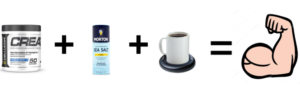
    Try this for a Pre-workout stack for a week and if it does not give you some of the most insane pumps and strength increases. Your next post workout shake is on me!!

    5 grams of Creatine 

    8 oz of black coffee

    6 shakes of Sea Salt or Pink Himalayan Salt

    Drink this 30 minutes before you begin your work out.

    To help with muscle gainz. Add 6 shakes of Sea Salt or Pink Himalayan Salt to your post workout shake or  to your post workout meal!

    ***Your post workout meal should always be protein and some form of fast digesting carbohydrate. Fat should be next to nothing!!***


    Try this for a week. Let me know how you feel. Drop a comment on this post. Till next time.. Train Hard!!!!

  • Gym Junkiez Approved –  Meal Options for the 4th of July

    Gym Junkiez Approved – Meal Options for the 4th of July


    Image result for 4th of july grilling


    Alright Gym Junkiez, July 4th is just around the corner! And I know everyone is ready to enjoy time with the family and some Good Food (of course after hitting the gym)!

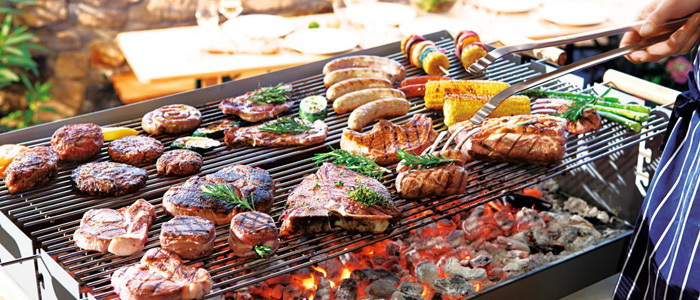
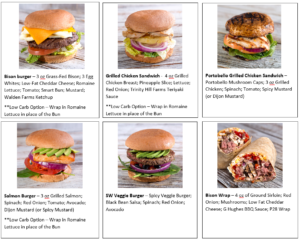
    Of course every cookout has the traditional grilled chicken, steak, burgers, hotdogs, and all of the fixes and side dishes you can hold. For those of us that have to be mindful of our nutrition, here are a few options for you guys (and gals) that will keep you on track  while still enjoying some delicious food!

    Hit the store (or Amazon) and pick up a few of these options. Most of the condiments listed are no/low-calorie and sugar-free and still taste great!

    **S/N Amazon Pantry is clutch for ordering Groceries and other necessities , I highly recommend that you sign up for it if it is available in your area. To try it out and/or find out just click here on this banner to check!**  


    Condiments

    Meats

    • Morning Star Spicy Black Bean Veggie Burgers
    • Bison or Lean Ground Sirloin
    • Applegate Farms Uncured Beef Hotdogs
    • Turkey or Chicken Hotdogs
    • Salmon
    • Ahi Tuna

    Ok now that you have those, add some of these options to your cookout menu! I guarantee they will be a hit with everyone, not just the gym junkiez!


    All of these options can be made into a low carb option by wrapping in lettuce. You can also use the P28 Wraps instead of a bun and vice versa.

    I figure hot dogs are self-explanatory! There are not too many variations that are unknown.

    If you have recipes to share please leave a comment or send them to us at gymjunkiez17@gmail.com to share with the world. Till the next time Eat Smart!!!


  • Gym Junkiez Approved Chicken Recipes

    Gym Junkiez Approved Chicken Recipes

    Image result for fitness boring chicken meme


    Whats up Gym Junkiez! If you are like me then you eat a great deal of chicken! Its cheap, its easy to prepare, and its the number 1 bro food in the world. If this rings true for you, then this is also a true statement: Chicken is Boring! You get tired of eating chicken the same way and eventually either have to find a new protein source, or another way to prep it. If you are looking for quick recipes that are delicious and easy to prepare, please see below!


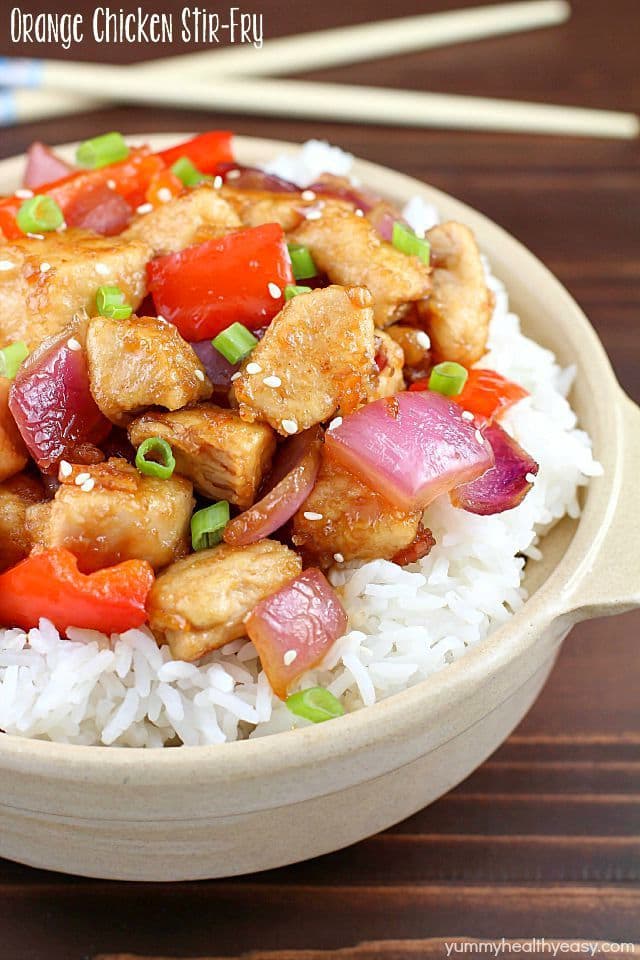
    Orange Chicken

    The most incredible Orange Chicken Stir Fry with pan seared chicken, red bell peppers, onion and a delicious sweet and savory sauce served over rice. So easy and so flavorful!

    Ingredients
    ⅓ cup chicken broth
    ⅓ cup orange marmalade
    2 Tbsp. soy sauce
    ½ tsp. garlic powder
    pinch of red pepper flakes
    2 Tbsp. coconut oil, divided
    1 red bell pepper, coarsely chopped
    ½ purple onion, coarsely chopped
    1 lb. chicken thighs, boneless skinless, cut into bite-size pieces (I used chicken breasts)
    ¼ cup cornstarch

    Instructions

    • Combine the chicken broth, orange marmalade, soy sauce, garlic powder and red pepper flakes in a small bowl, then whisk to combine. Set this aside for later
    • Heat a wok or large skillet over medium-high heat. Add 1 tablespoon of oil to the pan and cook the peppers and onions for 2 to 3 minutes, stirring frequently. Remove the pepper and onion from the pan and set aside.
    • Heat the remaining tablespoon of oil in the wok or skillet and toss the bite-size pieces of chicken in the cornstarch, shaking off the excess.
    • Add the chicken to the pan, being careful not to overcrowd the pan (I like to do this in two batches).
    • Brown the chicken on all sides, about 2 to 3 minutes per batch. Once all the chicken is cooked, add the vegetables back to the pan, then stir in the sauce and heat it through until it bubbles and thickens.
    • Garnish with sliced green onions and sesame seeds, if desired. Enjoy!


    Slow Cooker Chicken, Sweet Potato, and Quinoa Soup

    Ingredients
    1 and 1/2 pounds boneless skinless chicken breasts
    1 cup quinoa I used a black bean quinoa package
    2 pound large sweet potatoes ~3-1/2 cups
    1 can (15.25 ounces) black beans
    1 can (14.25 ounces) petite diced tomatoes
    1 teaspoon minced garlic
    1 packet (1.25 ounces) chili seasoning mix
    5 cups chicken broth*
    Optional: fresh parsley

    Instructions

    • Spray the slow cooker with nonstick spray. Remove the fat from the chicken breasts and put them into the slow cooker along with the rinsed quinoa.(I found a black beans seasoned quinoa package which I used and loved, but regular quinoa will work as well, just make sure to rinse it well.)
    • Remove the skins and chop the sweet potatoes into cubes adding them into the slow cooker.
    • Drain and rinse the black beans and add those in. Add in the undrained petite diced tomatoes, minced garlic, chili seasoning mix, and chicken broth.
    • Place on high for 3-5 hours (It took 4 hours on high for my crockpot.)
    • Using two forks, shred the chicken and stir all the ingredients together.
    • Add salt and pepper and if desired fresh parsley.
    • Serve immediately.


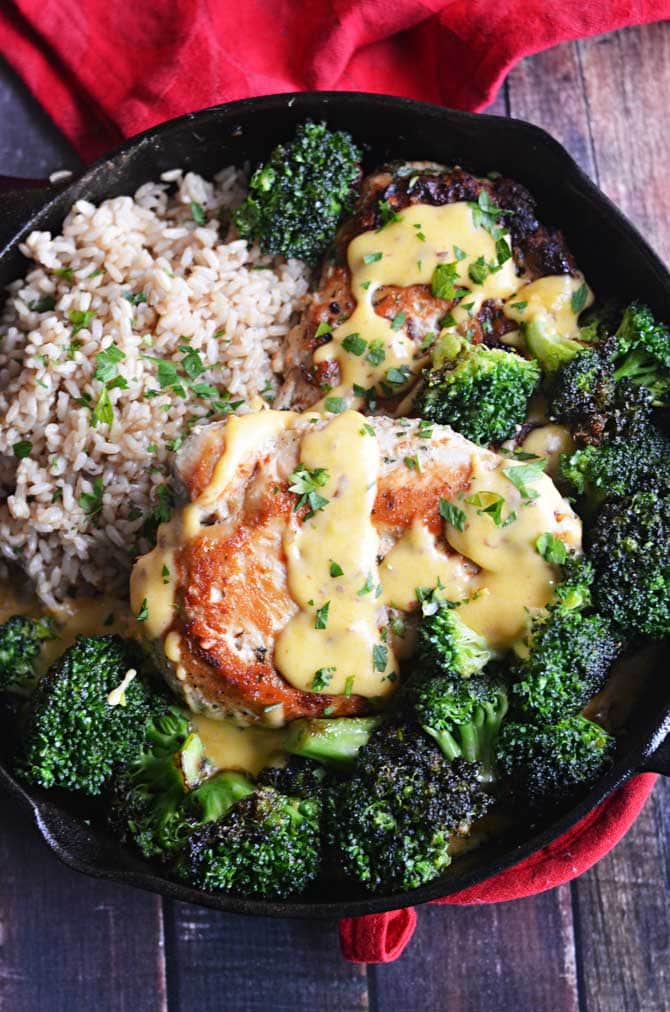
    Chicken Brocoli and Cheddar Skillet

    Sizzling Chicken, Broccoli, and Cheddar Skillet!  Way healthier than those from your favorite chain restaurants, but even more delicious! | hostthetoast.com


    Ingredients

    2 (4 oz) chicken breasts, pounded to 1/2 – 3/4″ thick
    1 cup jasmine rice, cooked according to package directions
    1 tablespoon fresh parsley, chopped, to garnish
    FOR THE MARINADE:
    5 cloves garlic, minced
    2 tablespoons fresh parsley, chopped
    1/4 cup coconut oil
    1 teaspoon crushed red pepper flakes
    Salt and pepper
    FOR THE CHEDDAR CHEESE SAUCE:
    1 cup almond milk, divided
    1 tablespoon almond flour
    1/4 teaspoon sea salt
    1/2 cup sharp cheddar cheese, shredded (light cheddar cheese, works, too)
    FOR THE BROCCOLI:
    1 small head broccoli, cut into florets
    Salt and pepper, to taste

    Instructions

    • In a freezer bag, combine the marinade ingredients and add in the chicken breasts. Refrigerate overnight or for at least 2 hours.
    • Heat a cast iron skillet over medium-high heat. Add in the chicken breasts and reserve excess marinade. Cook until cooked through, about 6 minutes per side. Remove chicken to a plate and tent with foil to keep warm.
    • In a separate small saucepan over medium heat, whisk together the flour and about 1/4 cup of the milk. Slowly whisk in the remaining milk and the salt. Bring to a gentle boil, stirring often.
    • Reduce to a simmer and allow mixture to thicken, stirring constantly, about 3 minutes.
    • Stir in the cheese, a bit at a time, until melted and completely combined. Keep over low heat, stirring regularly, until ready to use.
      In the cast iron skillet over medium heat, add 2 tablespoons of the reserved marinade and discard the remaining marinade.
    • Reduce heat to medium. Add in the broccoli and saute until bright green and beginning to brown lightly in spots, stirring and turning often, about 3 minutes. Season with salt and pepper, to taste.
    • Remove the broccoli and place on the plate with the chicken. Increase the heat on to high and let the pan sit for a minute or so to get steaming hot.
    • Remove the skillet from heat and pour 1/2 of the cheese sauce onto the hot skillet. Quickly add the chicken, broccoli, and rice on top of the cheese sauce, and then pour over the remaining cheese sauce. Sprinkle the chopped parsley on top, to garnish, and serve while still sizzling.


    Pulled BBQ Chicken Sandwich


    healthy bbq pulled chicken recipe


    Ingredients

    • 1 8-ounce can reduced-sodium tomato sauce
    • 1 4-ounce can chopped green chiles, drained
    • 3 tablespoons cider vinegar
    • 2 tablespoons honey
    • 1 tablespoon sweet or smoked paprika
    • 1 tablespoon tomato paste
      O Organics Tomato Paste 6 Oz
      $0.99 for 1 itemThru 05/16
    • 1 tablespoon Worcestershire sauce
    • 2 teaspoons dry mustard
    • 1 teaspoon ground chipotle chile
    • ½ teaspoon salt
    • 2½ pounds boneless, skinless chicken thighs, trimmed of fat
      Family/ Value Pack Boneless Skinless Chicken Thighs 1 Lb
      $2.49 for 1 item Thru 05/16
    • 1 small onion, finely chopped
    • 1 clove garlic, minced
    • Tip: Substitute Bun for P28 Protein Packed Bread (to buy click here)

    Instructions

    • Stir tomato sauce, chiles, vinegar, honey, paprika, tomato paste, Worcestershire sauce, mustard, ground chipotle and salt in a 6-quart slow cooker until smooth. Add chicken, onion and garlic; stir to combine.
    • Put the lid on and cook on low until the chicken can be pulled apart, about 5 hours.
    • Transfer the chicken to a cutting board and shred with a fork. Return the chicken to the sauce, stir well and serve.
    • Make Ahead Tip: Cover and refrigerate for up to 3 days or freeze for up to 1 month.
    • For easy cleanup, try a slow-cooker liner. These heat-resistant, disposable liners fit neatly inside the insert and help prevent food from sticking to the bottom and sides of your slow cooker.


    Thai Chicken Burgers with Cabbage Slaw

    healthy chicken burger recipe

    Ingredients

    1 1/4 pounds boneless, skinless chicken thighs (or 1 1/4 pounds 85% or 90% lean ground chicken)
    2 cloves garlic
    2 tablespoons finely minced fresh ginger
    1/2 teaspoon ground coriander
    1 teaspoon kosher salt
    1 tablespoon sesame oil
    1 teaspoon sambal oelek (1 teaspoon sriracha or 1/2 teaspoon chile flakes will also work)
    1 tablespoon soy sauce
    2 tablespoons mayonnaise
    1/4 cup bread crumbs (preferably panko)
    1 tablespoon chopped cilantro
    1 tablespoon chopped basil
    1 tablespoon chopped mint
    2 teaspoons finely grated lime zest
    1 tablespoon lime juice
    1 teaspoon sugar

    Coconut oil, for cooking the burgers

    Tip: Substitute Bun for P28 Protein Packed Bread (to buy click here)

    Instructions

    Cut the chicken thighs into 1-inch cubes. Arrange the cubed chicken in a single layer on a large plate or sheet-pan and freeze until the edges of each piece of meat are frozen but the center is still soft, 15-20 minutes.

    Put the peeled garlic cloves in the bowl of a food processor and process until finely minced. Add the par-frozen chicken and pulse until the meat is roughly chopped. The goal is to have 1/4- to 1/3-inch pieces of chicken rather than a mixture that resembles pâté. This will take about 15 to 20 short pulses. Transfer to a medium bowl.

    Add the rest of the ingredients and use your hands to mix thoroughly. Divide the seasoned chicken into 4 balls of equal size, then form the balls into patties, making a 1/2-inch depression in the center of each to account for the fact that the burgers will swell as they cook. When you have formed all the patties, place them in the refrigerator for at least 15 minutes.

    Light 2/3 chimney’s-worth of charcoal. When hot and glowing, pour out the charcoal on one side of your grill. Place the cooking grate in place, close the lid and allow the grill to preheat for 5-10 minutes.

    If using a gas grill, set half of your burners to medium-high, close the lid and allow the grill to preheat for at least 10 minutes.
    When the grill is hot, clean the grill grate and brush it generously with the vegetable oil. Place the burgers on the hot side of the grill and cook, without turning, until the burgers are nicely charred and release from the grate, about 5 minutes. Turn and cook until the other side is nicely charred and the burgers are no longer pink inside when pierced with the tip of a paring knife, about 5 minute more. Transfer the burgers to a sheet-pan or large plate to rest. If desired, brush the cut sides of the buns lightly with vegetable oil and grill until warmed through and grill marks appear.

    To serve, place the grilled burgers on a bun and top with a generous amount of the slaw. Serve any remaining slaw alongside the burgers (it goes fast!).

    Napa Cabbage Slaw

    Ingredients
    8 cups (about 1 pound) coarsely shredded napa cabbage
    1 cup thinly sliced radishes
    1 cup julienned carrots (yellow or orange bell pepper also works well)
    12 ounces snow peas, strings removed and thinly sliced on the bias (yields about 2 cups)
    1 cup thinly sliced green onions, green part only
    1 cup cilantro leaves, lightly packed

    3 tablespoons white wine vinegar
    3 tablespoon sugar
    1 tablespoon soy sauce
    1 clove garlic, finely minced or pressed
    1/2 teaspoon toasted sesame oil
    1/2 teaspoon ground ginger
    1/4 teaspoon ground cayenne
    1 cup mayonnaise
    3/4 cup shelled, roasted, salted peanuts

    Instructions

    In a large bowl, combine the cabbage, radishes, carrots, snow peas, green onions and cilantro.

    In a small bowl, combine the vinegar, sugar, soy sauce, garlic, sesame oil, ginger and cayenne. Whisk to dissolve the sugar. Add the mayonnaise and continue to whisk until the dressing is homogenous.

    Just before serving, add the dressing and peanuts to the vegetables. Mix to coat thoroughly.

    *Note: Only dress and add the nuts to the slaw mix you intend to eat immediately; it will get soggy if it sits with dressing on it. The remaining vegetables and dressing will keep, covered and stored separately in the refrigerator, for up to 3 days.


    If you like these recipes, please leave a comment and let us know. Till the next time. Eat Smart!!!!!!

  • Template for Building your Weight Training Program

    Template for Building your Weight Training Program

    I see a lot of people new to the gym junkiez lifestyle doing random exercises, some of them are even doing those exercises incorrectly. Several guys have asked me what exercises to do for various bodyparts or what plan they should follow to get bigger and/or stronger. I’m now going to provide you with a couple of plug-n-play – make that plug-n-train – templates that you can use to quickly and easily design a slew of great, no-nonsense training programs.

    Since I generally recommend training four or five days per week, I’ll include both a four-way training split and a five-way split. That way you’ll be covered either way.

    I encourage you to use these templates either as-is, or as a base upon which you can build your own training program.


    Be Flexible

    “I am a man of fixed and unbending principles, the first of which is to be flexible at all times.” — Everett Dirksen

    Nothing in these templates or the following exercise options is set in stone. For example, you may already have huge calves. If you happen to be so lucky, then you may want to opt to do no calf exercises at all.

    Or you may be a recreational Mixed Martial Artist who needs to work on grip strength. Thus you’ll want to add grip/forearm exercises to the templates below.

    Whatever the case, just remember that while bodybuilding training is definitely a science, it’s just as much an art – and even though you and I use the same science, your art may very well look different from my art.

    Be Rigid

    “Life is indeed terribly complicated–to a man who has lost his principles.” — G.K. Chesterton

    Although creative flexibility is welcomed, don’t get carried away. Whether you use my 11 bodybuilding training principles (which are built into the following templates) or your own, you should definitely have some parameters to guide your decision-making, otherwise it’s easy to venture too far from the tried and true.

    For example, if you’ve ever seen a leg workout that consisted of 3 sets each of leg extensions, leg press, and leg curls, you’ve seen a lack of training principles in action.

    Rest Intervals

    The topic of rest intervals is a perfect illustration of the need to be flexible and rigid at the same time.

    While walking around in the touristy part of San Francisco the other day, I saw a shirt that said, “Some say I have ADD, but they just don’t underst….Hey, LOOK, a Squirrel!”

    If your friends would say that shirt applies to you (or you already own said shirt), then you may very well get bored between sets, especially when you’re focusing on strength and need to get copious rest between sets. In that case, you need to be more rigid, getting at least the minimum amount of rest prescribed between sets.

    On the other hand, it’s important to be flexible regarding your rest intervals between sets – at least flexible enough to allow common sense to prevail.

    For example, if a workout calls for you to only rest 30 seconds between sets, yet your breaths per minute and the beats per minute of your heart haven’t even begun to slow, then it’s time to be flexible and use some common sense – take more rest.

    With that said, here are the rest intervals that you should adhere to, unless you have a good reason not to – and getting bored isn’t a reason!

    • Short rest: 20-60 seconds (45 seconds on average)
    • Moderate rest: 1-2 minutes (90 seconds on average)
    • Long rest: 2-5 minutes (3 minutes on average)

    Besides implementing a rest period that aligns with your goal of doing a given exercise (which I’ve done for you with the following template), the other thing to remember is to be consistent with your rest intervals. Otherwise, your performance will be inconsistent and impossible to monitor.

    Sets & Reps

    As a rule, we could say there are three general rep/weight ranges:

    • Low Rep / Heavy Weight: 1-6 reps (5 reps on average)
    • Moderate Rep / Moderate Weight: 7-12 reps (10 reps on average)
    • High Rep / Light Weight: 12 reps (15 reps on average)

    But I point out the above ranges more for illustration, as we’re not going to stick precisely to those.

    In the templates I’ll lay out the exact sets and reps I’d typically recommend for that particular exercise, but don’t get too hung up on being 100% consistent with what I’ve laid out. Instead, use them as a guideline to know what ‘ballpark’ to stay in.

    For example, I may say do 5 x 5 (five sets of five reps), but instead you’d like to do 5, 4, 3, 2, 1. That’s totally fine – you’re still in the same heavy weight/low-rep ‘ballpark’ so-to-speak.

    On the other hand, if I prescribe 3 x 6-10 and you instead do 3 x 12-15, then you’re changing things a bit too much and essentially creating your own training template. Again, that’s fine, but just make sure you have a legitimate reason to tweak things that much.

    Image result for deadlift

    When In Doubt

    When in doubt as to whether to stick to the plug-n-train template I’ve laid out or to tweak it, I’d highly encourage you to stick with the template as is.

    After all, I’m putting in (literally) over 20 years of trial-and-error experience and the same amount of book learning into these templates – so, to say I’m confident the following templates work would be a serious understatement.

    So my rule regarding tweaking the following templates is the same as Mrs. Mathews’ (my eighth-grade English teacher) rule regarding comma use – when in doubt, don’t.

    Exercise Selection

    It would be impossible for me to list every possible exercise for each body part. Instead, I’m going to list what I’d call the “No-Nonsense” exercises for each body part.

    (FYI, when designing workouts for myself or clients, I rarely feel the need to venture outside of these.)

    Although you’ve probably got some good, unique exercises up your sleeve, resist the temptation to use too many ‘fancy’ new exercises or machines. Otherwise you’ll stray too far away from the meat and potatoes exercises, which happen to be the ones that we know work!

    Primary and Secondary Exercises

    To systemize everything, I’m dividing exercises into primary (1°) and secondary (2°) exercises.

    Generally, primary exercises will be compound, multi-joint exercises, while secondary exercises tend to be more isolation movements. However, I’ve based this division on more than compound versus isolation.

    Take dips for example. They’re undoubtedly a compound exercise, yet I’d still consider dips secondary in terms of chest exercises.

    Make no mistake, there will be times when you’ll want to implement a secondary exercise in place of a primary one. Maybe you want to pre-exhaust your lats with pullovers, for example.

    A more likely exchange would be doing another primary exercise where I’ve listed a secondary exercise.

    For example, you may opt to do skull crushers – a primary exercise for triceps – last in your triceps routine. Nothing wrong with that.

    Although this primary versus secondary thing is flexible, be more hesitant to swap a primary exercise for a secondary exercise than vice versa – otherwise your routine might not contain enough tough exercises that are easy to loathe yet highly effective, like barbell squats.

    Without further ado, let’s get into the specific exercises for each body part.

    Chest

      • 1° Chest Exercises
      • Incline Press (barbell or dumbbell)
      • Flat Press (barbell or dumbbell)
      • Decline Press (barbell or dumbbell)


    • 2° Chest Exercises
    • Cable Fly/Crossover (high-to-low, low-to-high)
    • Dumbbell Fly (incline, flat, or decline)
    • Dip
    • Machine Press (incline, flat, or decline)
    • Machine Fly
    • Push-Up

    Back

      • 1° Back Exercises
      • Deadlift (full or rack)
      • Barbell Row (overhand or underhand)
      • Pull-Up / Chin-Up
      • One-Arm Dumbbell Row
      • T-Bar Row


    • 2° Back Exercises
    • Cable Row (neutral, overhand, or underhand grip)
    • Reverse Fly (dumbbell/machine)
    • Dumbbell Pullover
    • Pulldown (neutral, overhand, or underhand grip)
    • Row Machine
    • Pulldown Machine

    Shoulders

      • 1° Shoulder Exercises
      • Overhead Press (barbell or dumbbell)
      • Dumbbell Lateral Raise


    • 2° Shoulder Exercises
    • Arnold Press
    • Overhead Press Machine
    • Cable Lateral
    • Front Raise – (barbell or dumbbell)
    • Rear-Delt Cable Kickback
    • Rear-Delt Dumbbell Raise/Extension
    • Truck Driver
    • Upright Row – (barbell, dumbbell or cable)

    Triceps

      • 1° Triceps Exercises
      • Skull Crusher
      • Close-Grip Bench Press
      • Dip
      • V-Bar Cable Pushdown


    • 2° Triceps Exercises
    • Kickback (dumbbell or cable)
    • Randy Press
    • Straight-Bar/Rope Cable Pushdown
    • Overhead Extension (barbell, dumbbell, or cable)
    • Reverse-Grip Cable Pushdown

    Biceps

      • 1° Biceps Exercises
      • Barbell Curl – (straight or EZ/cambered bar)
      • Standing Alternating Dumbbell Curl


    • 2° Biceps
    • Spider Curl
    • Drag Curl
    • Low-Cable Curl
    • Preacher Curl (EZ bar or dumbbell)
    • Dumbbell Hammer Curl
    • Reverse Curl
    • Dumbbell Concentration Curl
    • Chin-Up

    Abdominals

      • 1° Ab Exercises
      • Hanging Leg Raise
      • Bicycle Crunch
      • Decline Crunch


    • 2° Ab Exercises
    • Rope Crunch
    • Reverse Crunch
    • Frog Kick
    • V-Up

    Quadriceps

      • 1° Quad Exercises
      • Back Squat
      • Front Squat
      • Hack Squat


    • 2° Quad Exercises
    • Bulgarian Split Squat
    • Leg Press
    • Leg Extension
    • Walking Lunge

    Hamstrings

      • 1° Hamstring Exercises
      • Stiff-Legged/Romanian Deadlift (barbell or dumbbell)
      • Seated Leg Curl


    • 2° Hamstring Exercises
    • Lying Leg Curl
    • Hamstring Ball Roll
    • Unilateral (machine) Leg Curl
    • Hamstring Rope Pull-Through

    Calves

      • 1° Calf Exercises
      • Standing Calf Raise (machine)
      • Unilateral Dumbbell Calf Raise


    • 2° Calf Exercises
    • Calf Press (on leg press)
    • Seated Calf Raise

    Training Split Templates

    My goal in creating these templates is to completely take the guesswork out of designing your own training programs. That way you can use your precious energy for training instead of thinking.

    Simply plug-in the appropriate exercise and you’re off!

    Image result for shoulder press

    4-Day Training Split

    The following 4-day training split is, as you likely surmised, for those of you who are going to train four days per week.

    Notice I didn’t say “might train four days per week” or “will often train four days per week.”

    It’s important that you decide, in advance, how many days per week you can commit to. Otherwise you’re going to compromise the effectiveness of the program. So if you’re thinking, “I can consistently train four or five days per week,” then go with four, because it needs to be something doable week in and week out.

    Note: Sure, we can design training splits that are more flexible in nature, allowing you to train on a more random schedule, but that’s a topic for another post.

    No-Nonsense 4-Day Training Split

    • Day 1: (e.g., Monday) – Chest & Biceps
    • Day 2: (e.g., Tuesday) – Back & Abs
    • Day 3: (e.g., Thursday) – Shoulders, Triceps, & Abs
    • Day 4: (e.g., Friday) – Legs

    Chest & Biceps

    Exercise Sets Reps Rest
    A 1° Chest (press) 5 5 Long
    B 1°/2° Chest 3 6-10 Moderate
    C 2° Chest 4 12-20 Short
    D 1° Biceps 4 5 Long
    E 1°/2° Biceps 3 8-12 Moderate
    F 2° Biceps/Forearm 3 10-15 Short/Moderate

    Back & Abs

    Exercise Sets Reps Rest
    A 1° Back (vertical pull) 4 6-10 Long
    B 1° Back (lift/row) 3-4 6-10 Long
    C 1°/2° Back 3 8-12 Moderate
    D 2° Back 4 10-15 Short
    E 1° Ab 3-4 6-10 Moderate
    F 2° Ab 3 10-20 Short/Moderate

    Shoulders, Triceps, & Abs

    Exercise Sets Reps Rest
    A 1° Shoulder (vertical press) 4 5 Long
    B 1° Shoulder (abduction) 4 8-12 Moderate
    C 2° Shoulder 3 10-15 Short
    D 1° Triceps 3 6-10 Moderate
    E 1°/2° Triceps 3 8-12 Moderate
    F 2° Triceps 3 10-15 Short
    G 1° Ab 4 6-12 Moderate

    Quads, Hams, & Calves

    Exercise Sets Reps Rest
    A 1° Quad 5 6-12 Long
    B 2° Quad 4 8-15 Moderate
    C 1° Ham 4 6-10 Moderate
    D 2° Ham 3-4 8-15 Short/Moderate
    E Ancillary Leg (as needed) 2-3 8-15 Short/Moderate
    F 1° Calf 4-5 6-12 Moderate
    G 2° Calf 3 10-15 Short
    Image result for leg press

    5-Day Training Splits

    For those who can commit to training five days per week, this is a great training split.

    Note: If you’re a bit savvy, you can reconfigure the following template to use with a different 5-day training split.

    No-Nonsense 5-Day Training Split

    • Day 1: (e.g., Monday) – Chest & Calves
    • Day 2: (e.g., Tuesday) – Back & Abs
    • Day 3: (e.g., Thursday) – Shoulders & Hams
    • Day 4: (e.g., Friday) – Quads & Abs
    • Day 5: (e.g., Saturday) – Arms

    Chest & Calves

    Exercise Sets Reps Rest
    A 1° Chest 5 5 Long
    B 1° Chest 3-4 6-10 Long/Moderate
    C 2° Chest 3 8-12 Moderate/Short
    D 2° Chest (weak point isolation) 3 10-15 Short
    E 1° Calf 4 5-10 Moderate
    F 1° Calf 3 10-15 Short/Moderate
    G 2° Calf 3 12-20 Short

    Back & Abs

    Exercise Sets Reps Rest
    A 1° Back (vertical pull) 3-4 6-10 Moderate/Long
    B 1° Back (lift/row) 3-4 4-8 Long
    C 1°/2° Back 3 8-12 Moderate
    D 2° Back 3 8-12 Moderate
    E 2° Back (weak point isolation) 4 10-15 Short/Moderate
    F 1° Ab 3-4 6-12 Moderate
    G 2° Ab 3 12-20 Short

    Shoulders & Hamstrings

    Exercise Sets Reps Rest
    A 1° Shoulder (press) 4 4-8 Long
    B 1° Shoulder (abduction) 4 6-10 Moderate
    C 2° Shoulder 3 8-12 Short/Moderate
    D Shoulder Health (i.e., ext rotation) 3 12-15 Short
    E 1° Ham (knee flexion) 3-4 6-10 Moderate
    F 1° Ham (hip ext) 2-3 6-10 Moderate
    G 2° Ham 3-4 10-15 Short/Moderate

    Quads & Abs

    Exercise Sets Reps Rest
    A 1° Quad 5 6-10 Long
    B 1°/2° Quad 4 8-12 Moderate/Long
    C 2° Quad 3-4 8-12 Moderate
    D 2° Quad 3 10-20 Short/Moderate
    E 1° Ab 3 6-12 Moderate
    F 2° Ab 3 12-20 Short

    Biceps, Triceps, & Forearms

    Exercise Sets Reps Rest
    A 1° Triceps 4 4-8 Moderate/Long
    B 1° Biceps 4 4-8 Moderate/Long
    C 1°/2° Triceps 3 8-12 Moderate
    D 2° Triceps 3 12-20 Short
    E 1°/2° Biceps 3 8-12 Moderate
    F 2° Biceps 3 12-20 Short
    G Forearms (as needed) 3 8-15 Short/Moderate

    Ancillary Exercises to Consider

    Here are some smaller/more specific body parts that you may want to give some attention, along with the exercises to accomplish that task.

    As needed, simply plug these into your split where they fit best, as illustrated above with the ancillary leg, forearm, and shoulder health exercises.

      • Tibialis Anterior
      • Resisted Dorsiflexion
      • Heel Walking


      • Forearm Wrist
      • Curls/Flexion (Barbell or Dumbbell)
      • Wrist Extension (Barbell or Dumbbell)
      • Wrist Rolls
      • Reverse Curls


    • Shoulder External Rotation
    • Cuban Rotation
    • Side-Lying DB External Rotation
    • Cable External Rotation

    Ancillary Exercises

    Target Muscle Sets Reps Rest Interval
    Tibialis Anterior 4 8-15 Short-Moderate
    Wrist Extensor 4 8-15 Short-Moderate
    Wrist Flexor 3 8-15 Short-Moderate
    Shoulder External Rotation 4 8-15 Short-Moderate

    In Closing

    I’ll be the first to admit, there’s nothing revolutionary in this post, but that’s sort of the point – we’re not trying to reinvent bodybuilding training here.

    Instead, these templates are meant to be something more like elegantly simple, yet extremely effective.

    With that in mind, I’d encourage you to print them out or screenshot them and take ’em to the gym with you. That way, you’ll always have the information you need to construct a bad ass training program whether you like to have a plan before going to the gym or want to instinctively train and create one  on the spot.

    Train Hard!!!!!!

  • 8 Reasons Why You Cant Cut the Fat!

    8 Reasons Why You Cant Cut the Fat!

    Do you eat well most of the time, but just can’t seem to lose stubborn pounds? It could be that you are eating the right foods, but in the wrong combinations. Or you could be eating the right combinations of food, but not timing your meals correctly. No matter how you slice it, your weight loss is determined by your metabolism. A revved-up metabolism will easily yield more weight loss than a sluggish one. The good news is that you do have control over your fat-burning capacity!

    WE ARE NOT CREATED EQUAL

    Before I teach you how to eat well for an active metabolism, let me dispel the myth that we are all created equal. When it comes to calories-in and calories-out, we are NOT all equal. I might work with two clients who are the same age, same sex, and do the same amount of exercise, yet one can get away with eating a lot more food than the other, and still lose weight. Some of it will depend on muscle mass (the more muscle, the higher the metabolism), however some of it is just straight genetics. This is one of the reasons that obesity runs in families.

    To help rev-up your metabolism, I offer the top eight ways we slow it down and how to avoid them.

    1. NOT EATING ENOUGH DURING THE DAY

    Not eating enough during the day slows down your metabolism two ways. First, your body thinks it’s starving, so it will slow down your calorie-burning capacity in order to “survive.” Second, you are likely to make up for low caloric intake in the last few hours of the day, causing your body to hang on to the food through the night in preparation for another day of “starving.” Plain and simple — eat early and eat often — it will get your engine revving on high!

    2. NOT DRINKING ENOUGH FLUIDS

    Image result for not staying hydrated

    Drinking water is one of the easiest ways to turn up your fat-burning capacity. I cannot say that drinking water alone will cause weight loss; however, if you are eating a perfect diet, but are dehydrated, you will lose less weight. When your body is dehydrated it cannot burn fat. So please, get 64 ounces per day—and as a bonus your hair and skin will shine!

    3. ALL-OR-NOTHING DIETING

    One of the biggest problems with “fad” and “crash” diets is that they usually provide a very low calorie allowance. Not only will this cause your body to burn fewer calories, but it will also make you more likely to binge. A slower metabolism combined with an increased likelihood of binging spells disaster. So play it safe; find a well-balanced diet that does not overly restrict calories.

    4. EATING TOO MUCH SUGAR

    Image result for eating sugar

    I often find that my clients are eating the right amount of calories for weight loss, but are not losing weight. The culprit is usually sugar. Sugars and refined carbs have the unique ability to stop weight loss in its tracks. Think of this: Your body is burning fat (from your hips, maybe?), and all of a sudden it gets an influx of sugar. It will use the sugar as energy and promptly stop burning the fat. So really, cut the sugar.

    5. NOT WEIGHT-TRAINING

    Image result for weight training vs cardio

    So many of my women tell me about the hours they spend on the treadmill — thinking that this is the secret ingredient to burning more calories. Sadly, it just doesn’t work out. Sure, you burn more calories by walking on the treadmill than by lying on the couch; however, without the proper amount of weight training, you will not increase your metabolism. Your resting metabolism is directly affected by how much muscle you have — so go on, build more muscle!

    6. “EATING BACK” YOUR EXERCISE CALORIES

    Many people want to know how many calories their exercise session burned. Usually the reason they want this information is to quantify it in terms of food. In other words, they justify eating a candy bar since they already worked off those calories. However, this equation just doesn’t work. You’ll end up not losing weight, or you might even gain some weight. So remember, food and exercise are separate issues.

    7. DRINKING TOO MUCH ALCOHOL

    Image result for drinking alcohol fitness

    There is nothing wrong with a few cocktails per week, but too many will absolutely reduce your fat-burning capability. Not only does alcohol provide a hefty dose of calories, but it also stops fat burning in its tracks (similar to sugar). Add in the side effect of the increased hunger you might feel while imbibing, and you’ve set yourself up for weight loss failure. Enjoy your cocktails…sparingly.

    8. SKIMPING ON PROTEIN

    During the low-fat food craze of the late 1980s, we all became afraid of protein. It was linked to higher-fat diets, and many trendy diets limited protein to 2 ounces per meal. This has a disastrous consequence on weight loss. When you skimp on protein, your body has to burn its own muscle for fuel, resulting in decreased lean muscle mass. Less muscle means less calorie-burning action! Additionally, without adequate protein you can’t build more muscle mass (to burn calories). And lastly, diets that are low in protein cause increased sugar cravings. So eat your protein, often! Remember, a good rule of thumb for protein intake is to consume between 0.6 – 1 gram of protein per pound of body weight. Enjoy!!!

    If you are adhering to these protocols then you will be on your way to a healthy metabolism and a leaner YOU. Whether you want to be in better shape for the summer time or just want to be healthy, this will help you achieve both. Eat Smart!!

  • I Got that Juice!!!

    I Got that Juice!!!

    One of the best ways to boost your health and begin to repair years of damage is with juicing. Now when it comes to juicing I’m not talking about running to the grocery store and buying a bottle of juice straight off the shelves. What I’m referring to is fresh juice made in your own kitchen. That’s right, juice as fresh as fresh can be. I am going to cover the basics to juicing, share a couple of recipes that you will benefit from greatly, and give you a couple of options for juicers so that you can quickly start your journey to becoming a healthier you! 

    Ready… Lets go!!!!

    Image result for juicing

    Juicing Basics

    The benefits of juicing everyday are becoming more understood by consumers today. Juicing is an easy way to get a whopping heap of fresh veggies (and fruits) into your diet in one easy shot – or however many you want a day. You can consume far more of these veggies and fruits with juicing than you could probably eat in the same amount of time.

    Another great benefit of juicing is that it’s easy to digest and thus your body absorbs so many more nutrients so much faster. This is one of the reasons juicing has become so popular with health enthusiasts.

    In addition many juicer enthusiasts are fond of the process as they say it is of great benefit to the heart. Most fruits and vegetables are rich in vitamins C and E, which are great for boosting your immune sytem. In fact, studies indicate that both of these important vitamins help to fight free radical damage on the artery walls and help to lower triglyceride levels.

    As you probably know certain vegetables and fruits contain higher levels of specific vitamins than other fruits and veggies. For instance, if you really want to boost your intake of vitamin E consider juicing with asparagus, kiwi, spinach, and blackberries. Blackberries are also a great source of potassium and magnesium.

    But these aren’t the only benefits of juicing. Liver detoxification is one of the main reasons people juice too. The liver works on overload on a regular basis. We are constantly bombarding our bodies with toxins in what we eat, breathe, and put onto our bodies. Juicing offers the body a chance to aid in detoxing the liver.

    There are certain nutrients you can focus on for a thorough liver detoxification by juicing specific fruits and vegetables. The body needs the following nutrients to detoxify the liver:

    • Beta-carotene
    • Vitamin C
    • Vitamin E
    • N-acetyl cysteine
    • B vitamins

    If you want to create a liver detoxing juice try all or any of the following:

    Liver Detoxing Foods

    • Cabbage
    • Brussels sprouts
    • Cauliflower
    • Milk thistle

    People who juice have different goals in mind when they do. Another great reason to juice is to alkalize your body. Today’s society follows a diet that is highly acidic. Diseases grow abundantly in acidic environments and scientists have long stated their belief that creating an alkaline environment could be one of the best ways to fight off disease.

    There are juicing recipes you can make to help to alkalize the body. Keep in mind that all vegetables are alkalizing but not all fruits are. Fruits, in general, are acid in nature. Use some or all of the following ingredients to create a delicious, alkalizing drink:

    Alkalizing Juicing Recipe

    • Beets
    • Carrots
    • Cucumbers
    • Cabbage
    • Spinach

    Another great benefit of juicing is the ability it gives you to up your intake of chlorophyll. Chlorophyll is the green pigment in plants. Chlorophyll can help to strengthen the blood and rebuild red blood cells. The molecular structure of chlorophyll is almost identical to a component of red blood cells called hemin, and in fact scientists have recently found that chlorophyll in the body actually is converted into hemin.

    If you want to get more chlorophyll into your body consider creating the greenest juices you can. Add in the following for a green juice full of life giving, blood rejuvenating chlorophyll:

    • Kale
    • Spinach
    • Swiss chard
    • Wheatgrasses
    • Cucumber
    • Celery
    • Romaine lettuce
    • Greens of beets
    • Parsley

    Ginger and Juicing

    One way to add a little life to your juice and a plethora of health benefits is by adding some ginger. Ginger has been slotted as preventing heart attack and strokes because of its ability to prevent blood clotting. It is also helpful (and used often) as a dietary aid to prevent indigestion and nausea.

    In addition ginger is used as an anti-inflammatory and to improve circulation. Here are two recipes that include a hearty helping of ginger.

    Ginger Recipes

    Beetroot and Ginger
    (For 2 pints)

    • 4 beetroots
    • 4 carrots
    • 2 lemons
    • 6 apples
    • 4 inches of peeled ginger

    Ginger Energy Juice
    (For 2 pints)

    • 2 inches peeled ginger
    • 16 medium carrots
    • 6 apples

    When it comes to juicing you can create any recipe you want. Just follow your taste buds. Juicing may seem like a complex undertaking but once you find the right juicer and experiment with juicing some of your favorite vegetables and fruits you’ll be hooked. And speaking of finding the right juicer… check out these options below. (Click on the picture to get more info)


  • Fat Burners – Real Talk

    Fat Burners – Real Talk

    Enough is enough. Everywhere we go, I am tired of being inundated with ads promising people that taking a few pills a day will burn fat. Turn on the television and you hear doctors recommending the latest and greatest fat burner (here’s a little secret: most doctors take only one class in nutrition during their education, and thus know very little about nutrition and metabolism). Let me first say that MOST fat burners work about as well as what you see the guy in this picture doing.


    NOW If you want to waste your money on fat burners, go ahead and stop reading. If you want to learn the truth, keep reading. We’re going to take an evidence-based approach, and see what the actual scientific research says about these popular fat burners. 
    Bottle-Fat-Burners (1)A Quick Tangent on Research

    Before we dissect the 10 most popular fat burners, I want to take a moment to talk a little about scientific research. If you want to skip this section, go ahead, but I think it will help your understanding a lot.

    Due to cost and time considerations, a lot of studies are done on rats instead of humans. It’s a lot easier to get 50 rats doing what you want, when you want, how you want. You can see the effects of various supplements across generations and over a long period of time. You can do things to rats you really can’t do to humans.

    Rats are great. But they are also not humans (an understatement!). Often times we come across promising research that works in rats but is useless when applied to humans.

    Research originally happens in rats and human cells in test tubes or petri dishes. This is an important distinction – a human body spends a lot of energy and effort regulating what goes on within. A human cell inside a test tube is free from those constraints. So what may be extremely effective in a test tube can be completely useless inside our regulated bodies.

    Once we start studying humans, even then the quality of research can vary dramatically. Double-blind studies, the “gold standard,” are when you have two groups of people: One takes the supplement you are testing, and the other takes a placebo (usually a sugar pill). Neither the participants nor the researchers know who belongs in what group – this is what makes the test “double blind.”  Researchers try to make sure the two groups are mostly the same, so that if any changes do occur, you know it was because of the supplement, and not other factors. The group that takes the placebo is called your control group, and is basically your quality control.

    Weak evidence is when you make grand statements while you skip on all that quality control. When you test only on rats; when you test on only a few people; when you don’t do double-blind testing; when you only see what happens in a few days and not over months.

    Basically: The quality of research matters. A lot.

    Also of importance is that different people can respond to treatments differently. For example, men may respond differently than women in some instances. Other research is conducted on people of a certain body type. Because of their weight and its associated metabolic damage, it’s easier to get a positive response to a supplement when dealing with obese people. When the same supplement is given to people with more normal weight and metabolisms, the positive results can easily disappear.

    Now that you know how companies and people can twist legitimate  research into “supplement x will make you lose 10lb!” (while they take your cash), let’s actually discuss the real deal with the 10 most popular fat burners. (all of this information can be found at examine.com)

    Green Coffee Bean Extract

    The Claim: A “miracle” fat burner. It’s a source of chlorogenic acid, which gets lost when coffee beans are roasted. Chlorogenic acid is supposed to slow down your body’s absorption of glucose, which promotes weight loss.

    The Reality: Green coffee bean was found to have a slight effect in obese people. For people who are merely overweight, it is unlikely to have any effect. Furthermore, the positive research was industry funded, so take that research with a grain of salt.

    Other Notables: Surprisingly, green coffee bean extract could be a health supplement in itself! It could help with your cardiovascular system, and potentially cognition too. The research is far too early to make any proper recommendations.

    5-HTP

    The Claim: 5-HTP is converted to serotonin in the brain, which is supposed to suppress hunger.

    The Reality: It does suppress hunger – by making you nauseous! That is the “magic” – taking 5-HTP makes you feel nauseous, and you end up eating slightly less. It should be noted that the oft-recommended dosage of 200mg/day is well below the dosage you need before you notice it.

    Other Notables: 5-HTP is actually used to help treat depression, as it gets converted to serotonin in your brain (people suffering from depression tend to have lower amounts of serotonin). For those taking anti-depressants, taking 5-HTP could potentially cause serotonin syndrome, a condition where serotonin reaches toxic levels and can induce cardiac arrest.

    Garcinia Cambogia, aka Gambooge

    The Claim: Superlatives used to describe this fruit-based supplement include: “breakthrough,” “magic,” “holy grail” and “body-fat buster.” Gambooge is supposed to burn fat because it is a great source of hydroxycitric acid (HCA), which is supposed to decrease your appetite. The supplement you buy is usually the HCA extracted from the fruit.

    The Reality: Gambooge has research on it dating back to 15 years ago. A recent systematic review (in which researchers look at all relevant research to make a general recommendation) of over 700 participants concluded that gambooge has an irrelevant effect on your bodyweight.

    Gambooge is a great example of the rats vs humans issue. While it was very promising in rats, human studies found none of those benefits.

    Other Notables: Garcinia cambogia is traditionally used to enhance the flavor of food. The fruit itself has a sour taste (like lemons), and is frequently used in curries. In traditional medicine, garcinia cambogia is used as a laxative!

    Raspberry Ketones

    The Claim: Of all the “doctor-recommended” fat burners, this is the most popular one. Extracted from raspberries, this compound is meant to promote lipolytic activity. In simpler terms, it’s supposed to cause fat breakdown.

    The Reality: Raspberry ketones were found effective in rat studies, at a very high dosage. That’s it. There is literally zero legitimate research done in humans. Extrapolating from some rat studies and applying them wholesale to humans is disingenuous.

    Even the results in the rat studies were pathetic! It was as effective as taking a car from 42 MPG to 42.1 MPG.

    Other Notables: Its fame is exponentially greater than its efficacy. Raspberry ketones are the best example of what marketing and vague “backed by scientific research” claims can do. For those who have experienced fish burps, some people get raspberry burps when taking this supplement.

    There is some evidence that applying raspberry ketone cream could help improve your skin and hair!

    Green Tea / EGCG

    The Claim: There are four main polyphenols (a kind of compound commonly found in nature) in green tea. The most potent of them is EGCG, which is supposed to promote fat burning. The four polyphenols interact with each other in a health-boosting manner.

    The Reality: For once, a fat-burning supplement (kind of) delivers! There are human studies that shows consuming green tea/EGCG helps burn more fat and decrease your overall fat mass. While it’s not by a lot, there is at least evidence that it works!

    The catch? It seems to only work on those who don’t regularly consume caffeine. If you regularly drink coffee or tea, the fat-burning effects of green tea/EGCG are heavily compromised.

    Other Notables: First of all, the supplement itself comes in a variety of combinations – green tea catechins (a form of polyphenols), green tea extract (crushed raw green tea which contains green tea catechins) and EGCG. Our recommendation is that you buy green tea extract, and that it be roughly 50% EGCG.

    The other interesting note is how healthy green tea is for you! It has positive effects throughout your body such as low-grade anti-oxidative and anti-inflammatory properties paired with a reduction in cancer risk. I drink green tea regularly (even though I think it tastes horrible) just for its health benefits.

    Caffeine

    The Claim: Caffeine is supposed to increase your metabolism. This lets your body use your fat reserves for energy, which means less fat stored.

    The Reality: Caffeine is a potent stimulant, and does indeed increase your metabolism.

    But just like green tea, caffeine only works if you are not used to it. As you become a regular user, its stimulant effects wear off, and so does the boost to your metabolism. For caffeine to be effective, you need to cycle its usage.

    It should be noted that potent is relative – yes caffeine burns fat, but the bulk of your fat loss will be through your diet. Since you become used to caffeine, it is not an effective everyday fat burner. It can help, but it’s not something you can rely on every day.

    Other Notables: Caffeine is a stimulant, and you have to be careful not to abuse it. It increases your blood pressure, and can also negatively impact your sleep if you take it too close to bed time.

    The two main dietary sources of caffeine (tea and coffee) have a host of health benefits themselves (we covered green tea above). With that in mind, caffeine is a cool supplement because it has a slight effect on a lot of things: adrenaline, testosterone, workout ability, reaction time and more. Two other interesting sources are yerba mate and guarana.

    Conjugated Linoleic Acid, aka CLA

    The Claim: CLA is supposed to interact with the peroxisome proliferator activated receptor (PPAR) system in your body, which is related to fat metabolism inside your body.

    The Reality: A common theme emerges – what works in rats does not work in humans. CLA barely interacts with the PPAR system, rendering it unreliable. The end result? No fat burning.

    Other Notables: CLA was one of the first promising fat burners, and thus there is a lot of research conducted on it: over 20 human studies! Alas, while most of the other supplements listed here have some other interesting tidbit, CLA seems to be a very uninteresting and boring molecule.

    7-keto, related to DHEA

    The Claim: Stimulates your thyroid to increase your body’s metabolism. This means less fat is stored.

    The Reality: 7-keto is one of three oxygenated metabolites of DHEA, a naturally occurring hormone in your body. Studies do seem to indicate that 7-keto can increase your metabolism, but the quality of research is extremely iffy (due to conflicts of interest). At this time no statement can be made as to whether 7-keto works or doesn’t.

    Other Notables: While its parent, DHEA, is a hormone, 7-keto itself is not hormonal (which means less potential side effects).

    White Kidney Bean Extract, aka Phase 2

    The Claim: Prevents the breakdown of carbs into simple sugars, so they are not absorbed by your body. As a result, complex carbs pass through your digestive system unabsorbed.

    The Reality: White kidney bean extract does seem to reduce the absorption of carbohydrates, but its potency is so weak that it has little overall effect. It’s as effective as having a few less bites of food.

    Other Notables: You may think that white kidney bean extract sounds like fibre, but they are not the same. Fibre still helps in digestion, and it also interacts with intestinal bacteria. For better or worse, white kidney bean extract makes you poop sugar and starch.

    L-Carnitine, aka ALCAR (Acetyl-L-Carnitine)

    The Claim: L-Carnitine helps shuttle fats into your mitochondria (the “powerhouse” of a cell), where they get burned off.

    The Reality: Another supplement which works in theory, but does not work in reality. Supplementation only works in burning fat if you are deficient (which is common only in very elderly people); taking more carnitine than your body needs results in no extra fat burning. This is likely due to your body’s regulatory facilities.

    Other Notables: L-Carnitine is used as a brain booster, increasing alertness and neuronal support. It can even help alleviate side effects of aging (neurological, fatigue) for those in a weakened state.

    So what does all of this data mean. Basically – Stop wasting your money on these “Get Fit” quick products and schemes. Use those funds to by the foods you need to achieve your goal!

    Losing weight/burning fat will only take place through hard work and discipline. A balanced diet, exercise (weight training for the gym junkiez), and patience are the only way you will achieve the results you want. There are products that will ASSIST you in that process but thats it… NOW I will definitely admit that many fat burners do give you energy to power through those grueling bouts in the gym. And they will help you Sweat!!! I do recommend them for that reason only; and even then use sparingly.

    As always if you have questions, or have information you would like to share or if you want to discuss where i went wrong in the delivery of this data please leave me a comment. Eat Smart, Train Hard!!!!!
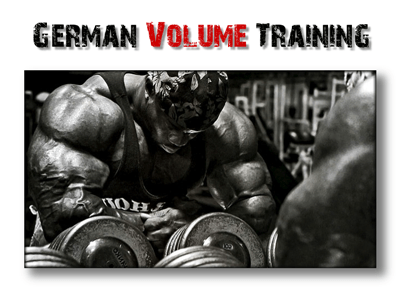

     

  • Gym Junkiez Spotlight – Phoenix Hollistic Wellness

    Gym Junkiez Spotlight – Phoenix Hollistic Wellness

    Ashante Hinton is an avid gym junkie! She had an awesome transformation and in the process has acquired some extensive knowledge that allowed her to take a very focused approach at helping the masses improve their health and fitness through holistic means. Check out the spotlight and learn more about Ashante and her Phoenix Holistic Wellness company!


    Tell a little about yourself

    I’m a 34-year-old single mom and registered nurse.  I’ve just started my own health and wellness company and am an advocate for prevention

    When did you become a “Gym Junkie”?

    For a while I was unhappy with my weight and my health. I decided to do something about both so my fitness journey started about six years ago. What began as a way for me to lose weight and get off of the medications I have to take soon became an addiction. I then developed a passion for the science behind nutrition and weight training. I am now a lifetime lover of the fitness life and an advocate for health and wellness.


    What is your favorite training style/workout routine?

    I have tried every form of working out from spin classes and Zumba to weight training. I fell in love with CrossFit and Tabata. CrossFit has helped to improve my stamina and allowed me to begin losing weight at a steady pace. Plus, it’s FUN and the adrenaline rush is insane!!!!!!!!
    What nutrition plan has worked best for you?

    This is a hard one! I have tried everything with my health conditions but so for being vegetarian with some keto elements has worked the best for me. I have not cut out meat completely but cutting back on meat and increasing healthy fats has definitely helped me become healthier and improve my energy levels.

    What is your ultimate goal?

    Personally, my fitness goal is simple. I want to be 180 lbs. strong, fit, and healthy. I also want to cease using the blood pressure medication I have been on for a portion of my adult life. Ultimately, I would like to use my degree and experience in Nursing, as well as my certifications in personal training and holistic medical approaches to health and wellness to help any and every one become the best version of themselves. I want everyone to develop good habits towards fitness and nutrition and live long healthy lives. To that end I have started a wellness company call Phoenix Holistic Wellness to work towards this goal.


    Talk about Phoenix Wellness…

    Phoenix is my baby! I’m a Scorpio and one of the symbols of the Scorpio is the Phoenix. A Phoenix is a mystical creature that dies and rises reformed from its ashes. I chose that name because my business is centered  around holistic lifestyle changes. You get to change who you are inside and out! Through personal training, nutrition services, support groups, and holistic wellness nurse coaching my goal is to help my clients live healthier more fulfilling lives.


    How can people reach you?

    I can be reach by email PhoenixHWLLC@gmail.com. you can follow the Instagram page phoenixwellnessllc or Facebook at Phoenix Holistic Wellness!