Category: Featured

  • Fasted Cardio – Science and Common Sense

    Fasted Cardio – Science and Common Sense

    Today I am going to tackle fasted cardio. Before I begin let me make two  statements:

    1. Science always wins!!!!

    2. No  matter what approach you take to meeting your fitness goals, two things must remain constant. Hard work and discipline. Which ever methods you choose to follow, as long as you remain true to the cause you will accomplish your goal.

    This morning on Instagram, I commented on a friend’s picture in regards to her remarks on fasted cardio.  I then received a DM from one of her followers (Im guessing) explaining to me that doing cardio in a fasted state is terrible for muscle retention, fat loss is simply burning more calories than you take in and being fasted doesn’t matter, and that i need to look into changing my philosophy. While he made some valid points during the discussion, I was quickly able to tell that he did not have all of the facts. So to the guy who will remain nameless, here is the information I promised you! Never argue without having all of the facts; or doing your homework on who you are arguing with (FLEX)! LOL… joking

    Anyway….. Due to that conversation, I thought it  was a perfect time to weigh in on the matter because while I do have a good scientific understanding of the matter, I also have practical experience and know what it takes to get to 5 to 6% body fat without drugs and without burning up all your muscle. Fasted cardio has been always been a staple in my overall fat loss routine.

    So, in this post I am going to cover the basic science of fasted cardio and why i believe its better for fat loss…..

    What is Fasted Cardio?

    Image result for fasted cardio meme

    Hands down the BEST form of fasted cardio there is!!! LOL

    Fasted cardio has been around for quite some time and is re-gaining popularity as an effective way to accelerate fat loss. People think fasted cardio is simply training on an “empty stomach,” which they usually think is simply a stomach that “feels empty.”

    Well, let me tell you what it really means….

    You are partially correct in saying fasted cardio is cardio done while in a “fasted” state, or in laymen terms your stomach is empty. But it’s actually a bit more than that. It has a lot more to do with how your body processes and absorbs the food you eat.

    When you eat food, it gets broken down into various molecules that your cells can use, and these molecules are released into your blood. Insulin is released and its job is to shuttle these molecules into cells. Depending on how much food you eat in a meal, your insulin levels can remain elevated for several hours (anywhere from 3 – 6+).

    When your body is digesting and absorbing what you’ve eaten, your body is in a “fed”  state. Once it has finished processing and absorbing the nutrients, insulin levels drop to a “baseline”  (low) level, and your body enters a “fasted”  state. Every day your body moves between “fed” and “fasted” state. Learning how to manage your diet and training between these two states  will help you maximize your bodies fat burning potential.

    Long Story Short:

    • Exercise done during periods where insulin levels are elevated and food is still being processed and absorbed is “fed” training.
    • Exercise done during periods where insulin is at a low, baseline level and food is no longer being processed and absorbed is “fasted” training.

    Alright, now you know what fasted cardio is. Let’s now talk about one factor that can hinder your body’s ability to burn fat!

    Insulin – The Fat Loss Killer

    Related image

    Insulin is defined as a hormone made by the pancreas that helps the cells in the body take up glucose from the blood.  Insulin does more than just shuttle nutrients into cells–it also inhibits the breakdown of fatty acids. That is, the higher your insulin levels are, the less your body is going to use fat for energy (both body fat and dietary fat).

    This makes sense physiologically. Why burn fat when there’s a surplus of energy (glucose) readily available via the food we just ate? Thus, when you eat food, your body basically shuts down its fat-burning mechanisms and lives off the energy provided by the meal, and it also stores a portion of the excess energy as body fat for later use.

    As your body processes and absorbs the food, insulin levels decline, which tells the body to start going to fat for energy as the “fuel” from the meal is running out. When the absorption is finally complete, your body is fully running off its own fat stores for energy. While this last part sounds great, do not get too happy. The amount of fat you burn between meals when your insulin levels are low is nothing to be excited about.


    As you can see, your insulin levels spike every time you eat a meal. It takes a while for your insulin levels to drop low enough for your body to tap into fat stores for energy, but by that time your body is telling you that you are hungry again, because of the low insulin levels. So in a nutshell, think of this repetitive cycle as “A Nightmare on Fat-Loss Street” and insulin as Freddy Kruger…

    Freddy is keeping you from losing fat! No matter how hard you use “healthy foods” to battle him, you cannot lose body fat! Dont fear any longer. There are two sure fire ways to end this nightmare. Weight training (which I won’t get into in this post) and fasted cardio!

    Fasted Cardio and Weight Loss


    Fasted cardio is often recommended as a way to speed up fat loss by many experienced gym junkiez and fitness professionals. However without an explanation of how this actually works, you will more than likely lose weight but will not make a dent in your fat loss goals.

    The first thing you should know about fasted cardio is it won’t help you lose fat optimally if you don’t maintain a proper diet. 

    Fasted cardio does not let you somehow cheat the laws of energy balance. At the end of the day, fat loss requires an energy (calorie) deficit, and that means you have to burn more calories than you take in (eat)!

    And with that said, fasted cardio does offer some unique fat loss benefits when done properly. Let me first explain how insulin ties into this.

    As you would expect, if your insulin levels are elevated before exercise due to a pre-workout meal, lipolysis will be hindered (your body will break down less fat cells during that workout). There is tons of research that has proven this true in  both trained and untrained individuals.

    With that said, Lipolysis is only one part of fat loss. The other part is Fat Oxidation, which is the actual burning off of the fatty acids by cells. Your body could break down every fat cell it has into usable fatty acids, but most would go unused (your body only burns so much energy) and winds up reconverted back into body fat.

    This is where many believe fasted cardio is worthless. They say that while it’s true that exercising in a fed state means less lipolysis during the workout, fat oxidation rates aren’t affected so all that happens is your body mobilizes many more fat cells than it can actually oxidize (burn).

    The National Center of Biotechnology Information gives several reasons for this belief to be wrong!

    1. Research has shown that the total amount of fatty acids available regulates fat oxidation rates.

    While your body may not be able to burn all of the fatty acids mobilized during fasted cardio, the more it has available, the more it burns.

    2. Thus, it’s not surprising that research has also shown that ingestion of carbohydrate reduces fat oxidation while at rest and when ingested before exercise.

    Now, ingested before exercise is a key phrase here because the study most commonly cited as “proof” that fasted cardio is a waste of time showed that when carbohydrates are ingested after exercise has begun (30 minutes after, in this case), then fat oxidation rates aren’t changed until after 80 to 90 minutes of exercise.

    That’s cool andall, but who starts their workouts fasted and then eats carbs 30 minutes into them?  Almost, Nobody. Many of us  eat our carbs anywhere from 30 to 60 minutes before we exercise, and as you now know, this reduces both lipolysis and fat oxidations rates and thus reduces the total amount of fat we lose in the workouts.

    So, the bottom line is when we consider all the available research, it’s clear that fasted cardio results in  more fat loss than “fed” cardio, and thus is worthwhile.

    Total fat loss isn’t the only reason I like fasted cardio, though. It also helps eliminate stubborn fat from my lower abs, and lower back!

    How Fasted Cardio Helps Get Rid of “Stubborn” Fat

    Image result for ebony abs

    If you’re a woman, your hips, thighs, and butt are probably the last to really tighten up when you’re losing weight. If you’re a guy, it’s almost certainly your lower abs, obliques, and lower back.

    This isn’t a genetic curse–it’s simply a physiological mechanism.

    You see, your body uses chemicals known as “catecholamines” to break fat cells down into usable energy. Catecholamines travel through your blood and “attach” to receptors on fat cells, which then trigger the release of the energy stored within the cells so it can be burned off. Fat cells have two types of receptors for catecholamines, alpha- and beta-receptors.

    And to make a long story short,  beta-receptors speed up fat mobilization, alpha receptors hinder it.

    So if you have been following along you have probably guessed pretty quickly that the areas that get lean quickly have a lot of fat cells with more beta-receptors than alpha, and those stubborn areas mentioned earlier have a large amount of fat cells with more alpha-receptors than beta.

    (If not leave me a comment or send me a message and i will try to clear up anything you have questions on!!)

    A major issue with these “stubborn fat” areas relates to blood flow.

    You may have noticed that fat in areas like the lower back and thighs are slightly colder to the touch than fat in other areas of your body like the arms or chest. This is simply because there’s less blood flowing through the areas.

    Less blood flow = fewer catecholamines reach the stubborn fat cells = even slower fat loss.

    So you are basically screwed twice here: large amounts of fat cells that don’t respond well to catecholamines and reduced blood flow to keep the catecholamines away.

    Fasted Cardio to the Rescue

    Blood flow in the abdominal region (upper lower abs, obliques, lower back, butt, hips, upper thighs) is increased when you’re in a fasted state, which means the catecholamines can reach this stubborn fat easier, resulting in more fat loss.

    This is where I’ve personally really noticed a difference in cutting with and without fasted cardio. When I include fasted training (both cardio and weightlifting), the journey from about 9% to 6%, where the majority of the fat you’re losing is the “stubborn” stuff, is noticeably faster than when I don’t.

    So i bet your next question is “which type of cardio is best to do in a fasted state”. Thats another answer for another post. If you want me to post the answer to this question, leave me a comment. If you have questions you would like answered. Feel free to ask in the comments section as well. Till the next time, Train Hard!!
  • Gym Junkiez Approved Chicken Recipes

    Gym Junkiez Approved Chicken Recipes

    Image result for fitness boring chicken meme


    Whats up Gym Junkiez! If you are like me then you eat a great deal of chicken! Its cheap, its easy to prepare, and its the number 1 bro food in the world. If this rings true for you, then this is also a true statement: Chicken is Boring! You get tired of eating chicken the same way and eventually either have to find a new protein source, or another way to prep it. If you are looking for quick recipes that are delicious and easy to prepare, please see below!


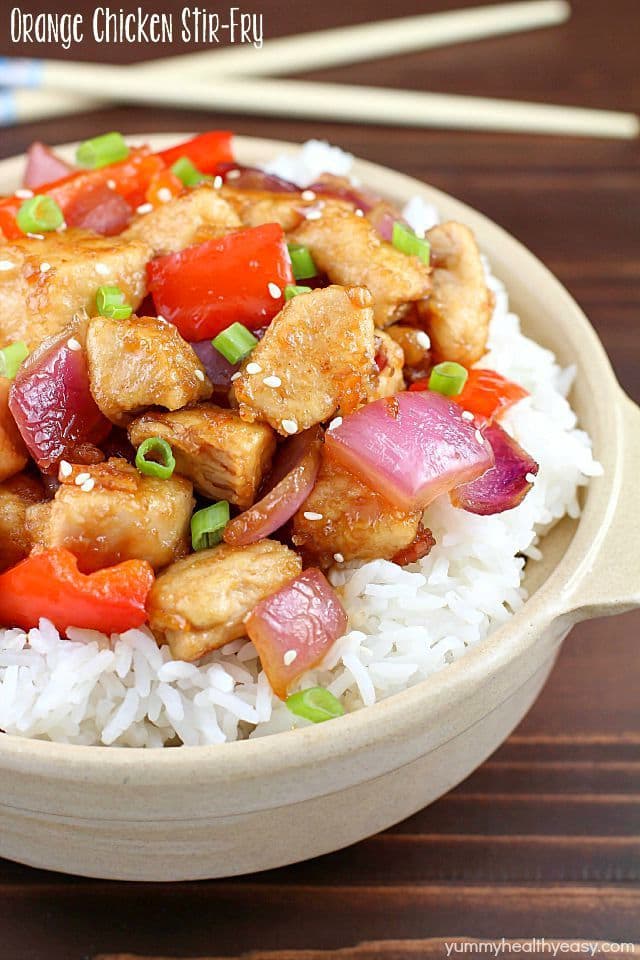
    Orange Chicken

    The most incredible Orange Chicken Stir Fry with pan seared chicken, red bell peppers, onion and a delicious sweet and savory sauce served over rice. So easy and so flavorful!

    Ingredients
    ⅓ cup chicken broth
    ⅓ cup orange marmalade
    2 Tbsp. soy sauce
    ½ tsp. garlic powder
    pinch of red pepper flakes
    2 Tbsp. coconut oil, divided
    1 red bell pepper, coarsely chopped
    ½ purple onion, coarsely chopped
    1 lb. chicken thighs, boneless skinless, cut into bite-size pieces (I used chicken breasts)
    ¼ cup cornstarch

    Instructions

    • Combine the chicken broth, orange marmalade, soy sauce, garlic powder and red pepper flakes in a small bowl, then whisk to combine. Set this aside for later
    • Heat a wok or large skillet over medium-high heat. Add 1 tablespoon of oil to the pan and cook the peppers and onions for 2 to 3 minutes, stirring frequently. Remove the pepper and onion from the pan and set aside.
    • Heat the remaining tablespoon of oil in the wok or skillet and toss the bite-size pieces of chicken in the cornstarch, shaking off the excess.
    • Add the chicken to the pan, being careful not to overcrowd the pan (I like to do this in two batches).
    • Brown the chicken on all sides, about 2 to 3 minutes per batch. Once all the chicken is cooked, add the vegetables back to the pan, then stir in the sauce and heat it through until it bubbles and thickens.
    • Garnish with sliced green onions and sesame seeds, if desired. Enjoy!


    Slow Cooker Chicken, Sweet Potato, and Quinoa Soup

    Ingredients
    1 and 1/2 pounds boneless skinless chicken breasts
    1 cup quinoa I used a black bean quinoa package
    2 pound large sweet potatoes ~3-1/2 cups
    1 can (15.25 ounces) black beans
    1 can (14.25 ounces) petite diced tomatoes
    1 teaspoon minced garlic
    1 packet (1.25 ounces) chili seasoning mix
    5 cups chicken broth*
    Optional: fresh parsley

    Instructions

    • Spray the slow cooker with nonstick spray. Remove the fat from the chicken breasts and put them into the slow cooker along with the rinsed quinoa.(I found a black beans seasoned quinoa package which I used and loved, but regular quinoa will work as well, just make sure to rinse it well.)
    • Remove the skins and chop the sweet potatoes into cubes adding them into the slow cooker.
    • Drain and rinse the black beans and add those in. Add in the undrained petite diced tomatoes, minced garlic, chili seasoning mix, and chicken broth.
    • Place on high for 3-5 hours (It took 4 hours on high for my crockpot.)
    • Using two forks, shred the chicken and stir all the ingredients together.
    • Add salt and pepper and if desired fresh parsley.
    • Serve immediately.


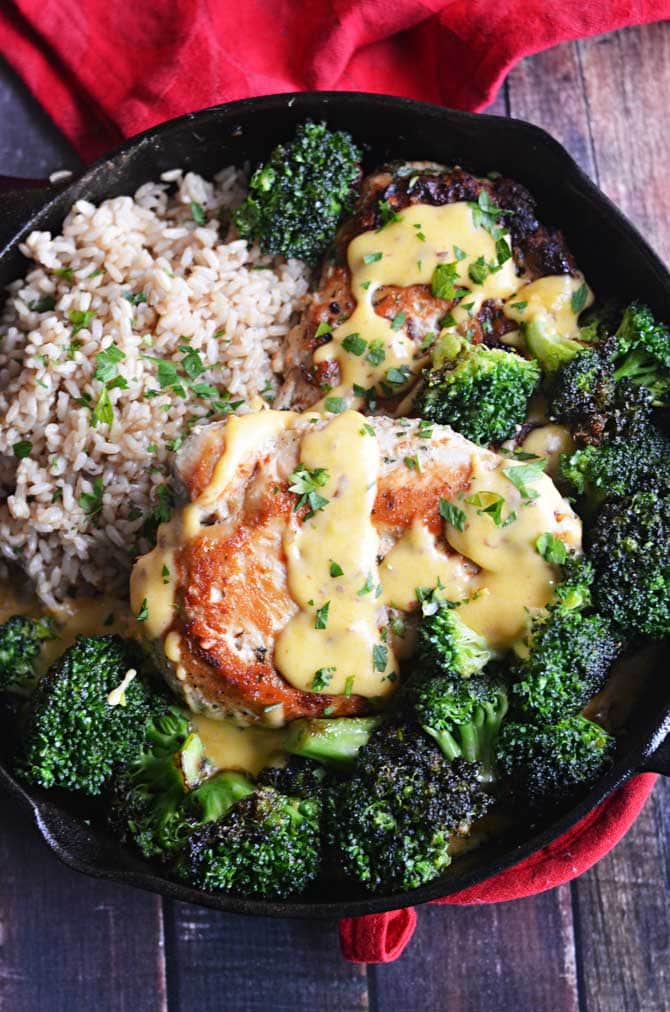
    Chicken Brocoli and Cheddar Skillet

    Sizzling Chicken, Broccoli, and Cheddar Skillet!  Way healthier than those from your favorite chain restaurants, but even more delicious! | hostthetoast.com


    Ingredients

    2 (4 oz) chicken breasts, pounded to 1/2 – 3/4″ thick
    1 cup jasmine rice, cooked according to package directions
    1 tablespoon fresh parsley, chopped, to garnish
    FOR THE MARINADE:
    5 cloves garlic, minced
    2 tablespoons fresh parsley, chopped
    1/4 cup coconut oil
    1 teaspoon crushed red pepper flakes
    Salt and pepper
    FOR THE CHEDDAR CHEESE SAUCE:
    1 cup almond milk, divided
    1 tablespoon almond flour
    1/4 teaspoon sea salt
    1/2 cup sharp cheddar cheese, shredded (light cheddar cheese, works, too)
    FOR THE BROCCOLI:
    1 small head broccoli, cut into florets
    Salt and pepper, to taste

    Instructions

    • In a freezer bag, combine the marinade ingredients and add in the chicken breasts. Refrigerate overnight or for at least 2 hours.
    • Heat a cast iron skillet over medium-high heat. Add in the chicken breasts and reserve excess marinade. Cook until cooked through, about 6 minutes per side. Remove chicken to a plate and tent with foil to keep warm.
    • In a separate small saucepan over medium heat, whisk together the flour and about 1/4 cup of the milk. Slowly whisk in the remaining milk and the salt. Bring to a gentle boil, stirring often.
    • Reduce to a simmer and allow mixture to thicken, stirring constantly, about 3 minutes.
    • Stir in the cheese, a bit at a time, until melted and completely combined. Keep over low heat, stirring regularly, until ready to use.
      In the cast iron skillet over medium heat, add 2 tablespoons of the reserved marinade and discard the remaining marinade.
    • Reduce heat to medium. Add in the broccoli and saute until bright green and beginning to brown lightly in spots, stirring and turning often, about 3 minutes. Season with salt and pepper, to taste.
    • Remove the broccoli and place on the plate with the chicken. Increase the heat on to high and let the pan sit for a minute or so to get steaming hot.
    • Remove the skillet from heat and pour 1/2 of the cheese sauce onto the hot skillet. Quickly add the chicken, broccoli, and rice on top of the cheese sauce, and then pour over the remaining cheese sauce. Sprinkle the chopped parsley on top, to garnish, and serve while still sizzling.


    Pulled BBQ Chicken Sandwich


    healthy bbq pulled chicken recipe


    Ingredients

    • 1 8-ounce can reduced-sodium tomato sauce
    • 1 4-ounce can chopped green chiles, drained
    • 3 tablespoons cider vinegar
    • 2 tablespoons honey
    • 1 tablespoon sweet or smoked paprika
    • 1 tablespoon tomato paste
      O Organics Tomato Paste 6 Oz
      $0.99 for 1 itemThru 05/16
    • 1 tablespoon Worcestershire sauce
    • 2 teaspoons dry mustard
    • 1 teaspoon ground chipotle chile
    • ½ teaspoon salt
    • 2½ pounds boneless, skinless chicken thighs, trimmed of fat
      Family/ Value Pack Boneless Skinless Chicken Thighs 1 Lb
      $2.49 for 1 item Thru 05/16
    • 1 small onion, finely chopped
    • 1 clove garlic, minced
    • Tip: Substitute Bun for P28 Protein Packed Bread (to buy click here)

    Instructions

    • Stir tomato sauce, chiles, vinegar, honey, paprika, tomato paste, Worcestershire sauce, mustard, ground chipotle and salt in a 6-quart slow cooker until smooth. Add chicken, onion and garlic; stir to combine.
    • Put the lid on and cook on low until the chicken can be pulled apart, about 5 hours.
    • Transfer the chicken to a cutting board and shred with a fork. Return the chicken to the sauce, stir well and serve.
    • Make Ahead Tip: Cover and refrigerate for up to 3 days or freeze for up to 1 month.
    • For easy cleanup, try a slow-cooker liner. These heat-resistant, disposable liners fit neatly inside the insert and help prevent food from sticking to the bottom and sides of your slow cooker.


    Thai Chicken Burgers with Cabbage Slaw

    healthy chicken burger recipe

    Ingredients

    1 1/4 pounds boneless, skinless chicken thighs (or 1 1/4 pounds 85% or 90% lean ground chicken)
    2 cloves garlic
    2 tablespoons finely minced fresh ginger
    1/2 teaspoon ground coriander
    1 teaspoon kosher salt
    1 tablespoon sesame oil
    1 teaspoon sambal oelek (1 teaspoon sriracha or 1/2 teaspoon chile flakes will also work)
    1 tablespoon soy sauce
    2 tablespoons mayonnaise
    1/4 cup bread crumbs (preferably panko)
    1 tablespoon chopped cilantro
    1 tablespoon chopped basil
    1 tablespoon chopped mint
    2 teaspoons finely grated lime zest
    1 tablespoon lime juice
    1 teaspoon sugar

    Coconut oil, for cooking the burgers

    Tip: Substitute Bun for P28 Protein Packed Bread (to buy click here)

    Instructions

    Cut the chicken thighs into 1-inch cubes. Arrange the cubed chicken in a single layer on a large plate or sheet-pan and freeze until the edges of each piece of meat are frozen but the center is still soft, 15-20 minutes.

    Put the peeled garlic cloves in the bowl of a food processor and process until finely minced. Add the par-frozen chicken and pulse until the meat is roughly chopped. The goal is to have 1/4- to 1/3-inch pieces of chicken rather than a mixture that resembles pâté. This will take about 15 to 20 short pulses. Transfer to a medium bowl.

    Add the rest of the ingredients and use your hands to mix thoroughly. Divide the seasoned chicken into 4 balls of equal size, then form the balls into patties, making a 1/2-inch depression in the center of each to account for the fact that the burgers will swell as they cook. When you have formed all the patties, place them in the refrigerator for at least 15 minutes.

    Light 2/3 chimney’s-worth of charcoal. When hot and glowing, pour out the charcoal on one side of your grill. Place the cooking grate in place, close the lid and allow the grill to preheat for 5-10 minutes.

    If using a gas grill, set half of your burners to medium-high, close the lid and allow the grill to preheat for at least 10 minutes.
    When the grill is hot, clean the grill grate and brush it generously with the vegetable oil. Place the burgers on the hot side of the grill and cook, without turning, until the burgers are nicely charred and release from the grate, about 5 minutes. Turn and cook until the other side is nicely charred and the burgers are no longer pink inside when pierced with the tip of a paring knife, about 5 minute more. Transfer the burgers to a sheet-pan or large plate to rest. If desired, brush the cut sides of the buns lightly with vegetable oil and grill until warmed through and grill marks appear.

    To serve, place the grilled burgers on a bun and top with a generous amount of the slaw. Serve any remaining slaw alongside the burgers (it goes fast!).

    Napa Cabbage Slaw

    Ingredients
    8 cups (about 1 pound) coarsely shredded napa cabbage
    1 cup thinly sliced radishes
    1 cup julienned carrots (yellow or orange bell pepper also works well)
    12 ounces snow peas, strings removed and thinly sliced on the bias (yields about 2 cups)
    1 cup thinly sliced green onions, green part only
    1 cup cilantro leaves, lightly packed

    3 tablespoons white wine vinegar
    3 tablespoon sugar
    1 tablespoon soy sauce
    1 clove garlic, finely minced or pressed
    1/2 teaspoon toasted sesame oil
    1/2 teaspoon ground ginger
    1/4 teaspoon ground cayenne
    1 cup mayonnaise
    3/4 cup shelled, roasted, salted peanuts

    Instructions

    In a large bowl, combine the cabbage, radishes, carrots, snow peas, green onions and cilantro.

    In a small bowl, combine the vinegar, sugar, soy sauce, garlic, sesame oil, ginger and cayenne. Whisk to dissolve the sugar. Add the mayonnaise and continue to whisk until the dressing is homogenous.

    Just before serving, add the dressing and peanuts to the vegetables. Mix to coat thoroughly.

    *Note: Only dress and add the nuts to the slaw mix you intend to eat immediately; it will get soggy if it sits with dressing on it. The remaining vegetables and dressing will keep, covered and stored separately in the refrigerator, for up to 3 days.


    If you like these recipes, please leave a comment and let us know. Till the next time. Eat Smart!!!!!!